


India
oi-Ashish Rana

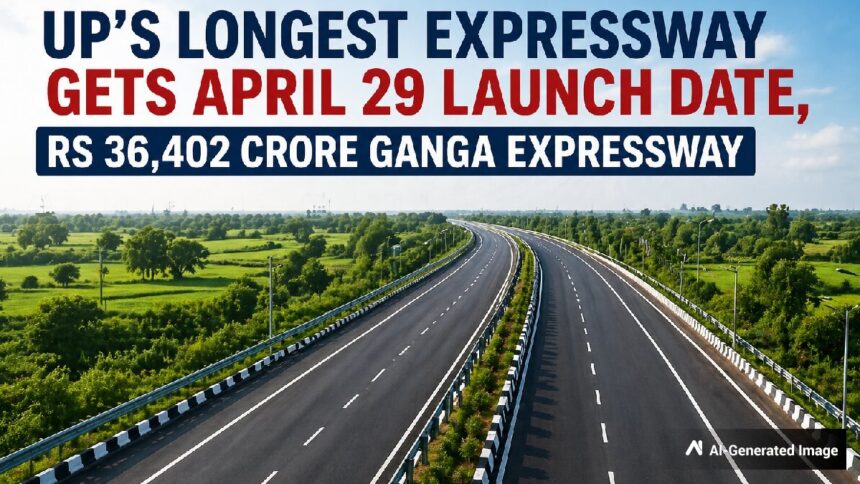
Uttar Pradesh is set for a major infrastructure leap as the 594-km Ganga Expressway is scheduled to be launched on April 29, with Prime Minister Narendra Modi expected to inaugurate the mega corridor. Touted as one of the state’s most ambitious road projects, the expressway is expected to significantly improve east-west connectivity, reduce travel time, and create a fresh push for economic activity across multiple regions of Uttar Pradesh.

Uttar Pradesh’s 594-km Ganga Expressway, costing Rs 36,402 crore, will be inaugurated by PM Narendra Modi on April 29, aiming to cut Meerut to Prayagraj travel time to 6-7 hours and foster economic development across 12 districts.
Built at an estimated cost of Rs 36,402 crore, the Ganga Expressway is currently the longest expressway in Uttar Pradesh. More than just a transport corridor, it is being positioned as a long-term development project that could strengthen logistics, improve rural access, support farming, attract industries, and further cement Uttar Pradesh’s growing image as India’s ‘Expressway State’.
Meerut To Prayagraj Journey To Be Cut Nearly In Half
The Ganga Expressway will begin from Bijauli village in Meerut and run all the way to Judapur Dandu village in Prayagraj, creating a direct high-speed route between western and eastern Uttar Pradesh.
One of the biggest highlights of the project is the sharp reduction in travel time. The road journey from Meerut to Prayagraj, which currently takes over 11 hours, is expected to come down to around 6 to 7 hours once the expressway opens for traffic.
With a maximum speed limit of 120 kmph, the corridor is expected to make long-distance road travel faster, smoother and safer for commuters while also improving freight movement across the state.
12 Districts, 519 Villages And A Wider Development Push
The expressway is expected to directly benefit 12 districts across Uttar Pradesh: Meerut, Hapur, Bulandshahr, Amroha, Sambhal, Badaun, Shahjahanpur, Hardoi, Unnao, Rae Bareli, Pratapgarh and Prayagraj.
Along with these districts, around 519 villages are expected to be linked through the project, opening up better access to markets, services and transport networks for rural communities.
Officials believe the corridor can do more than just cut travel time. By connecting underserved regions with major urban and commercial zones, the expressway is expected to reduce developmental gaps and unlock new economic opportunities along its route.
UP Chief Minister Yogi Adityanath has also recently reviewed preparations ahead of the inauguration, holding meetings with administrative and police officials and directing departments to ensure full readiness before the April 29 launch.
AI Tolling, No-Stop Collection And Modern Travel Facilities
A major technology-driven feature of the Ganga Expressway will be its AI-based toll collection setup. A total of 14 toll plazas are being developed, but the system is being designed to reduce congestion and avoid long stoppages.
The corridor will use sensors, high-tech cameras and vehicle registration number recognition technology to automatically collect FASTag tolls. Officials are also introducing a ‘no-stop toll collection system’, allowing vehicles to keep moving without halting at toll booths, which is expected to improve traffic flow and reduce delays.
To improve commuter convenience, nine facility centres are also being developed along the route. These are expected to offer petrol pumps, EV charging stations, food courts, cafeterias, dhabas, motels, dormitories, trauma care services, restrooms and large parking areas.
Motor vehicle service centres are also planned to support travellers in case of breakdowns, making the expressway more than just a high-speed road and turning it into a full-service travel corridor.
Farmers, Tourism, Industry And Jobs Could All Benefit
The Ganga Expressway is also being seen as a major economic catalyst for the state. For farmers, faster transport could mean quicker access to mandis and urban markets, especially for perishable produce where speed directly affects pricing and freshness.
Officials expect the improved logistics network to help reduce spoilage, lower transport inefficiencies and improve returns for agricultural communities located along the route.
The corridor is also likely to support tourism, particularly with Prayagraj and other important religious and cultural zones becoming easier to access by road. This could boost local businesses, hospitality services and small enterprises linked to visitor movement.
Industries too are expected to benefit from lower logistics costs and faster movement of goods. Over time, the expressway could evolve into an industrial growth belt, attracting investment and creating new employment opportunities, especially for young people in districts connected to the project.
Night Safety Measures And UP’s Expanding Expressway Network
Given that large stretches of the expressway pass through agricultural and sparsely populated areas, special attention has been paid to safety and night-time visibility.
The project includes red radium lights, blinkers on both sides of the road, streetlights on bridges and yellow radium reflectors on barricades to improve visibility after dark. Barbed-wire fencing is also being installed along parts of the corridor to prevent cattle crossings and reduce accident risks.
With the Ganga Expressway set to become operational, Uttar Pradesh’s already extensive expressway footprint is expected to grow even further. The state currently accounts for around 55% of India’s total expressway network, and that share is projected to move closer to 60% after this corridor opens.
Following flagship projects such as the Purvanchal Expressway and Bundelkhand Expressway, the Ganga Expressway is being seen as another major milestone in Uttar Pradesh’s infrastructure expansion and its broader ambition to position itself among the country’s leading economic hubs.