


By using this site, you agree to the Privacy Policy and Terms of Use.
Accept
Next India Magazine
  • Home
    • Home 2
    • Home 3Hot
    • Home 4
    • Home 5New
  • Home
  • Opinion

    That Provide Critical Analysis on Political Decision-Making

    krutikadalvibiz@gmail.com

    Analyzing Global Dynamics and Unraveling Key Policy Initiatives

    krutikadalvibiz@gmail.com

    Luxurious Stays Redefining Hospitality at Hotel Havens

    krutikadalvibiz@gmail.com

    Electric Cars Subsidies by German Taxpayers End Up on Foreign Roads

    krutikadalvibiz@gmail.com

    Challenge and Inspire Future of Political Thought

    krutikadalvibiz@gmail.com

    Assessing the Diplomatic Challenges and Global Security

    krutikadalvibiz@gmail.com
  • World
  • Politics
  • Market
  • Health
  • Insurance
  • Pages
    • Blog Index
    • Contact US
    • Search Page
    • 404 Page
    • Technology
    • World
  • Pages
    • Blog Index
    • Search Page
    • 404 Page
  • Technology
    TechnologyShow More
    Buying a Car Will Soon be Like Buying a Phone, Why Your Next Car Could be an EV
    Hands-On With the iPhone 13, Pro, Max, and Mini
    4 Min Read
    Explained: What are Smart Glasses and How Do It Work?
    4 Min Read
    Apple VS Samsung– Can a Good Smartwatch Save Your Life?
    4 Min Read
    Role of Technology in Modern Political Relations and Communication
    8 Min Read
  • Posts
    • Post Layouts
      • Standard 1
      • Standard 2
      • Standard 3
      • Standard 4
      • Standard 5
      • Standard 6
      • Standard 7
      • No Featured
    • Gallery Layouts
      • Layout 1
      • Layout 2
      • layout 3
    • Video Layouts
      • Layout 1
      • Layout 2
      • Layout 3
      • Layout 4
    • Audio Layouts
      • Layout 1
      • Layout 2
    • Post Sidebar
      • Right Sidebar
      • Left Sidebar
    • Review
      • Stars
      • Scores
      • User Rating
    • Content Features
      • Highlight Shares
      • Inline Mailchimp
      • Print Post
      • Inline Related
      • Source/Via Tag
      • Reading Indicator
      • Content Size Resizer
    • Table of Contents
      • Full Width
      • Left Side
    • Sponsored Post
  • Contact
  • Pages
    • Search Page
    • 404 Page
Reading: On counting day, a look at the quality of electoral politics
SUBSCRIBE
Next India MagazineNext India Magazine
Font ResizerAa
  • My Saves
  • Economics
  • Technology
  • My Interests
  • World
  • My Feed
  • History
  • Business
  • Technology
  • Lifestyle
  • Fashion
  • Health
  • Technology
  • World
Search
  • Pages
    • Blog Index
    • Contact Us
    • Search Page
    • 404 Page
  • Home
    • Home 1
    • Home 2
    • Home 3
    • Home 4
    • Home 5
  • Home
  • Blog
  • Categories
    • Technology
    • Lifestyle
  • Personalized
    • My Feed
    • My Saves
    • My Interests
    • History
  • Demos
  • Categories
    • Technology
    • Business
    • Fashion
    • Economics
  • Bookmarks
  • Categories
    • Technology
    • Health
    • World
  • More Foxiz
    • Blog Index
    • Sitemap
  • Bookmarks
  • Contact
  • More Foxiz
    • Sitemap
Have an existing account? Sign In
Follow US
  • Home
  • World
  • Contact
  • Blog
© Foxiz News Network. Ruby Design Company. All Rights Reserved.
BusinessLifestyleStartup

On counting day, a look at the quality of electoral politics

India Times Now
Last updated: May 3, 2026 5:55 pm
India Times Now
6 Min Read
Share
SHARE

Record voting is testimony to the tide of the times and a reflection of growing social consciousness. Today, when the poll results of the five states are announced, we should look back at the rumblings before the contest.

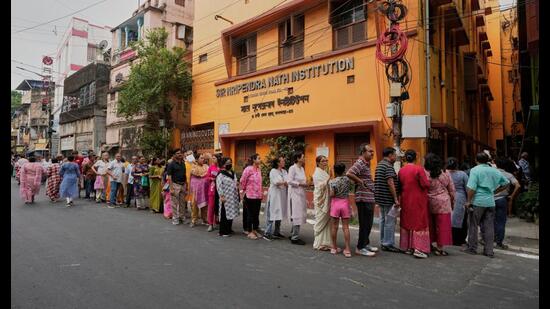
The 92.47% voting in West Bengal and above 80% voting in the three other states and one Union Territory is testimony to the fact that voters have performed their duty exceptionally well. (AP)

It is hard not to have felt that the campaign trail was inundated by hate. Words denoting identity such as mian/miya (Muslim), Hindi, Hindu, Muslim or Sanatan — in some cases, people were called “infiltrators” — were constantly thrust into our consciousness. Do these leaders who have been ruling for the last five to 15 years and their detractors have nothing positive to contribute to the political discourse?

During the first general elections in 1952, India’s literacy rate was 18.33%. At that time, merely 45% of the electorate voted. Among them, many had no idea that they had made a transition from British colonial rule to democracy. They were unaware that their vote wasn’t just electing a government but deciding the fate of their nation. Till this day, it is their initiative that is defining the strength of the country’s democracy.

Right now, India’s literacy rate has crossed 81%. Education brings awareness and leads to responsibility. The 92.47% voting in West Bengal and above 80% voting in the three other states and one Union Territory is testimony to the fact that voters have performed their duty exceptionally well. In our 5,000-year-old history, the last close-to-eight decades have been particularly important. Eight of 15 presidents have come from tribal, dalit or minority communities. We have had two women as Lok Sabha speakers and one woman prime minister (PM).

Rajiv Gandhi, as PM, introduced the 64th and 65th constitutional amendment Bills to empower women by reserving a third of the seats in village panchayats and urban local bodies for them. Though the amendments failed to clear Parliament’s test, these reforms were later introduced under the 73rd and 74th constitutional amendments. Today, 50% of village panchayat representatives are women. In state assemblies, their strength is 8-10%. There are 116 women MPs in both the houses of Parliament.

Last month, the Nari Shakti Vandan (Amendment) Bill was introduced in Parliament. Had it been cleared it would have paved the way for 272 seats for women in Parliament. It failed due to a political logjam, but experience suggests it can’t be stalled for long.

Meanwhile, the war against Iran has brought another fact to light. Long queues at LPG agencies to secure a gas cylinder are a sad sight but indicate a rise in gas usage among households, primarily because of the Ujjawala scheme. The crowds suggests they have become habitual of uninterrupted supply of gas. Sometimes, crises make us realise how far we have come.

Our democratic progress would have been more satisfying had our election procedure not become so expensive and many of our leaders weren’t so corrupt.

This discrepancy has led to a situation where our legislative assemblies and Parliament are slowly being overwhelmed by millionaires. According to the Association for Democratic Reform (ADR), out of 543 Lok Sabha members, 504 (or 93%) were millionaires. The numbers have increased alarmingly since 2009 when just 58% were millionaires. From 2014 onwards, their number has steadily crept up.

There’s nothing wrong with a country’s Members of Parliament being rich. But tongues will wag when the average earning of an Indian is languishing at ₹2-2.5 lakh.

The chasm between the voter and the representative is pronounced during elections. In West Bengal, there are just 50,400 millionaires but one out of every five contestants is a self-declared millionaire. Similarly, the parties fighting to gain power have fielded 1,047 people with 412 facing serious criminal charges. They include 35 who face murder charges. Neighbouring Assam isn’t lagging behind. Out of 722 contestants, 39% are millionaires and 14% face criminal charges. Parties crying hoarse about women empowerment have fielded just 8% women contestants.

This is the reason why, as the elections approach, our leaders liberally dole out government largesse — they hide their weaknesses and speak in intemperate language. They sow discord and reap hate. Record voting conjures fears, what if the hydra-headed monster of social alienation is rearing its head? Has polarisation taken over our society? I want to see my apprehension proven wrong.

Shashi Shekhar is editor-in-chief, Hindustan. The views expressed are personal

Share This Article
Facebook Email Copy Link Print
Previous Article Mumbai–Bengaluru Highway Protests: 3-Year-Old’s Rape-Murder Sparks Outrage, Govt Promises Swift Justice
Next Article Scorpio Horoscope for Today May 04, 2026, Monday – Seek Truth Calmly, Guard Your Energy, And Move Strategically
Leave a Comment Leave a Comment

Leave a Reply Cancel reply

Your email address will not be published. Required fields are marked *

You Might Also Like

BusinessLifestyleStartup

$1 million buys less real estate in Mumbai now than in 2020: Report

Mumbai: A budget of $1 million (approximately ₹9.4 crore) now…

4 Min Read
BusinessLifestyleStartup

Retired Army man killed in Kota; wife, aide held

Kota , A 45-year-old retired Army man was allegedly strangled…

3 Min Read
BusinessLifestyleStartup

Will new SIR numbers affect political calculus in urban hubs, key regions in Uttar Pradesh?

Uttar Pradesh’s final electoral rolls have not only altered the…

5 Min Read
BusinessLifestyleStartup

Ludhiana: Deportated from Australia, Samrala man reaches home

A 34-year-old man from Samrala was deported from Australia following…

2 Min Read
Next India MagazineNext India Magazine
Follow US
© 2026 Next India Magazine powered by India Times Now. All Rights Reserved.
Welcome Back!

Sign in to your account

Username or Email Address
Password

Lost your password?