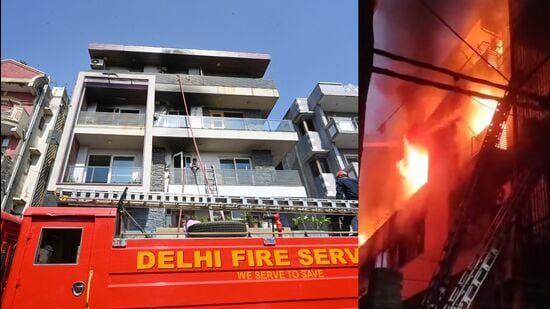
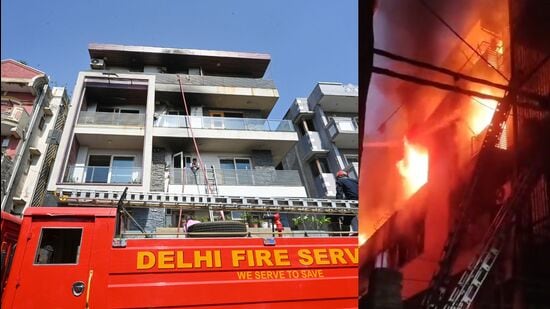
The Sunday morning fire at a residential building in east Delhi’s Vivek Vihar has yet again shaken the Capital. Nine people lost their lives in this fire, which has initial reports suggesting that it was triggered due to an air conditioner (AC) blast. As per the Delhi Fire Services (DFS), the total number of calls received for fires in Delhi this year have been 6,693 so far. The incidents rose from 1,096 in February to 1,538 in March and 2,663 in April. Addressing the concern, AK Malik, chief fire officer at DFS, says, “One of the major reasons behind ACs catching fire is irregular and non-maintenance since people are not laying as much emphasis on servicing as much as they use these electrical appliances.”
Why does an AC blast?
“There are mainly two reasons: compressor-related issues and electrical load problems. When an AC is not properly serviced or maintained, the electrical load can increase. This happens because more current (amperes) flows than what the circuit is designed to handle. As a result, the temperature rises and puts extra load on the compressor,” shares an officer at Delhi Fire Service.
What to do in case of fire?
1. If the incident is reported immediately, the first response should be to evacuate safely.
2. If the fire is reported late and you are already trapped, seal the room where the fire has started. Close it off and block gaps with wet clothes so that smoke and fire do not spread to other parts of the house.
3. If you’re unable to get out of the house, move to a room that has a window and make your presence known to rescuers from there.
4. If your clothes catch fire, avoid running since it will make the flames spread faster. Drop to the ground, shield your face with your hands, and roll repeatedly until the flames are put out.
5. Always touch the door and handle before opening. If it feels hot or if smoke is coming through, do not open it; the fire is likely just outside.
6. Always use the stairs during a fire. Know your exit points in advance. Avoid using lifts.
7. If there is smoke, stay low to the ground and crawl on your hands and knees to reduce smoke inhalation.
Check your equipment prior
“Before moving into a new place, make sure that all fire safety equipment is of good quality. It’s important to get an expert to verify the quality, even in cases where you have already been a resident of a high-rise building. It’d cost around ₹2,000, which would include a full inspection of all equipment, including fire extinguishers, smoke detectors and fire alarms,” says Intiyaaz, from Fire Felixon Enterprises, a Delhi-based fire safety equipment and services provider.