


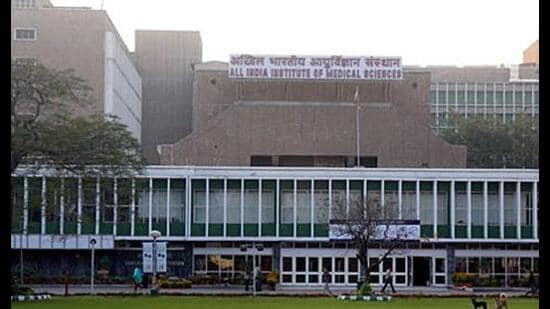
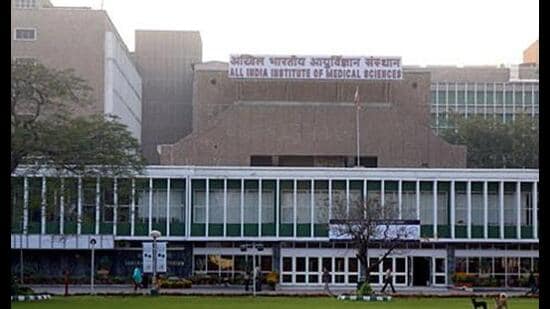
The All India Institute of Medical Sciences (AIIMS) on Wednesday distributed AI-enabled wearable glasses for free to 40 visually impaired people including 32 children and eight teachers, to help them interpret their surroundings through sound.
According to AIIMS officials, the smart glasses—made in collaboration with Rotary District 3012, SHG Technologies and Vision Aid—will translate visual cues into real-time audio guidance and include features such as text-to-speech reading, facial and object recognition, obstacle detection, navigation assistance and emergency support.
According to doctors the technology is designed to help users engage more independently with their environment. Beneficiaries were identified both from specialised schools, including institutions for the blind in Delhi, and from patients attending low-vision and rehabilitation clinics at the Dr RP Centre at AIIMS. The programme includes structured user training and continued support to ensure effective use of the devices.
“The initiative is part of an ongoing programme under which nearly 1,500 visually impaired students above Class 5 from schools for the blind across Delhi-NCR have been registered. We have also registered teachers and those attending low-vision and rehabilitation clinics at AIIMS. The distribution is limited to users having access to a smartphone. “Before distribution, we provide a day-long assistive training on how to use the device,” said prof Dr Praveen Vashist, professor and officer-in-charge, community ophthalmology.
Dr Praveen said that in the first phase, 53 beneficiaries received these glasses in February this year. Each device costs around ₹35,000 but currently it is being provided free of cost under the initiative.
Speaking at the event on Wednesday, prof Radhika Tandon, chief professor and officer in-charge, community Ophthalmology at Dr RP Centre, said that AI-enabled assistive technology complements clinical care by reducing dependency and improving autonomy. “These glasses open new possibilities for education, employment, and daily living,” she said, adding that feedback from children will be collected to improve the technology.
Dr Amita Mohindru, district governor, rotary district 3012, said the initiative marks a step towards improving the quality of life for visually impaired individuals. Organisers said efforts will continue to expand the programme to reach more beneficiaries across the region.