


India
oi-Madhuri Adnal

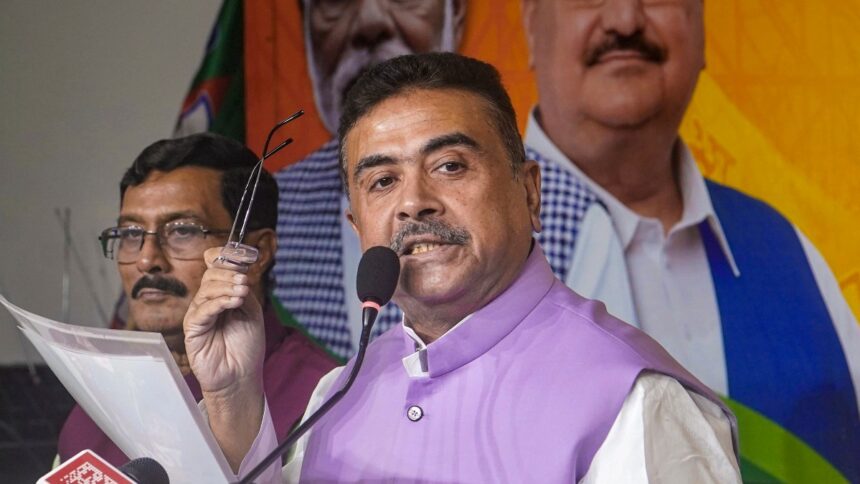
As Suvendu Adhikari prepares to become West Bengal’s first BJP Chief Minister after the party’s historic 2026 victory, public attention has rapidly shifted beyond politics to his social background, caste identity and regional roots. Among the most searched questions around Adhikari right now is which community the new Bengal CM belongs to and why that identity carries political significance in the state.
Senior BJP leader Suvendu Adhikari was elected leader of the BJP legislature party in West Bengal on Friday, paving the way for him to become the state’s first BJP chief minister. Union Home Minister Amit Shah announced Adhikari’s selection after a legislature party meeting attended by newly elected BJP MLAs and senior party leaders. The swearing-in ceremony of the new BJP government is scheduled to take place at Brigade Parade Ground on May 9.
Suvendu Adhikari, belonging to the influential Mahishya community, will become West Bengal’s first BJP Chief Minister following the party’s victory, with his swearing-in scheduled for May 9th.

Suvendu Adhikari belongs to the Mahishya community, an influential agrarian and land-owning caste that holds major demographic and political importance across southern districts of West Bengal, particularly in the Medinipur region.
The Mahishya community has historically been associated with agriculture, trade and strong local political organisation. In districts such as Purba Medinipur and Paschim Medinipur, the community has maintained significant social influence for decades. Political observers often view the Adhikari family as one of the strongest political representatives of the Mahishya community in Bengal.
Adhikari’s father Sisir Adhikari played a major role in building the family’s influence in the Medinipur belt over several decades. That political foundation later helped Suvendu Adhikari rise within the Trinamool Congress before eventually becoming one of BJP’s most influential faces in Bengal politics.
The role of caste and community identity in West Bengal politics has traditionally remained less visible compared to several northern Indian states, where electoral politics openly revolves around caste equations. However, analysts say the rise of Mahishya leadership under the BJP banner has brought greater attention to regional social identities in Bengal’s political landscape.
For many supporters from the community, Adhikari’s rise to the Chief Minister’s post is viewed as symbolic representation for a group that often felt overshadowed by Bengal’s traditional “Bhadralok” political elite.
Adhikari’s political image, however, extends beyond caste identity alone. Known as a grassroots leader from Kanthi and Medinipur, he built much of his public profile during the Nandigram movement, which became a turning point in Bengal politics. His victories over Mamata Banerjee in Nandigram in 2021 and again in Bhabanipur in 2026 significantly strengthened his political stature nationally.
Observers also believe his “son of the soil” image has helped him connect strongly with rural and semi-urban voters across Bengal. His leadership style is often associated with aggressive grassroots mobilisation, direct political outreach and strong organisational control.
Political analysts say Adhikari now faces the larger challenge of balancing community-based support with governance for a diverse state that includes Scheduled Caste, Scheduled Tribe and minority populations alongside multiple regional identities.
The influence of his Mahishya background is also expected to shape policy priorities around agriculture, rural infrastructure and land-related governance. Given his political emergence through land agitations like Nandigram, many expect his administration to take a cautious approach toward industrial land acquisition while pushing pro-farmer and infrastructure-focused development models.
With BJP forming its first government in West Bengal, Suvendu Adhikari’s caste identity, regional influence and political journey have all become central points of discussion as Bengal enters a major political transition.