


Amid high court rap, the Punjab government has thrown a fresh spanner in the ongoing deliberations for increasing the superannuation age for Panjab University members from 60 to 65 years.

It has been learnt that the Punjab government has sent a letter to the Union ministry of education, seeking the inclusion of the state’s representative in a three-member panel formed by the Centre to look into the retirement age of PU faculty.
The development comes at a time when the three-member panel was on the verge of recommending an increase in the retirement age of the faculty to 65 years, and fixing the tenure of the vice-chancellor to five years, in place of the existing three years, top officials familiar with the development confirmed.
The same recommendations were made by PU in 2011.
The development also coincides with the Punjab and Haryana high court’s (HC) refusal to grant more time to the Centre to consider the issue. The HC had also directed that the secretary education would ensure that the Centre’s appropriate stance is placed on record by way of his personal affidavit on July 29, when matter is next heard. It has also directed that a responsible officer, not below the rank of joint secretary, be sent for the July 29 hearing with relevant record. The order was passed by HC during the resumed hearing of appeals from PU professors, who have challenged the August 16, 2016 decision of a single bench that had dismissed their petition for enhancement of the retirement age to 65, on the lines of faculty of central universities.
The single judge bench was of the view that their retirement age cannot be enhanced on the lines of faculty members of central university or centrally funded varsity teachers until PU is declared a centrally funded university. The order was challenged before a division bench on August 22, 2016, which stayed a single judge order. Since then, just before attaining the retirement age, teachers approach the court to secure orders to work till the age of 65.
3-member panel created in Feb
The Centre had constituted the three-member committee to look into the professor’s demand in February. The panel is headed by former University Grants Commission (UGC) chairman M Jagadesh Kumar, with Delhi University vice-chancellor (V-C) Yogesh Singh and PU V-C Renu Vig as its members. The panel had met on March 30 to discuss the issue and had almost finalised the report, sources indicated, adding that Centre has not confirmed whether Punjab’s demand has been met with or not. Information about the same has, however, been communicated to the panel. If fresh deliberations are held, the final report may further get delayed.
The mandate for the panel was to examine and analyse the proposal in context of the legal and statutory framework governing the university, to assess the implications and possible repercussions, particularly in view of PU’s inter-state character. The Centre had also asked the panel to examine the financial implications of the proposal, including its financial sustainability, long-term fiscal impact, and the effect on faculty recruitment and promotional avenues.
Another issue sought to be examined was the matter of parity in relation to Punjab government institutions, institutions under the Chandigarh administration, and centrally funded universities and institutions.
The Centre’s stand so far has been that other stakeholders in PU affairs, notably Punjab, need to be on board before a decision is made. The Punjab government has been averse to the demand.
In Chandigarh, a peculiar situation exists: While teachers of colleges affiliated with PU are retiring at the age of 65, the university faculty have their retirement age at 60.
The superannuation age of teachers in centrally funded higher and technical institutions has been enhanced from 62 to 65 in 2007.
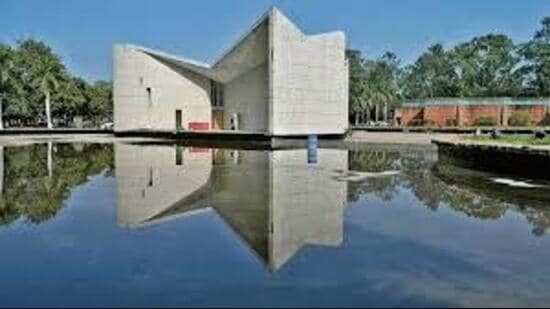
A pre-independence institution, PU was created under the Panjab University Act, 1947. In 1966, under the provision of Section 72 of the Reorganisation Act it was declared as an inter-state body corporate, having the participation of Punjab, Haryana and Himachal Pradesh. Later, the power to make and amend the laws relating to PU, was conferred, exclusively, upon the Centre/Parliament. Haryana and Himachal Pradesh ended their association in the 1970s.