



Virologist María Inés Barría remembers the Eureka moment from a decade ago.

Barría and her team in Chile had been working for months on antibodies to treat hantavirus that kills about one-in-three people who contract it. The breakthrough came around 2016, when a tell-tale fluorescent green glow indicating the presence of the virus disappeared under a microscope.
The antibodies developed in the immunovirology lab at the Universidad de Concepción, about 300 miles south of the capital Santiago, had seemingly neutralized the germ.
“We’re on the right track,” Barría, 48, recalls thinking. “We have to keep going.”
After later success in animal trials, the lab was ready to work with international partners to start testing on humans. Then they ran out of money.
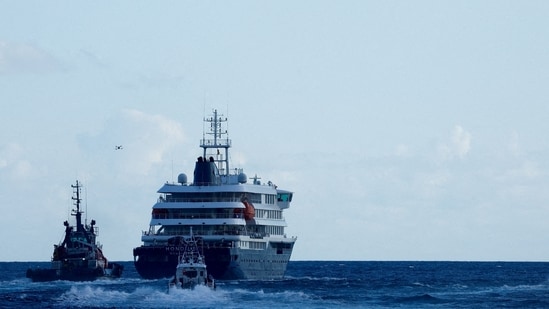
Now that same strain of hantavirus, the only one known to transmit from person to person, is drawing global attention. A cluster of infections linked to a cruise ship sailing from Argentina toward Europe left several people dead and others seriously ill, prompting a World Health Organization alert and raising new questions about how the disease spreads.
Barría and Chile weren’t alone in working on hantavirus, though progress has been incremental. Kartik Chandran, a professor at the Albert Einstein College of Medicine, has been developing a vaccine and an antibody treatment. The research is early. But the antibody — a version of the cells produced by the immune system to fight infection — has shown it’s effective at protecting against the Andes virus in animal models. Chandran said said the antibody is ready to advance to human trials.
“We are engaged in a number of conversations with various parties,” he said. “The goal would be to have something available should there be another outbreak. I’m optimistic that we’ll learn from the current situation and be positioned for hantaviruses down the road.”
A clinical trial would be challenging, he added, given that there have been so few cases. That same conundrum confronts scientists tackling other diseases swirling around the world, including bird flu, mpox and Ebola.
Finding a treatment for hantavirus is more pressing in Chile, where there have already been 39 cases in 2026, including 13 deaths, according to the Health Ministry. It’s also a challenge in southern Argentina, where there have been 42 infections diagnosed in the country so far this year through May 7, according to the government.
The source of the recent outbreak on the MV Hondius cruise ship that embarked from Argentina remains unknown. But long before the headlines, the building blocks of a potential treatment and vaccine were already taking shape in Chile until a lack of resources, and the subsequent onset of the Covid-19 pandemic, stopped them in their tracks.
The Chilean lab’s experience is reminiscent of many instances in which scientists had to halt work on novel coronaviruses before the Covid pandemic hit because funding dried up.
The virus had long gone largely overlooked outside southern Chile in part because it is rare and geographically concentrated, Barría said. “It has always been a public health problem here, but without a solution,” she said.
Leading a collaboration of Chilean scientists and international partners, including researchers at Rocky Mountain Laboratories at the National Institutes of Health, Robert Koch Institute in Germany and New York-based Ichor Biologics, Barría’s team began work in 2014 using blood samples from survivors to understand the immune response. The scientists also used a lab-safe pseudovirus in their testing.
By 2018, they had published findings from a study that isolated and characterized two monoclonal antibodies capable of neutralizing the virus — one of which, in later animal trials done with international partners, was able to completely clear infection from the lungs. By 2021, one had received orphan drug status from the US Food and Drug Administration, designed to help speed development.
But human trials required significant investment, about $7 million, Barría estimated. The team and Ichor Biologics sought international funding, but progress stalled during the Covid pandemic as resources shifted and local funding proved insufficient.
While human trials remain on hold, Barría and her team are working on related areas, including studying patients’ immune responses and the durability of the antibodies. Those details remain critical for future treatments and vaccine design, she said.
“The key factor that’s preventing further progress is funding and resources,” she said. “We have made significant advances, but we’ve reached a stage that is much more expensive and requires a different level of investment, as well as specific infrastructure that we are currently lacking.”
Even if the funding came through, Barría estimates it would take her and her team 12 to 24 months to get back to the same place they were before the pandemic.
Barría, currently a researcher at the Universidad San Sebastián in Puerto Montt, grew up in an area where hantavirus was known but poorly understood. People in her community fell ill from the disease — not often, but severely once they did — and there was no treatment.
The cruise ship outbreak has raised the treatment profile of the Andes strain she’s spent years studying. More than eight people have been infected, and passengers and staff from 23 countries were potentially exposed. Dozens have returned to their homes, where they are quarantining in an effort to prevent any risk of future transmission.
Early symptoms resemble the flu, including fever, fatigue and muscle aches, with nausea and occasional abdominal pain. In severe cases, the disease can quickly progress to respiratory failure as fluid fills the lungs, often requiring intensive care and ventilation.
There are about 40 to 60 infections diagnosed each year in Chile, with a fatality rate of up to 40%, according to estimates from Clínica Alemana, a private hospital. There are no specific treatments, though outcomes improve markedly with early diagnosis and care.