

By using this site, you agree to the Privacy Policy and Terms of Use.
Accept
Next India Magazine
  • Home
    • Home 2
    • Home 3Hot
    • Home 4
    • Home 5New
  • Home
  • Opinion

    That Provide Critical Analysis on Political Decision-Making

    krutikadalvibiz@gmail.com

    Analyzing Global Dynamics and Unraveling Key Policy Initiatives

    krutikadalvibiz@gmail.com

    Luxurious Stays Redefining Hospitality at Hotel Havens

    krutikadalvibiz@gmail.com

    Electric Cars Subsidies by German Taxpayers End Up on Foreign Roads

    krutikadalvibiz@gmail.com

    Bonusvoorwaarden van Becasino: de inzetterm die je saldo bepaalt

    krutikadalvibiz@gmail.com

    Blik w kasynach 2026 – o co pytają gracze przed pierwszym zasileniem konta

    krutikadalvibiz@gmail.com
  • World
  • Politics
  • Market
  • Health
  • Insurance
  • Pages
    • Blog Index
    • Contact US
    • Search Page
    • 404 Page
    • Technology
    • World
  • Pages
    • Blog Index
    • Search Page
    • 404 Page
  • Technology
    TechnologyShow More
    Ramya Sudha Vinukonda: A Biology Teacher Turning Government School Classrooms into Spaces of Possibility
    6 Min Read
    Dr. Nishant Sawant: The Mind Behind Secure Digital Progress
    4 Min Read
    NASA’s Artemis II Mission Rekindles Humanity’s Dream of Deep Space Exploration
    5 Min Read
    Buying a Car Will Soon be Like Buying a Phone, Why Your Next Car Could be an EV
    Hands-On With the iPhone 13, Pro, Max, and Mini
    4 Min Read
  • Posts
    • Post Layouts
      • Standard 1
      • Standard 2
      • Standard 3
      • Standard 4
      • Standard 5
      • Standard 6
      • Standard 7
      • No Featured
    • Gallery Layouts
      • Layout 1
      • Layout 2
      • layout 3
    • Video Layouts
      • Layout 1
      • Layout 2
      • Layout 3
      • Layout 4
    • Audio Layouts
      • Layout 1
      • Layout 2
    • Post Sidebar
      • Right Sidebar
      • Left Sidebar
    • Review
      • Stars
      • Scores
      • User Rating
    • Content Features
      • Highlight Shares
      • Inline Mailchimp
      • Print Post
      • Inline Related
      • Source/Via Tag
      • Reading Indicator
      • Content Size Resizer
    • Table of Contents
      • Full Width
      • Left Side
    • Sponsored Post
  • Contact
  • Pages
    • Search Page
    • 404 Page
Reading: How to check if your vehicle is BS-VI compliant? A step-by-step guide
SUBSCRIBE
Next India MagazineNext India Magazine
Font ResizerAa
  • My Saves
  • Economics
  • Technology
  • My Interests
  • World
  • My Feed
  • History
  • Business
  • Technology
  • Lifestyle
  • Fashion
  • Health
  • Technology
  • World
Search
  • Pages
    • Blog Index
    • Contact Us
    • Search Page
    • 404 Page
  • Home
    • Home 1
    • Home 2
    • Home 3
    • Home 4
    • Home 5
  • Home
  • Blog
  • Categories
    • Technology
    • Lifestyle
  • Personalized
    • My Feed
    • My Saves
    • My Interests
    • History
  • Demos
  • Categories
    • Technology
    • Business
    • Fashion
    • Economics
  • Bookmarks
  • Categories
    • Technology
    • Health
    • World
  • More Foxiz
    • Blog Index
    • Sitemap
  • Bookmarks
  • Contact
  • More Foxiz
    • Sitemap
Have an existing account? Sign In
Follow US
  • Home
  • World
  • Contact
  • Blog
© Foxiz News Network. Ruby Design Company. All Rights Reserved.
BusinessLifestyleStartup

How to check if your vehicle is BS-VI compliant? A step-by-step guide

India Times Now
Last updated: October 31, 2026 10:43 am
India Times Now
6 Min Read
Share
SHARE

Keeping track of a vehicle’s emission standards is important not only from an environmental perspective but also to ensure compliance with applicable regulations.
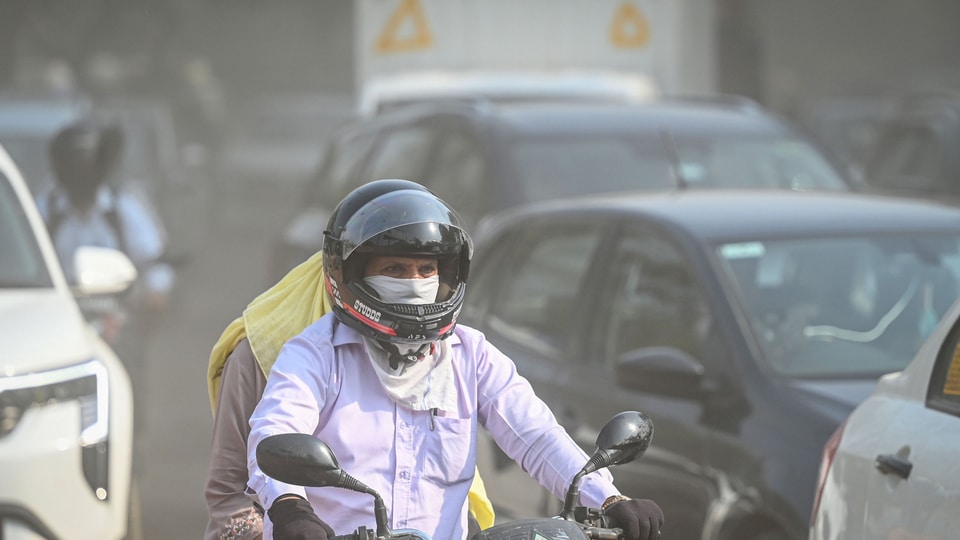
Based in this metric, the BS is split into five categories: BS-I (before 2005); BS-II (2005-2010); BS-III (2010-2017); BS-IV (2017-2020) and BS-VI (April 2020 onwards). (Sanchit Khanna/ HT Photo/ Representational)

Bharat Stage (BS) emission standards are India’s vehicle emission norms, modelled on European standards. Introduced by the government to control air pollution, these norms set limits on the pollutants vehicles can emit. Knowing a vehicle’s emission standard can also help owners verify its compliance status and understand whether any restrictions on vehicle use apply to it.

Also Read | Greater Noida authority sets up 224 anti-smog guns to mitigate air pollution

What is the BS number based on?

A vehicle’s Bharat Stage classification depends primarily on the emission standard it was designed and certified to meet, rather than its year of manufacture alone. The manufacturing date can offer a useful indication, but it is not definitive.

India’s major emission standards have been introduced in stages. BS-I norms came into effect in the early 2000s, followed by BS-II, BS-III and BS-IV. BS-VI norms became mandatory for new vehicles covered by the rules from April 1, 2020, with India skipping BS-V norms.

The transition did not occur nationwide for every vehicle category at the same time. For instance, BS-III norms were introduced for certain vehicles in selected cities in 2005 before being extended nationwide in 2010. BS-IV norms were introduced in selected areas before becoming nationwide in 2017.

Although the year of manufacture provides a broad indication of a vehicle’s emission standard, there can be exceptions. Some manufacturers introduced BS-VI-compliant models before the nationwide deadline. Therefore, owners should verify the classification through official vehicle documents or the manufacturer rather than relying on the manufacturing year alone.

How to check if my vehicle is BS-VI compliant?

The most reliable way to establish a vehicle’s emission standard is to check its registration and manufacturer documents.

A vehicle’s Registration Certificate (RC) may list the applicable emission standard under fields such as “Fuel Norms”, “Emission Norms” or “Norms Type”. The exact field name can vary across records and registration systems.

Another useful document is Form 22, the initial certificate of compliance issued by the manufacturer. It specifies the emission norms applicable to the vehicle. Form 21, by contrast, is the vehicle’s sale certificate submitted as part of the registration process and should not be confused with the emission compliance certificate.

If a physical copy of the RC is unavailable, owners can check their vehicle details through the government’s Parivahan portal or the relevant state transport department’s records.

Also Read | Shelar proposes weekly bar on construction to curb air pollution

Can I check BS-VI compliance using the VIN?

If the vehicle documents are unavailable, the Vehicle Identification Number (VIN) or chassis number can help identify the vehicle and obtain its manufacturing details. A standard VIN typically has 17 characters and can often be found on the vehicle’s dashboard near the windscreen, on a manufacturer’s label or in the engine compartment. The exact location varies by model.

However, the VIN does not universally encode the vehicle’s Bharat Stage classification. The position and meaning of its characters can vary by manufacturer, and the year code alone cannot confirm whether a vehicle is BS-VI compliant.

Owners can use the VIN or chassis number to seek the vehicle’s specifications and emission classification from the manufacturer or an authorised dealer. Manufacturer labels and compliance documents may also provide the relevant information.

A Pollution Under Control (PUC) certificate serves a different purpose: it records the vehicle’s compliance with applicable in-use emission limits at the time of testing. It should not be treated as definitive proof of the vehicle’s original BS classification.

Why are BS-VI-compliant vehicles important?

Moving to stricter Bharat Stage emission standards has helped reduce pollution from new vehicles. Compared with BS-IV, BS-VI norms impose tighter limits on several pollutants, including nitrogen oxides and particulate matter, particularly for diesel vehicles.

BS-VI fuel also has a lower permissible sulphur content than BS-IV fuel. The limit fell from 50 parts per million under BS-IV to 10 parts per million under BS-VI, enabling the use of more advanced emission-control technologies.

These improvements can help reduce harmful emissions and improve air quality, contributing to better public health.

However, owning an older BS-III or BS-IV vehicle does not automatically mean that it is illegal to use or that it must be replaced immediately. Restrictions depend on the applicable laws, court directions, vehicle category, age, registration location and any local pollution-control measures in force.

In areas experiencing severe air pollution, authorities may impose temporary or category-specific restrictions on vehicle use. Owners should therefore check the latest applicable rules before assuming that their vehicle is either permitted or prohibited from operating.

Share This Article
Facebook Email Copy Link Print
Previous Article Joshimath Helicopter Crash: Rescue Operation Underway To Recover 6 Bodies From Remote Site
Next Article Anti-India Slogans Return In Bangladesh: ‘Delhi Nahi, Dhaka’ Chanted At Protest In Capital
Leave a Comment Leave a Comment

Leave a Reply Cancel reply

Your email address will not be published. Required fields are marked *

You Might Also Like

BusinessLifestyleStartup

Toxic release date announced: Yash’s film to now hit the screens in August after multiple delays

Kannada star Yash's upcoming movie, Toxic A Fairytale for Grown-Ups,…

3 Min Read
BusinessLifestyleStartup

Delhi man flags litter near India Gate, says ‘garbage is scattered everywhere’

A video showing litter scattered around India Gate in Delhi…

4 Min Read
BusinessLifestyleStartup

Parliament’s monsoon session is over, but hasn’t ended: here’s what it means

Parliament’s monsoon session is over. But the monsoon session has…

1 Min Read
BusinessLifestyleStartup

Delhi grapples as AC fires rise: Here’s how to prevent one at your residence and what to do in case of an incident

The Sunday morning fire at a residential building in east…

4 Min Read
Next India MagazineNext India Magazine
Follow US
© 2026 Next India Magazine powered by India Times Now. All Rights Reserved.
Welcome Back!

Sign in to your account

Username or Email Address
Password

Lost your password?