

By using this site, you agree to the Privacy Policy and Terms of Use.
Accept
Next India Magazine
  • Home
    • Home 2
    • Home 3Hot
    • Home 4
    • Home 5New
  • Home
  • Opinion

    That Provide Critical Analysis on Political Decision-Making

    krutikadalvibiz@gmail.com

    Analyzing Global Dynamics and Unraveling Key Policy Initiatives

    krutikadalvibiz@gmail.com

    Luxurious Stays Redefining Hospitality at Hotel Havens

    krutikadalvibiz@gmail.com

    Electric Cars Subsidies by German Taxpayers End Up on Foreign Roads

    krutikadalvibiz@gmail.com

    Challenge and Inspire Future of Political Thought

    krutikadalvibiz@gmail.com

    Assessing the Diplomatic Challenges and Global Security

    krutikadalvibiz@gmail.com
  • World
  • Politics
  • Market
  • Health
  • Insurance
  • Pages
    • Blog Index
    • Contact US
    • Search Page
    • 404 Page
    • Technology
    • World
  • Pages
    • Blog Index
    • Search Page
    • 404 Page
  • Technology
    TechnologyShow More
    Dr. Nishant Sawant: The Mind Behind Secure Digital Progress
    4 Min Read
    NASA’s Artemis II Mission Rekindles Humanity’s Dream of Deep Space Exploration
    5 Min Read
    Buying a Car Will Soon be Like Buying a Phone, Why Your Next Car Could be an EV
    Hands-On With the iPhone 13, Pro, Max, and Mini
    4 Min Read
    Explained: What are Smart Glasses and How Do It Work?
    4 Min Read
  • Posts
    • Post Layouts
      • Standard 1
      • Standard 2
      • Standard 3
      • Standard 4
      • Standard 5
      • Standard 6
      • Standard 7
      • No Featured
    • Gallery Layouts
      • Layout 1
      • Layout 2
      • layout 3
    • Video Layouts
      • Layout 1
      • Layout 2
      • Layout 3
      • Layout 4
    • Audio Layouts
      • Layout 1
      • Layout 2
    • Post Sidebar
      • Right Sidebar
      • Left Sidebar
    • Review
      • Stars
      • Scores
      • User Rating
    • Content Features
      • Highlight Shares
      • Inline Mailchimp
      • Print Post
      • Inline Related
      • Source/Via Tag
      • Reading Indicator
      • Content Size Resizer
    • Table of Contents
      • Full Width
      • Left Side
    • Sponsored Post
  • Contact
  • Pages
    • Search Page
    • 404 Page
Reading: Films like Satluj strengthen India’s democratic core
SUBSCRIBE
Next India MagazineNext India Magazine
Font ResizerAa
  • My Saves
  • Economics
  • Technology
  • My Interests
  • World
  • My Feed
  • History
  • Business
  • Technology
  • Lifestyle
  • Fashion
  • Health
  • Technology
  • World
Search
  • Pages
    • Blog Index
    • Contact Us
    • Search Page
    • 404 Page
  • Home
    • Home 1
    • Home 2
    • Home 3
    • Home 4
    • Home 5
  • Home
  • Blog
  • Categories
    • Technology
    • Lifestyle
  • Personalized
    • My Feed
    • My Saves
    • My Interests
    • History
  • Demos
  • Categories
    • Technology
    • Business
    • Fashion
    • Economics
  • Bookmarks
  • Categories
    • Technology
    • Health
    • World
  • More Foxiz
    • Blog Index
    • Sitemap
  • Bookmarks
  • Contact
  • More Foxiz
    • Sitemap
Have an existing account? Sign In
Follow US
  • Home
  • World
  • Contact
  • Blog
© Foxiz News Network. Ruby Design Company. All Rights Reserved.
BusinessLifestyleStartup

Films like Satluj strengthen India’s democratic core

India Times Now
Last updated: July 8, 2026 2:18 am
India Times Now
6 Min Read
Share
SHARE

Every once in a while, a film comes along that deserves to be judged not merely by its cinematic merit but by the questions it compels society to ask. Satluj is one such film.

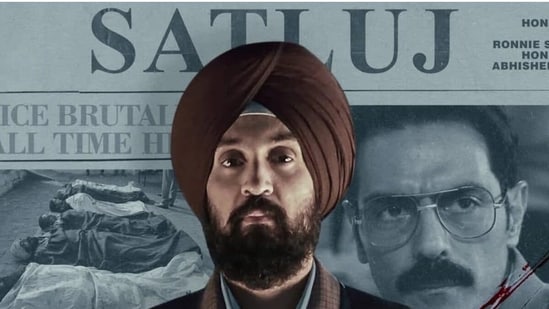
Satluj is not only about the State power, it is primarily about conscience and character. (Sutlej movie poster)

Ironically, before audiences could even decide its relevance, the film itself has become the very issue it seeks to address. Delayed for nearly three years by legal challenges and censorship-related hurdles, it eventually found release not in theatres but on an OTT platform — only to be withdrawn within two days. Why do certain chapters of our history continue to make us so uncomfortable that even telling their story becomes an uphill battle?

At one level, Satluj is set against one of the darkest chapters in independent India’s history. At another, it is a timeless meditation on conscience, courage and the moral choices that confront ordinary citizens.

There should be no ambiguity here. Every sovereign nation has the solemn duty to defeat terrorism with determination. Those entrusted with protecting the nation often have to take extraordinarily difficult decisions under extraordinary circumstances, and history should acknowledge that reality.

Yet, mature democracies are distinguished from the forces they fight by one crucial principle — they remain governed by the rule of law. The line between using legitimate force against terrorism and descending into abuse of power is often thin, but inviolable. When counter-insurgency slips into extortion, fake encounters, torture, enforced disappearances or indiscriminate killings, the moral authority of the State itself begins to erode.

But Satluj is not only about the State power, it is primarily about conscience and character.

What makes the protagonist remarkable is not that he possesses extraordinary powers or occupies high office or is a charismatic leader. Quite the contrary. He is a banker leading a comfortable, successful life and is even presented with an opportunity to seek asylum abroad, leaving behind the turmoil engulfing his homeland. He chooses the far more difficult path of listening to his conscience. That decision transforms him from an ordinary individual into an extraordinary citizen.

Satluj reminds us that history is often changed not by the powerful, but by ordinary people who refuse to remain silent when silence becomes complicity. It compels us to confront a distinction that mature democracies must never lose sight of. The legitimacy of the State rests on remaining faithful to the rule of law, even when tackling complex situations like terrorism. The allegations surrounding the disappearance of nearly 25,000 people during the troubled years of insurgency in Punjab continue to cast a long and painful shadow. Whatever one’s interpretation of individual cases, there can be little disagreement that democracies cannot afford to become indifferent to questions of accountability. The moral strength of a nation lies not in denying uncomfortable episodes but in possessing the confidence to examine them honestly.

Satluj, ultimately, is a story about institutions. A reassuring message from the film is that even during periods of immense fear and political turbulence, not every institution surrendered. The judiciary continued to provide a forum where injustice could still be challenged. Sections of the media persisted in asking uncomfortable questions despite enormous pressure. Brave investigators, lawyers, and citizens refused to look away. Democracy survives because enough people choose integrity over convenience; courage over silence; and duty over self-interest.

That lesson may be more relevant today than ever before.

In today’s times, information is available instantly, but perspective is increasingly getting scarce. If our cultural diet consists only of spectacle, fantasy and instant gratification, we risk producing citizens who know every trending reel but little about handling moral dilemmas that have shaped the nation they inherit.

Films such as Satluj remind us that democracy is preserved not only by soldiers guarding borders but also by judges defending justice, journalists asking inconvenient questions, police officers refusing unlawful orders, and ordinary citizens choosing courage over comfort. Stories like these build historical perspective, cultivate moral imagination, and, above all, they force each viewer to ask a profoundly uncomfortable question: What would I have done?

And there are far too few films today courageous enough to ask them. A nation is ultimately defined by the values it chooses to pass on to its next generation. If Satluj inspires even a handful of young Indians to believe that an ordinary citizen, armed with nothing more than integrity and the courage to act, can make an extraordinary difference, it will have achieved something far greater than cinematic success. The government must introspect if our next generation deserves this opportunity.

Prabal Basu Roy is a Sloan Fellow of the London Business School and a board member. The views expressed are personal


Share This Article
Facebook Email Copy Link Print
Previous Article Capricorn Horoscope for Today July 08, 2026, Wednesday – Capricorn Horoscope For Today, July 08, 2026, Wednesday – Slow And Steady Efforts Lead To Success
Next Article Cancer Horoscope Ravindar Chandrasekaran: Numerology and Career
Leave a Comment Leave a Comment

Leave a Reply Cancel reply

Your email address will not be published. Required fields are marked *

You Might Also Like

BusinessLifestyleStartup

Ferrari ki eco-friendly sawaari: F1 stars unveil first EV

While rival luxury carmakers like Lamborghini and Porsche are putting…

1 Min Read
BusinessLifestyleStartup

Why Bob Baffert doesn’t have a horse at Preakness Derby. Crude Velocity decision explained

Bob Baffert is absent from the Preakness Stakes field for…

5 Min Read
BusinessLifestyleStartup

Theegala survives triple bogey to make cut, tied with McIlroy at T-30

Newton Square , Indian-American golfer Sahith Theegala slipped from a…

3 Min Read
BusinessLifestyleStartup

‘Very limited experience…’: Experts provide key update after 3 evacuated from hantavirus-hit ship

Doctors have spoken out about hantavirus after three people suspected…

6 Min Read
Next India MagazineNext India Magazine
Follow US
© 2026 Next India Magazine powered by India Times Now. All Rights Reserved.
Welcome Back!

Sign in to your account

Username or Email Address
Password

Lost your password?