



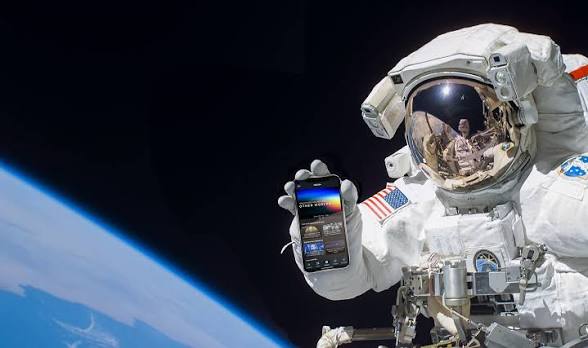
In a moment that has captured the imagination of millions across the globe, NASA’s Artemis II mission has emerged as one of the most significant international developments of the day. The mission marks humanity’s long-awaited return to deep space exploration, becoming the first crewed lunar flyby mission in more than five decades. Scientists, students, space enthusiasts, and world leaders have all turned their attention toward this groundbreaking achievement, which symbolizes a new era of technological ambition and global scientific collaboration.
The Artemis II mission is not just another space project; it represents a bold statement about the future of human civilization. Since the historic Apollo missions of the 1960s and 70s, no human crew has traveled beyond low Earth orbit. Artemis II changes that narrative completely. Carrying a team of astronauts aboard NASA’s Orion spacecraft, the mission aims to test critical systems and prepare for future lunar landings that could eventually pave the way for human settlements on the Moon and even missions to Mars.
What makes this event even more remarkable is the timing. At a period when the world is facing geopolitical tensions, economic uncertainty, climate challenges, and rapid technological disruptions, the Artemis II mission has offered something rare — a sense of shared global inspiration. Social media platforms have been flooded with reactions from people celebrating the mission as proof that humanity can still unite around science, discovery, and innovation.
Experts believe the success of Artemis II could redefine international space cooperation. NASA has partnered with multiple organizations and agencies across different countries, highlighting how space exploration is no longer the dream of a single nation but a collaborative effort for the future of humankind. Engineers and scientists involved in the mission have spent years developing technologies capable of surviving the harsh conditions of deep space. Every stage of the mission, from launch systems to astronaut safety protocols, reflects decades of research and determination.
The mission also carries enormous educational and economic significance. Universities, technology companies, and research institutions are expected to benefit from the innovations generated through the Artemis program. From advanced robotics to sustainable energy systems and next-generation communication technologies, the ripple effect of space exploration often extends far beyond rockets and astronauts. Many everyday technologies used today, including satellite communication and medical imaging advancements, originated from earlier space programs.
Another major reason why the Artemis II mission has become today’s defining global story is its emotional value. For older generations, it revives memories of the Apollo era — a time when humanity first stepped onto the Moon. For younger generations, it creates a fresh sense of possibility. The mission reminds people that exploration remains deeply connected to human identity. Even in an age dominated by artificial intelligence and digital experiences, the desire to physically explore unknown worlds continues to inspire humanity.
Environmental scientists are also paying close attention to the mission. Research conducted during Artemis II may help scientists better understand how humans can survive in extreme environments while developing sustainable technologies for Earth itself. Many experts argue that solutions created for space missions could eventually support renewable energy, water recycling, and habitat sustainability back on our planet.
The excitement surrounding Artemis II proves that space exploration still holds extraordinary power to unite people across borders, cultures, and generations. Beyond the scientific data and technical achievements, the mission represents hope — hope that humanity can continue pushing boundaries, solving impossible challenges, and dreaming beyond the limitations of today.
As the world watches Artemis II move forward, one message becomes clear: the future of exploration has officially begun again.