



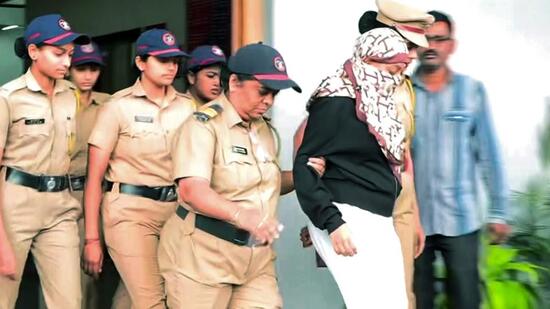
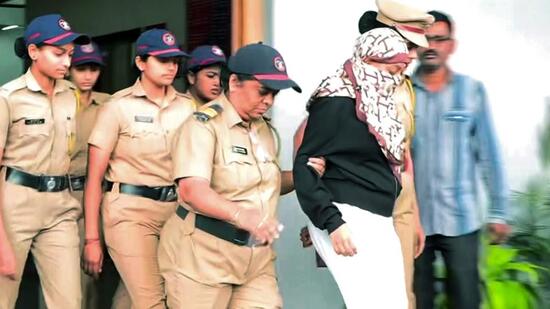
It is often the unthinkable that happens. It was unthinkable enough that Ketan Agarwal’s fiancé Siya Goyal, with her boyfriend Chetan Chaudhary, murdered Ketan by pushing him off a cliff in Pune. What is more unthinkable, though, is that several media and social media commentators are now busy excusing and explaining away the murder.
According to writer Chetan Bhagat, Siya ”couldn’t say no to marriage.” Thousands of young people from backgrounds very much like Siya’s say no to marriage every day and tell their parents they are in love with someone or they do not with to marry or they with to marry a same-sex partner. Why couldn’t Siya?
Siya failed Class 12 and, according to her mother, was not interested in higher studies. Her parents tried to marry her into a family that would enable her to continue the lifestyle to which she was accustomed. What would they have done if she had told them she did not want to marry Ketan? Would they have murdered her? It seems highly unlikely. They would have been upset because they had already spent a lot of money on the engagement, the wedding venue, and so on, but after some fighting, scolding, and weeping, they would have accepted her decision.
According to Bhagat, adults “fall in love and date.” The fact is that some adults do and some don’t. Barkha Dutt’s article The Wages of Society’s Focus on Marriage overlooks two facts. First, in a country of 1.4 billion people, the vast majority of marriages do not end in misery. Second, there is just as much if not more violence between boyfriends and girlfriends as between spouses.
The fourth-century Kamasutra says that the gandharva vivaha (what is now called love marriage) is the best type of marriage. But that does not mean a family-arranged marriage is bad. Plenty of adults have happy family-arranged marriages. Some so-called love marriages (most of which are actually self-arranged marriages) succeed and are happy while others are miserable or end in divorce. Exactly the same is true of family-arranged marriages. Many adults, even in the West, welcome help from family and friends.
A good life and a good marriage are based on dharma (in the sense of basic values and the law of being human). Dharma does not include killing people just to avoid unpleasantness. Dharma requires telling the truth. Shakuntala married Dushyanta in her father’s absence without his permission but he accepted it when he returned. Many young people today introduce their parents to their lovers, and most middle-income and upper-income parents sooner or later accept, and even pay for the weddings. As I document in my book Love’s Rite, some parents from the 1980s, have even accepted and participated in their children’s same-sex weddings.
Siya was not an old-fashioned rural girl. She dressed as she pleased, went out when she wanted, and drank alcohol. She proclaimed her love for Ketan on social media. Nor was she forced into marriage with a stranger. Her family and Ketan’s had been friends for years. She regularly visited Ketan’s family at home, even on her own. This is not a traditional practice. She went on extended dates with both Ketan and her boyfriend Chetan.
Siya couldn’t be bothered to talk to her parents because she thought it easier to pass off murder as an accident. She and Chetan would have succeeded had it not been for the alertness of the Pune police.
Commentators who sympathise with Siya want to have it both ways. They agree that murder is wrong but they still want to blame Siya’s parents. It is fashionable to celebrate some communities and castigate others, and it is always fashionable to denigrate the rich. Bhagat too condemns traditional “business families” (he doesn’t name a community but we all know which one he means) as “hollow, regressive and shallow”, claims they are devoid of innovation, and says that they spend their time “obsessing over vanity” by arranging extravagant weddings for their children. He seems unaware that many young people enjoy and even demand expensive weddings.
He berates those young people who join their parental businesses and sell “steel pipes and rubber wires” as their fathers and uncles did. Why? Who does he think should sell pipes and wires? Is it all right with him if lawyers’ children become lawyers and doctors’ children become doctors? Or would he like to prohibit children from ever following their parents’ professions or running their parents’ businesses?
Commentators also, with boring Puritanism, tells us that no one should have an expensive wedding. Do they realise that their lifestyles and supposedly non-tacky weddings might seem wildly extravagant to their plumbers or to their local shopkeepers where they buy pipes and wires?
A free society is one in which people can have any kind of wedding they like and marry someone they choose on their own, or with their parents’ and friends’ help, and where they can start their own businesses or inherit their parents’ businesses. Free individuals are those who have the courage to tell their parents the truth about themselves and not sneak around in order to cheat on their fiancé as Siya did.
There are no excuses for Siya and Chetan murdering Ketan – none.
Ruth Vanita is the author of many books including The Dharma of Justice in the Sanskrit Epics. The views expressed are personal