


India
-Oneindia Staff

The Punjab government has brought private school fees under a tighter regulatory framework, capping annual fee hikes at 5 percent and ordering refunds where schools have raised charges beyond the permitted limit over the past three years. The move is expected to affect more than 32 lakh students enrolled in nearly 7,800 private unaided schools across the state.

Punjab’s government has capped annual fees for private schools at 5% via the Regulation of Fees Ordinance, 2026, mandating fee data uploads and refunds for past overcharges, and including transport and other levies under regulatory control.
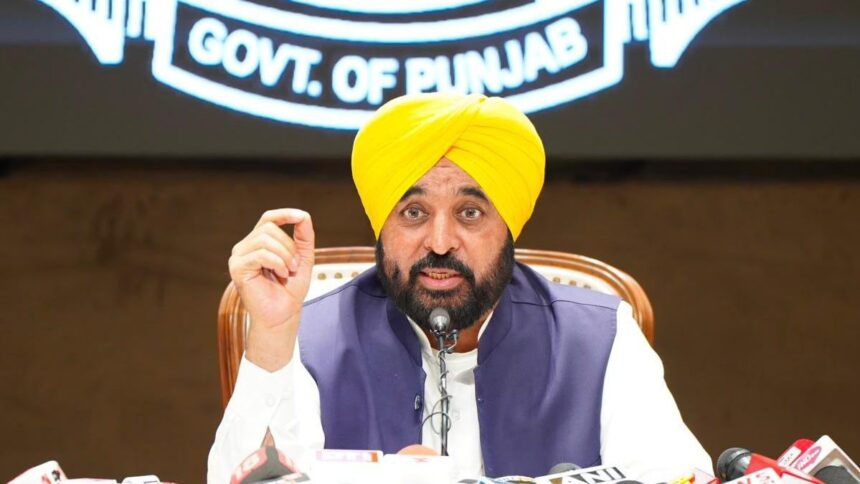
Chief Minister Bhagwant Singh Mann said the Punjab Regulation of Fees of Un-aided Educational Institutions (Amendment) Ordinance, 2026 has come into force after approval from the Governor. The ordinance requires every private educational institution to upload fee records for the past four years on a designated portal within 10 days.
Punjab private school fee cap: What changes now
The most significant change is the 5 percent ceiling on annual fee increases. Any school seeking to raise fees beyond this limit will need prior approval from the regulatory authority. The government has also widened the definition of school fees, bringing transport charges, building funds and other miscellaneous levies within the same regulatory net.
This means schools will not be able to bypass the fee cap by shifting collections into separate heads. According to the Chief Minister, any amount collected from parents, regardless of how it is described, will be treated as fee for regulatory purposes. This provision is aimed at curbing indirect increases that often add to household education costs.
The ordinance also provides for refunds in cases where private schools have increased fees by more than 15 percent in total during the previous three years. Schools found to have collected excess amounts will have to return the extra money to parents after the fee data is examined.
Mann said the state government would use the uploaded records to determine the actual fee collected by schools. He also said a forensic audit would be conducted to identify amounts collected under different heads and assess whether institutions had used fee structures to make profit in the name of education.
District panels to examine fee hikes
The implementation of the ordinance will be handled through district-level regulatory committees headed by Deputy Commissioners. These committees will scrutinise fee increase proposals and examine whether schools have complied with the new provisions. The structure gives district authorities a direct role in controlling school-level fee decisions.
The government’s position is that private unaided schools cannot make arbitrary fee increases without accountability. Mann said education must remain a public welfare function and not become a commercial venture. He argued that unchecked charges had placed an avoidable burden on families and distorted the purpose of schooling.
“Education is a noble and sacred work. It is a means of public welfare, not a commercial enterprise to be used for profit. Ensuring access to quality education for every student of Punjab is one of the top priorities of our government,” the Chief Minister said while announcing the measure.
The ordinance also lays down penalties for violations. A school breaching the rules will face a fine of Rs 50,000 for the first violation and Rs 1 lakh for the second violation. A third violation may lead to stricter action, including cancellation of recognition, according to the Chief Minister.
Why the ordinance matters for parents
For parents, the immediate relevance lies in transparency. Private schools will now have to disclose how much they collected over the past four years. This can help authorities compare year-wise increases, identify unusually high hikes and check whether schools used additional charges to raise the overall cost of education.
The inclusion of transport and building-related charges is also important. In many private schools, families do not pay only tuition fee. They also bear costs linked to buses, annual charges, development funds, activity fees and other school-specific heads. By treating these collections as part of the fee, the ordinance seeks to capture the full financial burden on parents.
The refund provision could become a key point of enforcement. If a school’s total fee increase over three years exceeds 15 percent, the excess amount will have to be returned. The practical impact will depend on how quickly the portal data is examined and how strictly district committees act on complaints or irregularities.
The government has framed the ordinance as a corrective step against profiteering in education. Mann said previous governments had allowed private institutions to impose unnecessary charges on students and parents. He also referred to Supreme Court guidelines, saying educational institutions cannot earn profit by collecting fees through multiple accounts.
Private unaided schools occupy an important space in Punjab’s education system, particularly in urban and semi-urban areas. Many families choose them for English-medium instruction, perceived academic standards, transport access and infrastructure. At the same time, fee increases have remained a recurring concern for middle-class and lower-middle-class households.
The ordinance does not abolish fee increases. It allows annual hikes up to 5 percent and provides a route for higher increases with approval. The policy question will now shift to enforcement, school-level compliance, audit quality and the speed at which parents receive relief in cases of overcharging.
With the ordinance now in force, the first test will be the 10-day deadline for schools to upload fee records. The effectiveness of the reform will depend on transparent scrutiny, timely refunds where due and consistent action against violations across districts.