



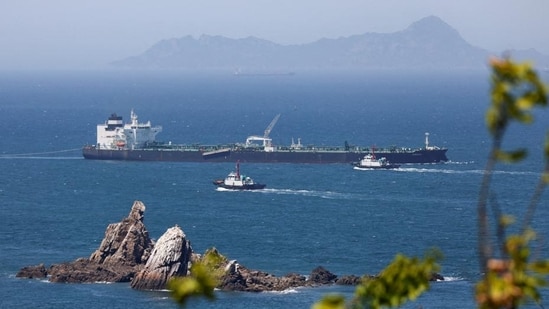
At least 15 seafarers, many of them Indians, have died in attacks on merchant vessels in and around the Strait of Hormuz since the US-Israeli war on Iran began on February 28.
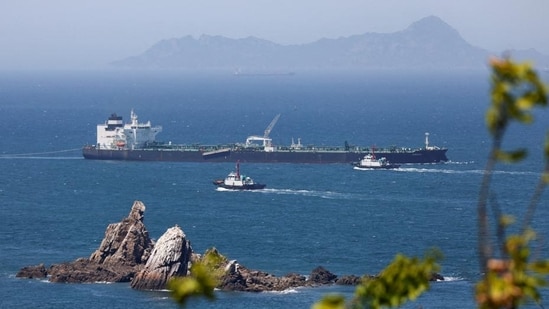
The figure of the total number of seafarers killed, as stated in a UN report published last month, stood at 14 until recently, but rose by one as the UAE confirmed the killing of one more sailor in an Iranian attack on a tanker. Track latest updates about Iran and US here
The latest casualty also involved an Indian sailor, and was reported after Iranian missiles struck two UAE oil tankers on Tuesday. The attack also wounded six Indians and two Ukrainians, according to an AP report. India has summoned Iran’s deputy chief of mission Mohammad Javad Hosseini to protest over the incident.
Forty-six attacks on commercial shipping have been confirmed since the beginning of the war, according to the International Maritime Organization (IMO).
When Indian sailors died in the US-Iran crossfire
March 1 – The first reported Indian casualty came when the Marshall Islands-flagged oil tanker MKD Vyom was attacked in the Strait of Hormuz on March 1, a day after the US and Israel attacked Iran and assassinated their Supreme Leader.
One Indian crew member was killed. While no group claimed responsibility, the United States blamed Iranian forces for the strike. The IMO later listed the vessel among confirmed fatal incidents.
March 1 – Later the same day, the Palau-flagged tanker Skylight was attacked near Oman’s Musandam Peninsula. Two Indian sailors were reportedly killed. The incident took place as Iran exchanged strikes with the United States and Israel.
May 8 – On May 8, another Indian sailor lost his life after a wooden dhow carrying Indian crew caught fire near the Strait of Hormuz.
June 9 – Three Indian seafarers were killed after the US struck the Palau-flagged oil tanker MT Settebello off the coast of Oman.
US forces said the vessel violated the blockade on Iranian ports after ignoring warnings before the strike. The three victims were later identified as Aditya Sharma, a cadet, Shivanand Chaurashiya, a fitter, and Patnala Suresh, a chief engineer.
July 12 – On Sunday, Cyprus-flagged merchant vessel GFS Galaxy came under attack off the coast of Oman with 11 Indian seafarers on board. The ministry of external affairs (MEA) said 10 Indian nationals were rescued, while one sailor remained missing.
July 14 – An Indian sailor was killed and eight crew, including six Indians, were injured after Iranian cruise missiles struck Emirati oil tankers Mombasa and Al Bahiyah while they were transiting the Strait of Hormuz in Omani waters.
The UAE said fires broke out on both tankers but were later extinguished. Four of the injured suffered serious wounds.
Why Indians are among the worst affected
Nine Indian-linked tankers with 198 Indian crew remain stranded near the Strait of Hormuz after shipping traffic through the strategic chokepoint fell to its lowest level since the US-Iran memorandum of understanding (MoU) came into force last month, as per Bloomberg.
The Strait of Hormuz is one of the world’s busiest shipping lanes, handling about 20% of global oil trade. Thousands of merchant ships, including oil tankers, LPG carriers, container vessels and bulk carriers, transit the waterway every year. India also relies heavily on the Gulf for its energy imports.
The IMO has repeatedly said that around 20,000 seafarers remain exposed to the deteriorating security situation in the Gulf and has asked all parties to protect civilian shipping and freedom of navigation.