


The Delhi High Court is examining Arvind Kejriwal’s recusal application, focusing on potential conflicts of interest linked to panel lawyers and government involvement, with broader implications for judicial neutrality in politically sensitive cases.
India
-Oneindia Staff

Arvind Kejriwal’s recusal application before the Delhi High Court has triggered fresh legal debate. The application, filed in an ongoing high-profile Delhi case, lists ten grounds. These grounds question judicial impartiality. The matter now places extra focus on how courts handle possible conflicts and perceived bias in politically sensitive investigations.

Arvind Kejriwal sought recusal from Delhi High Court, questioning judicial impartiality due to Justice Swarnkanta Sharma’s children being government panel lawyers, potentially influenced by Solicitor General Tushar Mehta’s role in case assignments.
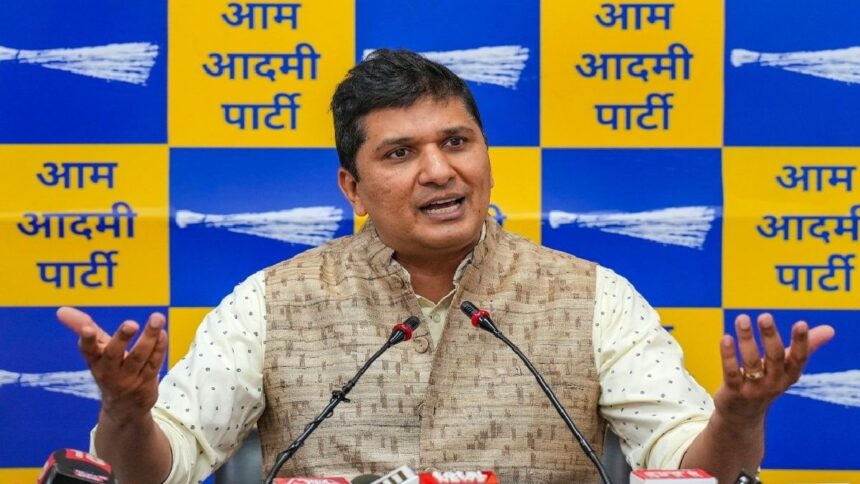
Aam Aadmi Party’s Delhi convenor Saurabh Bharadwaj said the application highlights one specific concern related to Justice Swarnkanta Sharma. According to the filing, two children of Justice Sharma serve as panel lawyers for the central government. They also appear before the Supreme Court and the Delhi High Court in various matters.
Arvind Kejriwal recusal application and Delhi High Court questions on judicial impartiality
The application further notes the role of Solicitor General Tushar Mehta in this backdrop. Tushar Mehta is representing the Enforcement Directorate (ED) and the Central Bureau of Investigation (CBI) in the case. The document states that Tushar Mehta has a say in assigning cases to panel lawyers. This link has been projected as a possible source of concern.
Kejriwal’s legal team has argued before the court that these circumstances raise a potential “conflict of interest”. The submission claims that such links create a “reasonable apprehension” in the mind of a litigant. The concern raised is whether a judgment can appear fully neutral when such indirect institutional relationships exist.
Recusal application में अरविंद केजरीवाल जी ने 10 points माननीय अदालत के सामने रखे।
उनमें से एक साधारण बात, जो आमतौर पर समझ में आती है, यह है कि Justice Swarnkanta Sharma जी के दो बच्चे हैं। दोनों बच्चे केंद्र सरकार के पैनल के वकील हैं, जो सुप्रीम कोर्ट और हाई कोर्ट में… pic.twitter.com/6kvHeR8HZN
— AAP (@AamAadmiParty) April 21, 2026“>
Arvind Kejriwal recusal application, Delhi High Court response and judicial impartiality debate
During the hearing, both the CBI and the court acknowledged that the factual assertions in the application are correct. However, it was clarified that the real issue lies in how those facts should be evaluated. The question of what legal conclusion follows from these facts has been left to judicial reasoning.
Key players and their roles in the Arvind Kejriwal recusal application before the Delhi High Court and its judicial impartiality debate are outlined below.
| Person/Institution | Role in case |
|---|---|
| Arvind Kejriwal | Applicant seeking recusal, raising concerns on impartiality |
| Justice Swarnkanta Sharma | Delhi High Court judge whose recusal is requested |
| Central Government Panel Lawyers | Include Justice Sharma’s two children, practising in Supreme Court and High Court |
| Tushar Mehta | Represents ED and CBI, involved in allocating cases to panel lawyers |
| CBI and ED | Investigating agencies represented before the Delhi High Court |
The controversy has renewed public discussion on transparency and fairness in the judiciary, especially where political stakes are high. Observers are watching the Delhi High Court’s handling of the recusal application. The eventual order may also decide whether this dispute develops into a wider constitutional issue around perceptions of bias.