



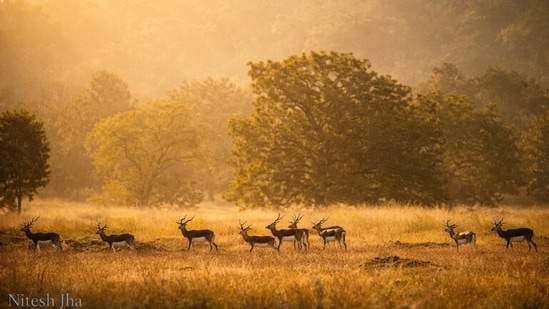
Chhattisgarh’s Barnawapara Wildlife Sanctuary has reported a steady increase in its blackbuck population following a reintroduction programme initiated in 2018, with current estimates placing the number of animals at close to 200.

Located in the Balodabazar-Bhatapara district and spread across approximately 245 square kilometres, the sanctuary had seen a decline in blackbuck numbers in the decades after the 1970s, when habitat degradation and human activity led to their local disappearance.
The reintroduction programme was undertaken after approval at a meeting of the State Wildlife Board in April 2018. Forest officials said the initiative involved scientific planning, habitat preparation, and sustained monitoring to support the species’ acclimatisation.
According to officials, the initial phase of the programme faced challenges, including the loss of some animals to disease. Subsequent interventions included improving enclosure conditions by adding sand layers for stability, enhancing drainage systems to prevent waterlogging, strengthening waste management practices, and ensuring veterinary supervision.
These measures contributed to stabilising the population, with gradual growth recorded over the years. Officials said the animals have adapted to the habitat, supported by controlled feeding and healthcare, and may be considered for phased release into open areas of the sanctuary.
The conservation effort was referenced in the latest episode of Mann Ki Baat, a radio programme hosted by Prime Minister Narendra Modi. State officials said the mention has drawn attention to ongoing wildlife conservation work in the region.
Blackbucks (Antilope cervicapra), native to the Indian subcontinent, are typically found in open grassland ecosystems. Males are characterised by dark coats and spiral horns, while females are generally lighter in colour and often lack horns. The species is known for its speed and daytime grazing behaviour.
Wildlife experts note that reintroduction programmes require long-term habitat management and monitoring to ensure sustainability. The Barnawapara initiative reflects a broader trend of state-led conservation efforts aimed at restoring species populations in protected areas.