


The Delhi excise policy case sees Kejriwal and Sisodia opting for satyagraha over personal appearance or legal representation. The Delhi High Court, led by Justice Swarana Kanta Sharma, reiterates judicial impartiality and maintains the integrity of proceedings, while considering the political implications of the leaders’ stance.
India
-Oneindia Staff

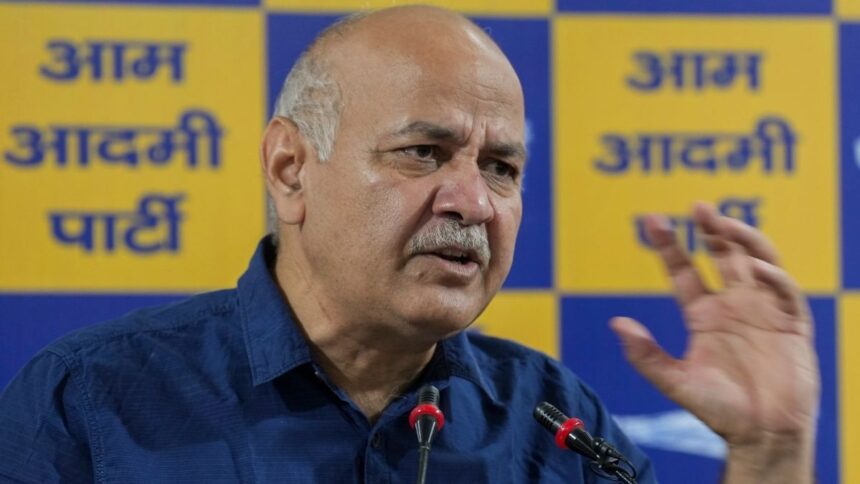
In the Delhi excise policy case, Aam Aadmi Party leaders Manish Sisodia and Arvind Kejriwal have both chosen not to appear before Justice Swarana Kanta Sharma. On 28 April 2026, Sisodia informed the Delhi High Court that there would be no personal appearance and no lawyer instructed on behalf of Sisodia in this matter.

In the Delhi excise policy case, Manish Sisodia and Arvind Kejriwal have refused to appear before Justice Swarana Kanta Sharma at the Delhi High Court, citing “satyagraha” and lack of fair relief, following the judge’s 20 April 2026 dismissal of Kejriwal’s recusal request.
Sisodia sent a letter to Justice Swarana Kanta Sharma stating that there was no expectation of fair relief. Sisodia wrote that there was no route left except “satyagraha”. In the letter, Sisodia added that no advocate would be appointed. Referring to Solicitor General Tushar Mehta, Sisodia wrote, “The future of your children is in the hands of Tushar Mehta.”
Delhi excise policy case, Manish Sisodia and Justice Swarana Kanta Sharma
Before Sisodia’s move, Arvind Kejriwal had already said that appearing in this court would not be possible while following Gandhian methods. Kejriwal stated, “I have full respect for the judiciary, but following the Gandhian principle of ‘satyagraha’, it is difficult for me to appear in this court.” Kejriwal had also refused representation through any lawyer in this case.
The choices by Kejriwal and Sisodia are being discussed widely in legal and political circles. Both leaders are key figures in the Delhi excise policy investigation. Their common stance, centred on “satyagraha”, has shifted the focus from a routine judicial hearing to questions about faith in the process before Justice Swarana Kanta Sharma at the Delhi High Court.
पूरे सम्मान और आदर के साथ, मैंने दिल्ली हाई कोर्ट की माननीय जस्टिस स्वर्णकांता शर्मा जी को पत्र लिखकर निवेदन किया है कि, वर्तमान परिस्थितियों में, मेरी अंतरात्मा मुझे इस मामले की कार्यवाही में उनके समक्ष, आगे भाग लेने की अनुमति नहीं देती।
मेरे लिए यह किसी व्यक्ति विशेष का… pic.twitter.com/RHesthiBTG
— Manish Sisodia (@msisodia) April 28, 2026“>
Arvind Kejriwal, Delhi High Court and Justice Swarana Kanta Sharma ruling
The present dispute intensified on 20 April 2026, when Justice Swarana Kanta Sharma rejected Kejriwal’s application seeking recusal. Kejriwal had requested that Justice Sharma step aside from hearing the excise policy case. The judge decided to continue, and delivered a detailed order through the Delhi High Court, addressing both legal points and concerns about institutional credibility.
In the 20 April ruling, Justice Swarana Kanta Sharma observed that withdrawing from the hearing without examination could have been the simpler path. However, Justice Sharma held that judicial dignity required a decision based on the merits of the record. According to the judge, the issue went beyond one petition and touched upon the standing of the judiciary as an institution.
The Delhi High Court under Justice Swarana Kanta Sharma underlined that impartiality of a judge is assumed unless clear, concrete material proves otherwise. The court stated that neither a litigant’s doubts nor personal impressions are enough to justify recusal. Justice Sharma stressed that allowing easy exits would harm the fairness expected in cases like the Delhi excise policy proceedings.
Justice Swarana Kanta Sharma also warned against any conduct that could weaken judicial procedure. The order stated that no person should be allowed to create situations that lower the level of the process. Justice Sharma remarked, “A lie, whether told in court or on social media, does not become the truth by being repeated a thousand times.”
Responding to Kejriwal’s allegations, Justice Swarana Kanta Sharma noted that no reliable proof had been presented to support charges of bias. The judge said there was no evidence that professional work of family members had influenced the case. The Delhi High Court maintained that the material produced did not meet the standard required to question the neutrality of Justice Sharma.
Political reaction to Delhi excise policy case and satyagraha stance
With Sisodia now refusing both physical presence and legal representation, the approach mirrors Kejriwal’s earlier stand. For the Delhi excise policy case, this means two principal accused leaders are choosing “satyagraha” over direct participation before Justice Swarana Kanta Sharma. Observers see this as a calculated political step, but its legal impact will depend on future High Court orders.
The key events in the excise policy matter involving Arvind Kejriwal, Manish Sisodia and Justice Swarana Kanta Sharma can be viewed through recent dates and decisions of the Delhi High Court, as the satyagraha line continues to shape their legal strategy.
| Date | Event | Person(s) involved |
|---|---|---|
| 20 April 2026 | Recusal plea dismissed by Delhi High Court | Arvind Kejriwal, Justice Swarana Kanta Sharma |
| 20 April 2026 | Court affirms presumption of judicial impartiality | Delhi High Court, Justice Swarana Kanta Sharma |
| 28 April 2026 | Letter refusing appearance or counsel submitted | Manish Sisodia, Justice Swarana Kanta Sharma |
The Delhi excise policy case now stands at a point where the court has asserted its authority, while Kejriwal and Sisodia have shifted to a protest-based stance of “satyagraha”. Justice Swarana Kanta Sharma continues to hear the matter, and the Delhi High Court’s earlier findings on fairness and evidence remain the operative judicial position.