


Cricket
oi-Ashish Rana

Delhi Capitals batter Nitish Rana found himself at the centre of an unusual controversy during the clash against Chennai Super Kings at the Arun Jaitley Stadium after his dismissal sparked widespread debate over whether the delivery should have been declared a dead ball.

Delhi Capitals batter Nitish Rana’s dismissal against CSK at Arun Jaitley Stadium sparked debate after a bail fell, but umpires maintained the catch was valid as it was not hit-wicket and the ball delivery preceded the bail dislodging according to MCC laws.
Batting on a difficult Delhi surface under strong windy conditions, Rana appeared to be one of the few DC batters comfortable at the crease before his innings ended in dramatic fashion. Attempting a sweep shot against CSK spinner Noor Ahmed, the left-hander top-edged the ball towards deep fine leg where the catch was completed successfully.
Viral Video Raises Questions Over Fallen Bails
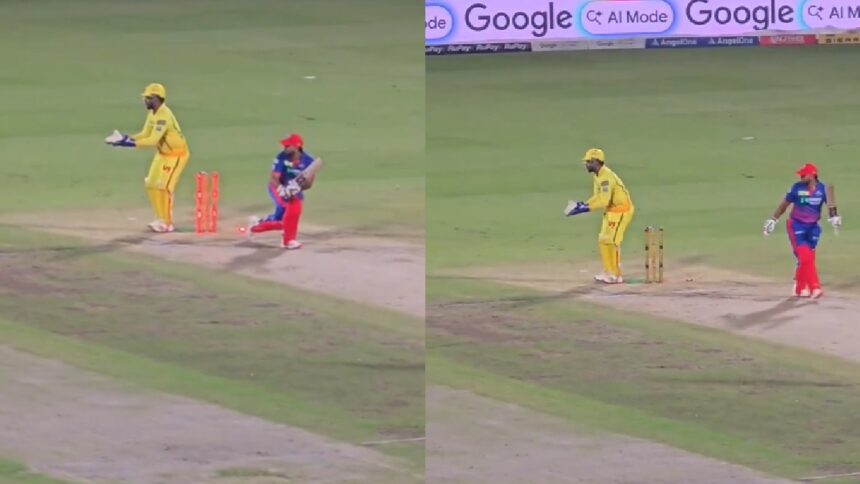
Soon after the dismissal, clips from the incident began circulating widely on social media. The footage appeared to show one of the bails falling off the stumps before Rana made contact with the delivery, leading to confusion among fans and experts alike.
Some questioned whether the umpires should have immediately signalled a dead ball, while others wondered if the dismissal could be treated as hit-wicket. There were also suggestions that wicketkeeper Sanju Samson may have accidentally disturbed the stumps from behind.
However, there was no indication during the match that the dismissal had been reviewed under hit-wicket laws, nor did the on-field officials raise concerns over interference from the wicketkeeper. The windy conditions in Delhi appeared to be the most likely reason behind the bails getting dislodged.
Why The Dismissal Was Not Considered Hit-Wicket
Under the Laws of Cricket, a batter can only be given out hit-wicket if they themselves disturb the stumps while attempting a shot or setting off for a run.
In Rana’s case, the batter did not appear to make contact with the stumps at any stage of the delivery. Since the bails had seemingly fallen due to external conditions and not because of the batter’s actions, the hit-wicket law was never applicable.
This ruled out one major area of confusion surrounding the dismissal.
What MCC Law Says About Dead Ball Situations
The bigger debate revolved around whether the umpires should have called the ball dead after the bails were disturbed.
According to MCC Law 20, an umpire can declare a dead ball under certain exceptional situations, including distractions affecting the striker or interruptions during the delivery stride.
Law 20.4.2.6 specifically states that either umpire shall call and signal Dead ball when “the striker is distracted by any noise or movement or in any other way while preparing to receive, or receiving a delivery.”
In this incident, the bail appeared to fall only after Noor Ahmed had already delivered the ball. There was also no visible sign that Rana had been distracted while preparing for or playing the shot.
Why Umpires Allowed Play To Continue
Because the disturbance to the stumps did not affect the batter directly and happened after the ball had been released, the conditions required for a dead-ball call were not fulfilled under the existing MCC laws.
As a result, Rana’s catch remained valid and the dismissal stood despite the fresh wave of controversy generated online after the match.