


Uttar Pradesh reports the highest level of government appointments through a merit based recruitment system powered by transparency and technology. Chief Minister Yogi Adityanath emphasises corruption-free processes, the role of recruitment bodies, and the broader economic impact including MSME growth and increased investment.
India
-Ashish Rana

Uttar Pradesh is now reporting the highest number of government appointments in India, with Chief Minister Yogi Adityanath linking this rise in jobs to strict transparency, use of technology and fixed accountability in recruitment. The Chief Minister said more than 9 lakh youth have secured government posts under this model since the present government took office.

Uttar Pradesh, led by CM Yogi Adityanath, reports India’s highest government appointments, issuing over 9 lakh jobs since 2017 via a merit-based, transparent system aided by technology. A recent event distributed 481 appointment letters.
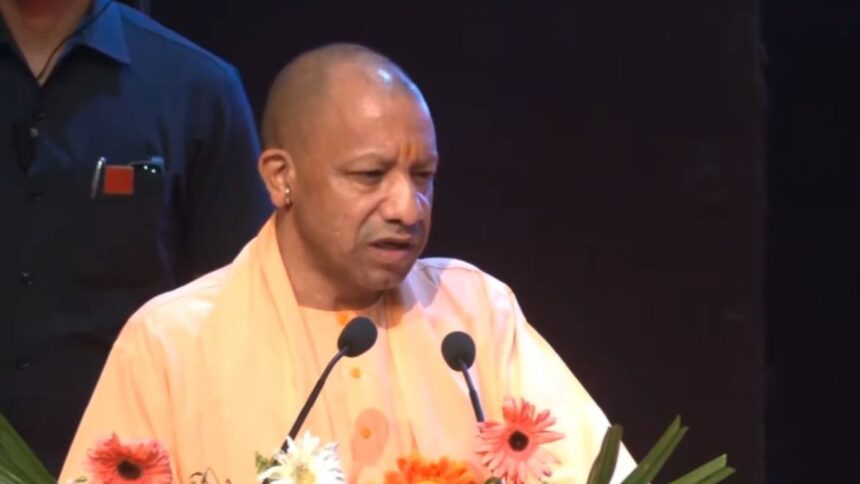
During a programme at Lok Bhavan on Thursday, Yogi Adityanath handed appointment letters to 481 selected candidates from the Ayush Department, Vocational Education and Skill Development Department and Department of Empowerment of Persons with Disabilities. The Chief Minister stated that this distribution is part of Prime Minister Narendra Modi’s “mission rozgar” being implemented across Uttar Pradesh.
Uttar Pradesh government jobs and shift to merit-based selection
Yogi Adityanath said that earlier recruitments in Uttar Pradesh were influenced by “paise, jaati, mat, mazhab aur kshetra”, which led to exploitation of deserving youth. According to the Chief Minister, the present system makes merit the only basis for selection, removing space for bribery or recommendation at any stage of the examination or appointment process.
The Chief Minister warned that when a bribe-giver entered the system in place of a deserving candidate, the damage lasted for 30–35 years of service. He said the government decided from the first day to end any scope for corruption or paper leaks in recruitment. Responsibility was clearly assigned to different commissions and boards, supported by technology.
Uttar Pradesh government jobs and recent appointment drives
Yogi Adityanath said that, over the last nine years, the state administration has set new records in issuing government appointment letters. According to the Chief Minister, “kisi ko kahin bhi sifarish karane ki naubat nahi aayi” during these drives, because the procedure stayed fair, transparent and simple for candidates at every level.
The government has, by its own count, given more than 9 lakh youths regular government jobs through these merit-based recruitments. Yogi Adityanath added that the ceremony on Thursday was the fourth appointment letter distribution programme held in the last 15 days, signalling a continuous hiring effort across departments within Uttar Pradesh.
Uttar Pradesh government jobs and role of recruitment bodies
The Chief Minister praised the Uttar Pradesh Public Service Commission and the Uttar Pradesh Subordinate Services Selection Commission for their role in this recruitment model. Yogi Adityanath said that due to “jawabdehi, takneek aur paaradarshita”, Uttar Pradesh has become the state issuing the highest number of appointment letters in the country.
According to Yogi Adityanath, no candidate needed to approach any middleman at any point after the examination. There was, the Chief Minister stated, no room for unethical means or pressure from influential individuals. He told the selected candidates that their appointment letters were the direct result of “saaf niyat aur spasht neeti” adopted in government recruitment.
Uttar Pradesh government jobs, economic growth and investment climate
Linking employment with broader economic changes, the Chief Minister said the government has managed to triple the state’s per capita income, annual budget and overall economy compared with earlier periods. He described Uttar Pradesh as a revenue-surplus state that now functions as a growth engine for the national economy.
Yogi Adityanath said the state is currently known for issuing the most appointment letters, building the largest network of expressways and giving the highest level of encouragement to farmers. The Chief Minister also claimed that welfare schemes are now reaching every social group, which, according to the government, supports both social security and economic activity.
Uttar Pradesh government jobs and MSME-led employment
The Chief Minister underlined that before 2017 the Micro, Small and Medium Enterprises sector in Uttar Pradesh was almost inactive, with no support structure and widespread despair among entrepreneurs. Yogi Adityanath said the situation has changed, and that Uttar Pradesh now holds the highest number of MSME units in the country.
Government figures presented at the event showed that 96 lakh MSME units in Uttar Pradesh are providing employment to more than 3 crore people. Yogi Adityanath added that over 4,000 large industries came to the state in the last year alone, while the number of large industrial units increased from 14,000 to more than 32,000 in nine years.
The Chief Minister pointed out that Uttar Pradesh, earlier often placed in the bottom three states on several national rankings, is now counted among the top three states. According to Yogi Adityanath, this shift is reflected both in job creation data and in how investors and workers now view opportunities inside the state.
Uttar Pradesh government jobs and skill development strategy
Yogi Adityanath highlighted the importance of the Vocational Education and Skill Development Department within this employment framework. With a steady flow of major investment proposals entering Uttar Pradesh, the Chief Minister said the department and its instructors must supply industry with skilled manpower that matches current and future demand across sectors.
The Chief Minister said the Vocational Education Department, in partnership with Tata Technologies, has modernised more than 150 Industrial Training Institutes in the state. These upgraded ITIs now offer certificate courses and training in artificial intelligence, drone technology, cyber security, space technology, robotics and 3D printing, along with training for plumbers, electricians and other technicians.
Yogi Adityanath informed the gathering that 272 trained instructors appointed on Thursday will play a crucial part in running these modernised courses. According to the Chief Minister, this structured approach to skill development is intended to connect local youth with jobs in both MSMEs and large industries, supporting the wider employment push across Uttar Pradesh.
Uttar Pradesh government jobs and change in state’s image
Reflecting on the period before 2017, Yogi Adityanath said Uttar Pradesh was then viewed across India and abroad as a place linked with corruption, criminal activity and disorder. According to the Chief Minister, people “das kadam peeche hat jaate the” when they heard the state’s name, and residents faced a crisis of identity.
Yogi Adityanath said that now, when people outside hear the name Uttar Pradesh, “samne wale ka chehra chamak uthta hai” and there is eagerness to welcome visitors from the state. The Chief Minister described this as a clear shift in public perception, and argued that the outcomes in employment, investment and governance match this new image.
To explain the government’s employment and investment claims, the following data were highlighted during the programme:
| Indicator | Figure cited by government |
|---|---|
| Government jobs provided so far | More than 9 lakh youths |
| Appointment letters issued in latest event | 481 candidates |
| MSME units in Uttar Pradesh | 96 lakh units |
| Employment through MSMEs | More than 3 crore people |
| Large industries before 9 years | 14,000 units |
| Large industries now | More than 32,000 units |
Yogi Adityanath linked these figures to the state’s recruitment system, saying that a combination of accountability, technology and transparency has turned Uttar Pradesh into a leading provider of government employment. The Chief Minister told newly appointed candidates that their selection reflects this broader policy shift, and urged them to perform their duties with integrity over their full careers.