

By using this site, you agree to the Privacy Policy and Terms of Use.
Accept
Next India Magazine
  • Home
    • Home 2
    • Home 3Hot
    • Home 4
    • Home 5New
  • Home
  • Opinion

    That Provide Critical Analysis on Political Decision-Making

    krutikadalvibiz@gmail.com

    Analyzing Global Dynamics and Unraveling Key Policy Initiatives

    krutikadalvibiz@gmail.com

    Luxurious Stays Redefining Hospitality at Hotel Havens

    krutikadalvibiz@gmail.com

    Electric Cars Subsidies by German Taxpayers End Up on Foreign Roads

    krutikadalvibiz@gmail.com

    Challenge and Inspire Future of Political Thought

    krutikadalvibiz@gmail.com

    Assessing the Diplomatic Challenges and Global Security

    krutikadalvibiz@gmail.com
  • World
  • Politics
  • Market
  • Health
  • Insurance
  • Pages
    • Blog Index
    • Contact US
    • Search Page
    • 404 Page
    • Technology
    • World
  • Pages
    • Blog Index
    • Search Page
    • 404 Page
  • Technology
    TechnologyShow More
    Buying a Car Will Soon be Like Buying a Phone, Why Your Next Car Could be an EV
    Hands-On With the iPhone 13, Pro, Max, and Mini
    4 Min Read
    Explained: What are Smart Glasses and How Do It Work?
    4 Min Read
    Apple VS Samsung– Can a Good Smartwatch Save Your Life?
    4 Min Read
    Role of Technology in Modern Political Relations and Communication
    8 Min Read
  • Posts
    • Post Layouts
      • Standard 1
      • Standard 2
      • Standard 3
      • Standard 4
      • Standard 5
      • Standard 6
      • Standard 7
      • No Featured
    • Gallery Layouts
      • Layout 1
      • Layout 2
      • layout 3
    • Video Layouts
      • Layout 1
      • Layout 2
      • Layout 3
      • Layout 4
    • Audio Layouts
      • Layout 1
      • Layout 2
    • Post Sidebar
      • Right Sidebar
      • Left Sidebar
    • Review
      • Stars
      • Scores
      • User Rating
    • Content Features
      • Highlight Shares
      • Inline Mailchimp
      • Print Post
      • Inline Related
      • Source/Via Tag
      • Reading Indicator
      • Content Size Resizer
    • Table of Contents
      • Full Width
      • Left Side
    • Sponsored Post
  • Contact
  • Pages
    • Search Page
    • 404 Page
Reading: Iran’s New Hormuz Strategy Explained: How A Wider Military Zone Could Impact Oil Prices Worldwide
SUBSCRIBE
Next India MagazineNext India Magazine
Font ResizerAa
  • My Saves
  • Economics
  • Technology
  • My Interests
  • World
  • My Feed
  • History
  • Business
  • Technology
  • Lifestyle
  • Fashion
  • Health
  • Technology
  • World
Search
  • Pages
    • Blog Index
    • Contact Us
    • Search Page
    • 404 Page
  • Home
    • Home 1
    • Home 2
    • Home 3
    • Home 4
    • Home 5
  • Home
  • Blog
  • Categories
    • Technology
    • Lifestyle
  • Personalized
    • My Feed
    • My Saves
    • My Interests
    • History
  • Demos
  • Categories
    • Technology
    • Business
    • Fashion
    • Economics
  • Bookmarks
  • Categories
    • Technology
    • Health
    • World
  • More Foxiz
    • Blog Index
    • Sitemap
  • Bookmarks
  • Contact
  • More Foxiz
    • Sitemap
Have an existing account? Sign In
Follow US
  • Home
  • World
  • Contact
  • Blog
© Foxiz News Network. Ruby Design Company. All Rights Reserved.
World

Iran’s New Hormuz Strategy Explained: How A Wider Military Zone Could Impact Oil Prices Worldwide

India Times Now
Last updated: May 12, 2026 2:51 pm
India Times Now
6 Min Read
Share
SHARE

Contents
The IRGC Navy has widened the Strait of Hormuz to a broader operational area, redefining control lines and security implications for global energy routes. The shift impacts major exporters and escalates regional tensions while underscoring sovereignty claims and potential market reactions.Strait of Hormuz new IRGC map and energy route stakesStrait of Hormuz new IRGC map and expanded control linesStrait of Hormuz new IRGC map, blockade and political messaging

The IRGC Navy has widened the Strait of Hormuz to a broader operational area, redefining control lines and security implications for global energy routes. The shift impacts major exporters and escalates regional tensions while underscoring sovereignty claims and potential market reactions.

International

-Swastika Sruti

Time
Updated: Tuesday, May 12, 2026, 19:45 [IST]

The Strait of Hormuz, already central to global energy flows, has been redefined by Iran as a far larger military theatre. The Islamic Revolutionary Guard Corps Navy now treats the waterway not as a narrow passage between Iran and Oman, but as a “vast operational area”, suggesting wider Iranian oversight of shipping lanes that many countries, including India, depend on every day.

Iran’s IRGC Navy has expanded its military theatre definition for the Strait of Hormuz from Jask to Siri Island, significantly widening its operational area and impacting global energy routes crucial for nations like India.

Iranian officials say this expanded zone stretches from the port of Jask in the east to Siri Island in the west, enlarging what Tehran counts as the Strait of Hormuz by around ten times. Iranian media report that the usable width has grown from roughly 32-48 km to as much as 322-483 km, giving the IRGC Navy a far broader claimed area for patrols and control.

Strait of Hormuz new IRGC map and energy route stakes

The Strait of Hormuz is one of the most sensitive oil and gas arteries on the planet. Around one-fifth of global crude and liquefied natural gas passes through this narrow route every day. Exporters such as India, Saudi Arabia, Iraq, Kuwait, the UAE and Qatar ship energy through these waters. Any disruption usually drives prices higher within hours and can rattle financial markets worldwide.

The war that began when the US and Israel bombed Iran on February 28 turned this waterway into a frontline. Tehran struck US bases and allies across the Gulf in response. A fragile ceasefire announced in April has not calmed tensions, because maritime traffic remains squeezed between a US naval blockade and Iran’s threats to halt commercial movement through the Strait of Hormuz.

Strait of Hormuz new IRGC map and expanded control lines

The IRGC recently circulated a new map that reshaped the debate over control of the Strait of Hormuz. The diagram showed two broad “lines of control”. The western line ran from Iran’s Qeshm Island to Umm Al Quwain in the UAE. The eastern line stretched from Mount Mobarak in Iran across to Fujairah in the UAE, enclosing key tanker routes.

Within these lines lie internationally used shipping lanes and parts of waters that Oman and the UAE consider their territory. The map also highlighted major Iranian ports including Bandar Abbas and Chabahar. Iranian reports later described the resulting shape as a “complete crescent”, indicating a continuous belt of waters that Tehran now classifies as a security zone under IRGC management.

Strait of Hormuz new IRGC map, blockade and political messaging

The new Iranian stance follows months of confrontation at sea. Washington has enforced a strict naval blockade that targets Iranian shipping around the Strait of Hormuz. Iranian officials, in turn, have repeatedly warned that any threat to Iran’s exports could trigger action to close the route to all traffic. The expanded map suggests Tehran is shifting focus from a narrow chokepoint to a wider controlled area.

Mohammad Akbarzadeh, deputy political director of the IRGC Navy, told Fars news agency that older charts are now outdated. “In the past, the Strait of Hormuz was defined as a limited area around islands such as Hormuz and Hengam, but today this view has changed,” Akbarzadeh said, presenting the wider zone as a new reference point for Iranian naval operations and security planning.

Oil markets have already reacted to the crisis centered on the Strait of Hormuz. Since the war began, oil prices in the US have risen by more than 55 percent. Brent crude moved from about $72 a barrel to above $120. Traders view any hint of interruption in Hormuz traffic as a risk to supply, especially for Asian buyers, which amplifies price swings during each new escalation.

Iranian media quoted Akbarzadeh stressing that the enlarged map does not mean Tehran is ready to compromise on borders. “As it has been said before, we will give blood, but we will not give up an inch of soil. The armed forces will defend the country’s territorial integrity and waters with all their might,” Akbarzadeh said, framing the new maritime zone as a sovereignty issue.

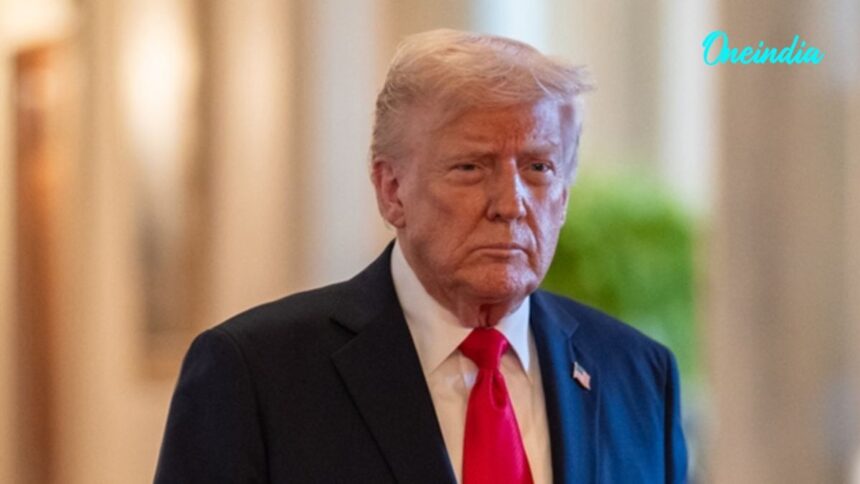
US rhetoric has also turned personal around the Strait of Hormuz. During a speech in Miami, US President Donald Trump mockingly renamed the passage the “Strait of Trump,” telling the crowd that Iran needs to “open up the Strait of Trump — I mean, Hormuz.” Trump then ridiculed media coverage, adding, “there’s no accidents with me.” It follows an earlier executive order in which Trump changed the Gulf of Mexico’s label to the “Gulf of America.”


TAGGED:ExplainedHormuzImpactIransMilitaryOilPricesStrategyWiderWorldwideZone
Share This Article
Facebook Email Copy Link Print
Previous Article German model LizLaz reveals she got offered money to say bad things about Virat Kohli after ‘like’ controversy
Next Article Haryana school board announce Class 12 results: Steps to check
Leave a Comment Leave a Comment

Leave a Reply Cancel reply

Your email address will not be published. Required fields are marked *

You Might Also Like

World

Bangalore Gold Rate Today, May 13: Gold Prices Jump Sharply After Duty Hike, 24-Carat Gold Surges Rs 1.39 Lakh Per 100 Grams

Business oi-Madhuri Adnal Published: Wednesday, May 13, 2026, 9:57 Gold…

4 Min Read
World

Punjab seeks High Court order to keep Amritpal Singh in Dibrugarh jail after NSA ends

The Punjab government has filed a fresh plea in the…

7 Min Read
World

Tamil Nadu Elections: Vote Counting Date & Time

The Tamil Nadu Assembly Election 2026 concluded in a single…

6 Min Read
World

Horoscope for Today {date} – Text Drama or Glow-Up? Calm Choices Win – Aries, Gemini, Scorpio

Lifestyle -Darshana Tiwari Published: Saturday, April 11, 2026, 0:00 Horoscope…

26 Min Read
Next India MagazineNext India Magazine
Follow US
© 2026 Next India Magazine powered by India Times Now. All Rights Reserved.
Welcome Back!

Sign in to your account

Username or Email Address
Password

Lost your password?