India
oi-Gaurav Sharma

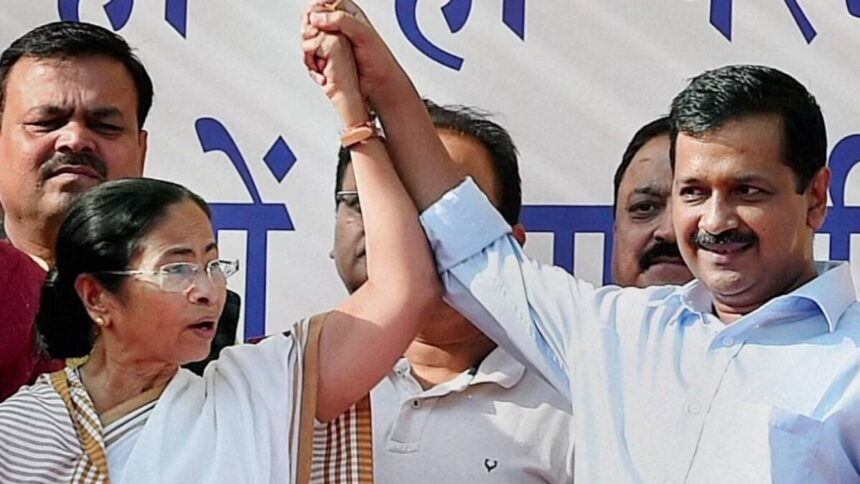
Ahead of the upcoming political showdown in West Bengal Assembly Elections, Arvind Kejriwal has stepped into the conversation with a strong message of support for Mamata Banerjee, sharpening the focus on the high-stakes contest between the Trinamool Congress and the Bharatiya Janata Party.
In a post on X (formerly Twitter), the Aam Aadmi Party chief revealed that he had spoken to Banerjee over the phone and extended “complete solidarity and support.” Kejriwal described the West Bengal battle as “one of the most difficult” as well as “one of the most important battles for Indian democracy,” framing the election as more than just a state contest.
Arvind Kejriwal voiced solidarity with Mamata Banerjee for the West Bengal Assembly Elections, framing the contest as vital for democracy and alleging institutional misuse by the Centre. AAP’s support highlights opposition unity efforts against the BJP amid the Trinamool Congress vs BJP rivalry.
Taking a direct swipe at the Centre, Kejriwal alleged that Prime Minister Narendra Modi would lose “in spite of misusing all institutions, including the CEC.” The remarks signal AAP’s attempt to position itself firmly within the broader opposition narrative, even as it is not a primary contender in West Bengal.

The political landscape in the state continues to revolve around a fierce TMC vs BJP rivalry. Mamata Banerjee, seeking to retain power, has consistently portrayed her fight as one against central overreach, while the BJP has been aggressively trying to expand its footprint in the eastern state.
Kejriwal’s intervention adds another layer to the evolving opposition dynamics. While AAP’s organisational presence in West Bengal remains limited, the party’s vocal backing of Banerjee reflects a larger strategy of opposition unity against the BJP in key electoral battles.
As campaigning gathers momentum, the West Bengal elections are shaping up to be a closely watched contest, with national implications. The TMC vs BJP face-off remains at the core, but voices like Kejriwal’s underline how the battle is being framed as part of a wider political narrative beyond state boundaries.