



UT administrator Gulab Chand Kataria on Sunday announced monthly review meetings with the Chandigarh Residents Associations Welfare Federation (CRAWFED) to improve coordination and ensure faster resolution of civic issues.
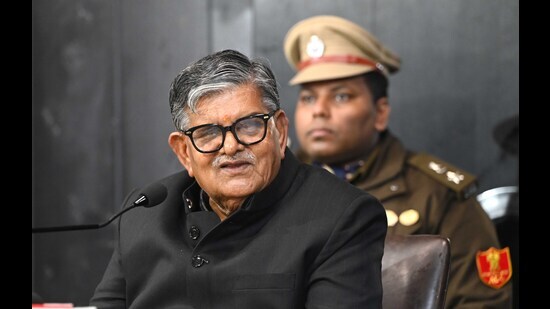
This was announced during an interaction at the IMA Auditorium in Sector 35, attended by representatives of various Resident Welfare Associations (RWAs). Kataria said the one-hour meetings would be held every month, with consolidated feedback submitted in advance to make discussions more effective and reduce bureaucratic delays.
Calling Chandigarh a city that has largely retained its planned character, Kataria said its uniqueness lies not only in infrastructure and greenery but also in the civic sense of its residents. He lauded CRAWFED for bringing together multiple associations under one platform, describing it as a rare model where voices from the grassroots reach the administration directly.
Housing, roads & governance challenges
Addressing the contentious Chandigarh Housing Board (CHB) issue, Kataria clarified that the recent demolition drives were carried out strictly under court orders in a contempt case and were limited to encroachments on government land. He noted that the matter had been taken to court by residents themselves. “We understand the value of a house in a person’s life, but we are bound to act within the law,” he said, adding that thousands of notices had been issued and committees formed to examine possible relief within the legal framework.
On infrastructure, he acknowledged public concerns over deteriorating roads and said he had personally pursued the matter with the Centre, securing ₹125 crore for the municipal corporation to improve road conditions.
Law & order and root causes
The administrator also flagged recent law and order incidents as a matter of concern, stating that the administration is working to ensure criminals are apprehended swiftly within city limits. Linking crime to broader socio-economic issues, Kataria highlighted unemployment and lack of skills among youth as contributing factors. He called for reforms in the education system and emphasised the need for skill-based training, especially for those without formal qualifications.
Electric mobility over metro
On urban transport, Kataria expressed reservations about the feasibility of a metro project for a city of Chandigarh’s size, citing high costs and long timelines. Instead, he advocated expanding the electric bus network as a more practical and economical solution. “Even free electric bus services would be more viable than a metro,” he remarked.
Water, civic sense and public participation
Highlighting water scarcity, the administrator urged residents to adopt responsible practices such as avoiding wastage through overflowing tanks and excessive use. He also cautioned against illegal connections and unregulated usage that strain the system.
During the event, CRAWFED chairman Hitesh Puri submitted a memorandum raising concerns related to law and order, senior citizens, and housing issues. The programme also saw the formal release of CRAWFED’s souvenir and directory.