


India
oi-Prakash KL

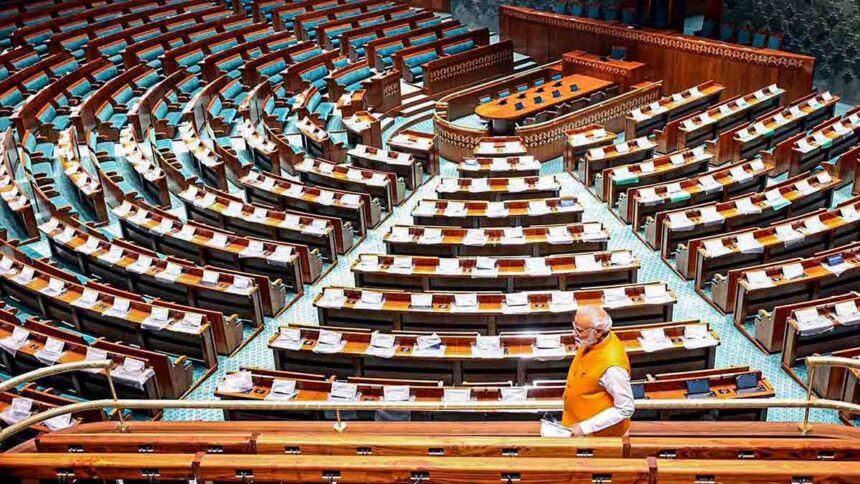
The BJP-led NDA government is set to introduce landmark bills on Thursday that could fundamentally reshape the country’s political landscape. The proposed bills seek to expand the Lok Sabha (the lower house of Parliament) from its current 543 seats to a staggering 850.
Under the new proposal, 815 seats would be allocated to the states, with the remaining 35 reserved for Union Territories. While the current assembly operates with 543 members, the Indian Constitution formally caps the House’s strength at 550. This move represents the most significant overhaul of India’s representative democracy in over half a century.
The Indian government plans to expand the Lok Sabha from 543 to 850 seats, using the 2011 Census for delimitation to implement the Women’s Reservation Act sooner, despite concerns from southern states about potential shifts in political representation.

Ending the Decades-Long Freeze
For decades, the composition of the Lok Sabha has been frozen based on data from the 1971 Census. Under the 84th Amendment Act of 2001, constituency boundaries were locked until the first census after 2026. However, the government’s new bill proposes to amend Article 82 of the Constitution to remove these restrictions entirely.
By doing so, the government aims to conduct a “delimitation” exercise, the redrawing of electoral boundaries, based on the 2011 Census figures rather than waiting for the results of the current census, which is expected to conclude in 2027.
The government defended the move, stating that while the freeze served its purpose in the past, the country’s demographic profile has shifted dramatically.
“Significant inter-state and intra-state population shifts, rapid urbanisation, and disproportionate growth in certain regions have resulted in wide disparities between populations and their constituencies,” the government’s statement read.
Accelerating Women’s Representation
A primary driver for this urgent legislative shift is the 2023 Women’s Reservation Act, which mandates a 33% quota for women in the Lok Sabha and state Assemblies.
Current law dictates that this quota can only be implemented following a fresh census and subsequent delimitation. By using the 2011 data, the government argues it can bypass the “considerable time” required for the next census, thereby preventing further delays in women’s “effective and dedicated participation” in Indian politics.
A Growing North-South Divide
The core of the controversy lies in a deepening regional rift:
Northern and Central States: High population growth suggests these regions would gain a massive influx of new seats.
Southern States: These states, which have successfully implemented population control and social development programmes, fear they will be “punished” for their success.
Leaders in the South argue that a purely population-based expansion would diminish their political influence, handing an overwhelming-and perhaps permanent-advantage to the more populous northern “Hindi heartland.”
Stalin Warns PM Modi
Tamil Nadu Chief Minister and DMK president M. K. Stalin on Tuesday issued a strong warning to the BJP-led Union government over the proposed delimitation exercise, cautioning that the State could witness a massive, statewide protest if the move disadvantages southern States while increasing political representation for northern regions.
In a video message, Stalin said Tamil Nadu would not remain passive if such a decision were pushed through. He warned that the State could come to a complete standstill, with people from all walks of life taking to the streets in protest.
“We will not remain silent. Tamil Nadu will rise in protest. Every family will come out. I will lead a massive agitation,” he declared.