


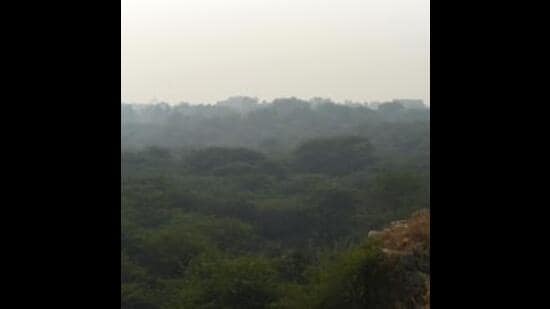
The Satara forest department has initiated steps to declare the Kiraksal-Kukudwad grassland region in Maandesh as a ‘conservation reserve’ to protect its rich biodiversity, rare wildlife, and native grassland ecosystem. The proposed conservation plan includes grassland restoration, wildlife monitoring, a leopard census, and eco-tourism initiatives. Earlier on April 9, Hindustan Times had reported about the Kiraksal wildlife conservation project and growing efforts to protect the region’s grassland habitat and wolf population.

The initiative is being undertaken under the guidance of Amol Satpute, deputy conservator of forests (DCF), Satara division; with a focus on preserving the region’s fragile grassland ecosystem, native biodiversity, and important wildlife species. The conservation roadmap was discussed during a key meeting held on Friday, May 8, at the Satara forest office. Representatives of the Kiraksal Wildlife Conservation Project, including Chinmay Prakash Sawant, Kiraksal resident and project lead of the Kiraksal Conservation Project; along with wildlife researcher Arnav Gandhe; led a detailed presentation highlighting the ecological significance of the Maandesh grassland and the urgent need for habitat protection and scientific conservation planning.
Sawant, who has an M.Sc. in wildlife science, said, “One of the major points discussed during the meeting was the formation of an expert committee by the forest department to facilitate the declaration of the Kiraksal-Kukudwad grassland region as a ‘conservation reserve’. Forest officials also reviewed concerns regarding the proposed highway project passing through the Kukudwad reserved forest, and discussed measures to ensure ecological balance and biodiversity protection during infrastructure development.”
As part of the conservation outreach, the forest department will publish a coffee table book documenting the Maandesh landscape, its biodiversity, and the Kiraksal Conservation Project. Furthermore, the department plans specialised capacity-building workshops for forest field staff under the Satara forest division. The training sessions will focus on scientific grassland monitoring, wildlife management practices, camera trapping techniques, and the use of modern wildlife monitoring equipment to improve field-level conservation efforts.
Also during the meeting, the forest department proposed large-scale restoration of native grasslands by removing invasive plant species and encouraging the growth of indigenous grasses and shrubs such as Capparis, locally known as Tarati or Waghati. Officials clarified that plantation methods such as Miyawaki will not be implemented in these ecosystems as they are unsuitable for natural grassland habitats. Instead, conservation efforts will prioritise native species adapted to the region’s ecology.
Furthermore, the meeting discussed the conduct of a scientific leopard census within the Karad-Patan forest division to better understand wildlife distribution and strengthen conservation planning in the area. The possibility of launching a wildlife safari in the Kiraksal-Kukudwad region somewhat on the lines of the Kadbanwadi grassland safari in Indapur was also discussed.
Satpute said, “The grasslands of Maandesh represent an ecologically significant ecosystem. Our objective is to ensure the scientific management and development of this landscape through active local community participation. The proposed ‘conservation reserve’ status will provide long-term protection to wolves and other wildlife species inhabiting the region.”