



India
oi-Gaurav Sharma

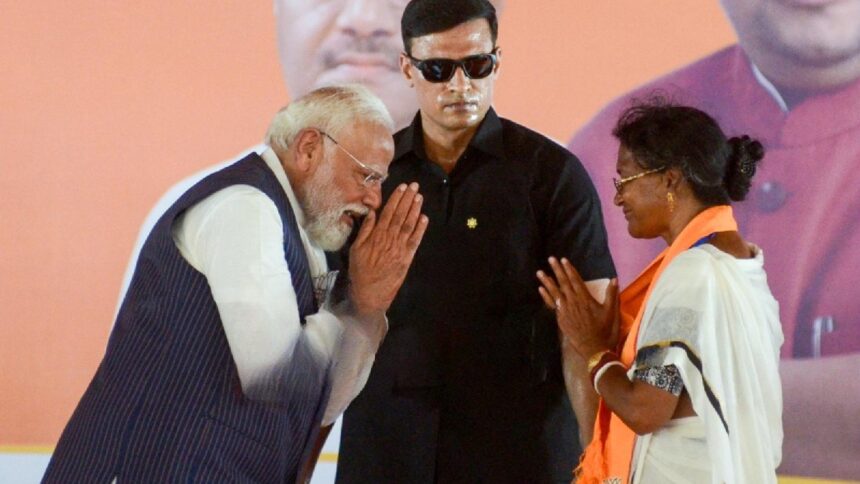
The West Bengal election campaign took a deeply emotive turn as Prime Minister Narendra Modi appeared alongside Ratna Debnath, who is now a candidate from Panihati on a Bharatiya Janata Party (BJP) ticket.
The image of a grieving mother stepping into electoral politics framed the rally’s message-justice, accountability, and women’s safety. Modi positioned Debnath’s candidature as symbolic, saying the BJP had given her a platform to fight for justice after the death of her daughter in the RG Kar case.
West Bengal election campaign: PM Modi featured BJP candidate Ratna Debnath in Panihati, whose daughter’s death became a focal point for BJP’s focus on women’s safety and accountability, criticizing the ruling TMC government.
Without delving into procedural details of the case, the Prime Minister used the moment to question the governance of the ruling All India Trinamool Congress (TMC). He accused the state administration of failing to protect women and responding inadequately when justice is sought.

The speech repeatedly returned to one theme: women voters. Modi urged them to see the election as a chance to push back against what he described as years of fear, corruption, and insecurity. He framed the BJP’s pitch around a “women-led development” approach, contrasting it with what he alleged was a pattern of neglect under the current government.
He also criticised Chief Minister Mamata Banerjee over her remarks advising women to avoid going out late at night, presenting it as an example of misplaced priorities when safety concerns remain unresolved.
For Debnath, the campaign marks a transition from personal loss to public life. Nearly a year and a half after her daughter’s death, she has entered the political arena with the stated aim of seeking truth and accountability. Her contest in Panihati-against candidates from both the TMC and CPI(M)-has now become one of the most closely watched battles in the state.
Beyond the immediate contest, the rally signalled how individual stories are being woven into larger political narratives. In this case, a tragedy has become a focal point for competing claims about governance, justice, and the role of women in shaping West Bengal’s future.