



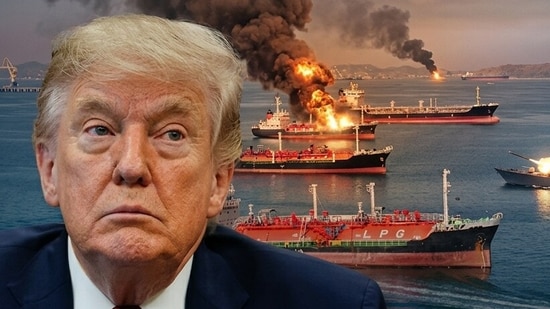
The United States is preparing to revive ‘Project Freedom,’ a naval operation designed to escort commercial vessels through the Strait of Hormuz, officials have said, according to the Wall Street Journal. This comes after Saudi Arabia and Kuwait restored US military access to critical bases and airspace in the Gulf, says the report.

The reversal removes a major obstacle that forced Washington to suspend the mission only 36 hours after it began earlier this week. US defence officials now say the Pentagon could relaunch the effort within days.
Phone calls between US President Donald Trump and Saudi Crown Prince Mohammed bin Salman helped restore access agreements, according to US and Saudi officials cited by the WSJ. The White House earlier denied that Gulf states imposed any formal “ban” on US military activity.
About Project Freedom
Project Freedom was conceived as a US-led maritime protection initiative aimed at reopening the Strait of Hormuz after Iran effectively shut the waterway following continued US and Israeli strikes on the country.
The mission began with the transit of the Alliance Fairfax, a US-flagged car carrier that had been stranded in the Persian Gulf for more than two months because of the security situation. The ship was guided through a newly designated maritime corridor along Oman’s coastline on the southern side of the strait, under the protection of US naval and air assets.
“You are all set to go. Safe travels,” a US military officer radioed to the ship as it cleared the narrow waterway.
The operation, though, spiralled into a military confrontation. Within hours, Iran launched missiles and drones across the Gulf region, targeting commercial shipping lanes, US naval assets and infrastructure in allied Gulf states.
One strike blasted a major oil transit facility in the United Arab Emirates, while Iranian fast attack boats moved aggressively toward escorted vessels before being engaged by US helicopters.
Civilian shipping also came under fire. A Chinese oil tanker carrying petrochemical cargo from Saudi Arabia reported being struck and catching fire at sea. Other vessels, including a South Korean-owned tanker and a French-operated container ship, also sustained damage in separate attacks over the following 24 hours.
The escalation was the most serious flare-up since Trump declared a ceasefire in April. Following this, Saudi Arabia and Kuwait temporarily restricted the US military’s use of key airspace and regional bases essential to sustaining escort operations.
Hormuz tensions
The Strait of Hormuz is one of the world’s most important shipping routes, with around a fifth of global oil trade passing through the narrow waterway between the Persian Gulf and the Arabian Sea. After the US and Israel waged their war, Iran began directing ships towards routes closer to its coastline. US officials also warned that parts of the usual commercial shipping lanes had become unsafe because of Iranian naval activity and sea mines.
In response, the Pentagon created a protected shipping corridor through waters near Oman, though the route was so narrow that only one large vessel could pass at a time. US destroyers provided missile defence while Apache and Seahawk helicopters patrolled against Iranian fast attack boats.
The operation brings to mind the US naval escort missions during the 1980s Tanker War, when American warships protected oil vessels during the Iran-Iraq conflict. Project Freedom relies on fewer warships and limited patrol coverage.