



Business
oi-Venkatesh Raghavendra

It’s early morning in Ahmedabad. The streets are just beginning to stir, but for Rekha, the day has already started. Her vegetable cart is carefully arranged, greens tied into small bundles, prices calculated in her head. Every sale matters. On some days, she earns enough to get by. On others, a slow market or an unexpected expense can undo weeks of effort. There is no safety net to fall back on. Rekha’s story is not unique, but reflects a much larger reality across India.

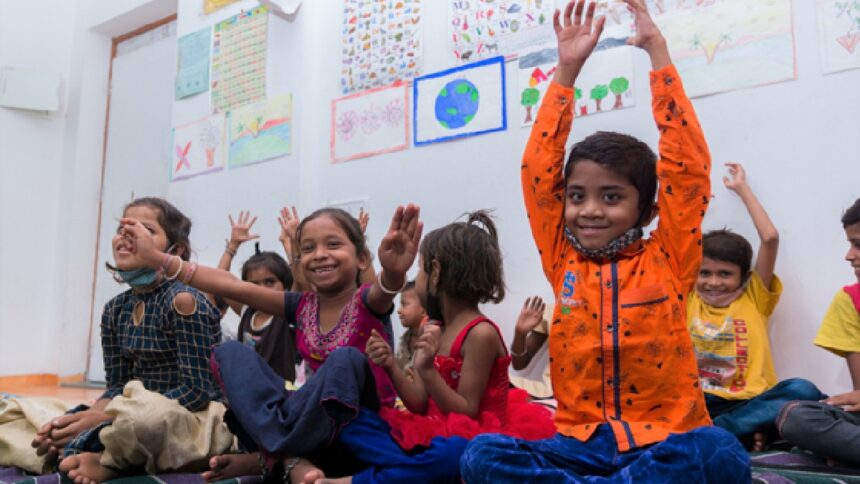
Ahmedabad’s Saath organization empowers India’s informal workers, excluded from key systems, by building financial literacy and healthcare access and connecting them to opportunities, shifting focus from service delivery to systemic inclusion.
India’s growth story is often told through big numbers, rising GDP, expanding infrastructure, and rapid technological change. But beneath this progress lies another reality. Millions of people continue to power the economy while remaining outside the systems meant to support them. These are informal workers, from street vendors and construction labourers to home-based producers and small entrepreneurs. They build cities, run local economies, and sustain livelihoods, yet their access to financial services, healthcare, and social security remains uncertain. The issue is not just poverty. It is exclusion from systems that were never designed with them in mind. And when external shocks hit, this exclusion becomes even more visible. Rising fuel costs, including the recent LPG price pressures, directly affect daily livelihoods, from cooking to small-scale businesses. Similarly, global conflicts and supply disruptions have ripple effects that reach far beyond borders, increasing costs and uncertainty for those who are already operating with the least margin for risk.

For over three decades, Saath, a grassroots organization based in Ahmedabad, has been working closely with these communities. What makes Saath stand out is not just what it does, but how it understands the problem. Instead of treating people as beneficiaries, it focuses on helping them engage with and benefit from larger systems. This becomes clear in its work with nano and micro-entrepreneurs. Many small business owners operate outside formal financial networks. They lack access not because they are unwilling, but because they do not have the tools or knowledge to navigate these systems. Saath’s approach is simple but effective, build those capabilities. Through financial literacy and business support, individuals begin to stabilize their incomes, make better decisions, and gradually grow their enterprises.

The same thinking carries into healthcare. For informal workers, a single health emergency can disrupt an entire household. Access to reliable and affordable care is often limited. Saath works to improve both awareness and access, ensuring that communities are not just treated when needed, but also protected from falling deeper into economic vulnerability because of health shocks.
But Saath’s work goes beyond services. It also focuses on something less visible but equally important, i.e. recognition. Informal labour is often overlooked, even though it plays a critical role in the economy. Through initiatives like Mehnat Manzil, a museum dedicated to the world of work, Saath creates space to acknowledge and value these contributions. It shifts the narrative from invisibility to recognition. At the ground level, even small interventions can have lasting effects. Improving access to menstrual health infrastructure in schools, for example, can shape whether girls stay in school, how they participate in daily life, and what opportunities remain open to them. These are not isolated improvements. They influence long-term outcomes across education, health, and livelihoods.
What ties all of Saath’s work together is a simple but powerful idea. Development is not just about delivering services, it is about connecting people to systems. When these connections are missing, individuals are left to navigate complex structures on their own, often at great cost. Saath acts as a bridge, helping communities access markets, institutions, and opportunities that were previously out of reach.
As Rajendra Joshi, founder of Saath, often emphasizes, “The issue is not whether people are capable. People are already working hard every day. The real question is whether systems allow them to participate and grow.”
In many ways, this reflects a larger shift across India. Civil society and CSR initiatives are increasingly stepping in to fill gaps where public systems are overwhelmed,unable to keep up with rising demands or searching for innovative solutions. They are not just supporting communities, they are beginning to take on roles that resemble welfare functions.
Saath shows what this can look like when done thoughtfully, with a focus on long-term engagement and real inclusion. As India continues to grow, the question is not whether progress will happen, but who it will include. Informal workers are not on the margins of this story, they are at its center.
About Authors
Pragya Raj Singh is a cross-border social impact advisor working at the intersection of India and the U.S., focusing on livelihoods, entrepreneurship, and systems change. Venkatesh Raghavendra is a global philanthropy leader with over four decades of experience building institutions and advancing social impact across sectors and geographies.