


India
-Oneindia Staff

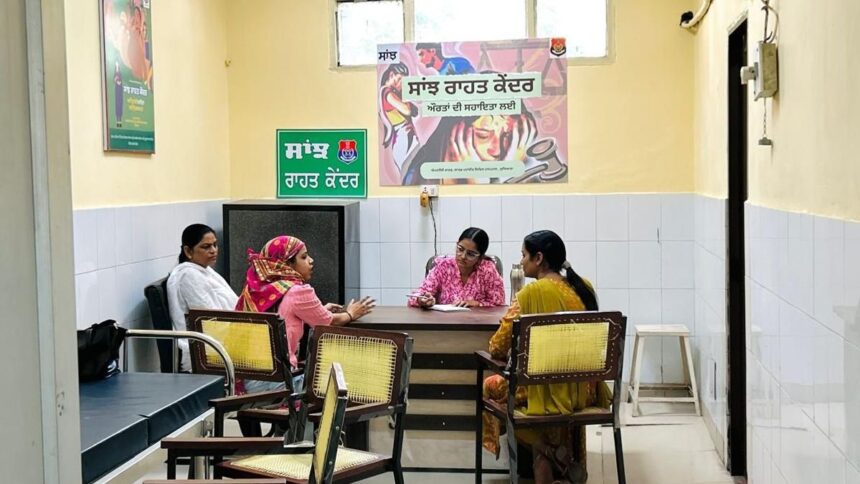
Punjab Police’s Saanjh Rahat Kendras are moving beyond routine complaint handling to become a focused support system for women facing violence, trauma and social distress. The four centres in Mohali, Fatehgarh Sahib, Ludhiana and Jalandhar have screened 1,656 cases in two years and formally registered 1,069 of them, according to details shared by the police.

Punjab Police’s four Saanjh Rahat Kendras provide focused support for women facing violence and trauma, registering 1,069 of 1,656 screened cases in two years and offering counselling, police assistance, and rehabilitation.
The initiative was set up to give distressed women a single point of access for counselling, police assistance, emergency support and rehabilitation. What began with only two trained counsellors across the centres has now expanded with more professionals joining the programme. The model is being presented as part of Punjab Police’s wider push towards community policing and victim-sensitive response.
Saanjh Rahat Kendras focus on safety, counselling and rehabilitation
Director General of Police Gaurav Yadav said the centres are helping women recover from mental trauma and return to normal life. “A total of four Saanjh Rahat Kendras are helping distressed women overcome their mental trauma and lead a normal life. Such initiatives reflect Punjab Police’s commitment to public safety based on trust and cooperation,” he said.
The role of the centres is significant because women in crisis often need more than registration of a police complaint. Many require safe transport, immediate shelter, medical help, emotional counselling, legal guidance and continued follow-up. The Saanjh Rahat Kendra model attempts to bring these services closer to the police response system, reducing the chances of victims being left to navigate multiple offices alone.
According to the police, one case in Mohali showed how timely intervention can prevent further harm. A woman contacted the team alleging that her husband was assaulting her and threatening to have her killed. She was already known to the SAS Nagar team because of an earlier case recorded in their system.
DGP Yadav said the Saanjh Rahat Kendra team acted immediately, ensured the woman’s safety, arranged secure transport and took her to her parental home. The intervention allowed her to move to a safer environment at a time when she had reported an immediate threat. Such cases underline why response speed is crucial in domestic violence complaints.
Police cite cases where support went beyond complaint registration
In another case highlighted by the police, a woman living alone was admitted to hospital in a serious condition. The Saanjh Rahat Kendra team counselled her to accept necessary medical treatment and helped facilitate admission to PGI. Through coordination, the team remained involved in her treatment for nearly two months.
During the course of her treatment, the woman suffered a miscarriage. The police said the team continued to provide emotional support and counselling during the period. After she recovered, efforts were made to help her find employment and reconnect with her family, enabling her to rebuild her life with dignity and independence.
These examples also show the difficult space in which victim-support teams work. Women approaching such centres may be dealing with violence, abandonment, health emergencies, fear of retaliation or social stigma. A purely procedural police response may not be enough in such situations, especially when a victim needs immediate protection and longer-term support.
The Saanjh Rahat Kendras are part of the larger Saanjh system, which was launched in 2011 to improve police-public partnership. Special Director General of Police Gurpreet Kaur Deo, who heads the Community Affairs Division, said the system has played an important role in strengthening cooperation between citizens and the police.
She said more than 530 Saanjh Kendras are functioning across districts, sub-divisions and police stations in Punjab. These centres deliver citizen-focused services and have become a key interface between the police and the public. The Rahat Kendras build on this network by addressing a specific gap in support for women in distress.
“This initiative is addressing an important gap by providing counselling, police assistance and legal support to distressed women,” Deo said. Her remarks point to the operational importance of combining community outreach with institutional support, particularly in cases where women may hesitate to directly approach police stations.
Women safety outreach expands through schools and help desks
Punjab Police has also linked women’s safety work with awareness programmes. Under the Jagriti programme, women police personnel known as Mahila Mitras have reached 12,482 schools in nearly two years. The campaign has covered 11,75,010 children in the age group of 6 to 12 years.
The same outreach also covered 76,299 principals, teachers, staff members and other school personnel. The focus on younger children and school staff is important because awareness around personal safety, abuse reporting and trusted support systems can help early identification of risk. It can also make institutions more responsive when children disclose abuse or distress.
Another pillar of the state’s outreach is the Women Help Desks initiative. Over the past five years, 69,329 public awareness programmes have been conducted through this platform. These programmes have covered cybercrime, domestic violence, child sexual abuse, the Prohibition of Child Marriage Act, the Juvenile Justice law, drug de-addiction and gender sensitivity.
For police organisations, such programmes serve two purposes. They inform citizens about legal protections and available support, and they also help build confidence in approaching police mechanisms. This is especially relevant in cases involving domestic violence, child abuse or online exploitation, where under-reporting remains a major challenge.
The figures shared by Punjab Police indicate that women-focused community policing in the state is now operating on two tracks: direct crisis intervention through Saanjh Rahat Kendras and broader prevention through school and public outreach. The effectiveness of the model will depend on trained staff, quick response, sustained follow-up and continued coordination with hospitals, legal services and families.