


India
-Oneindia Staff

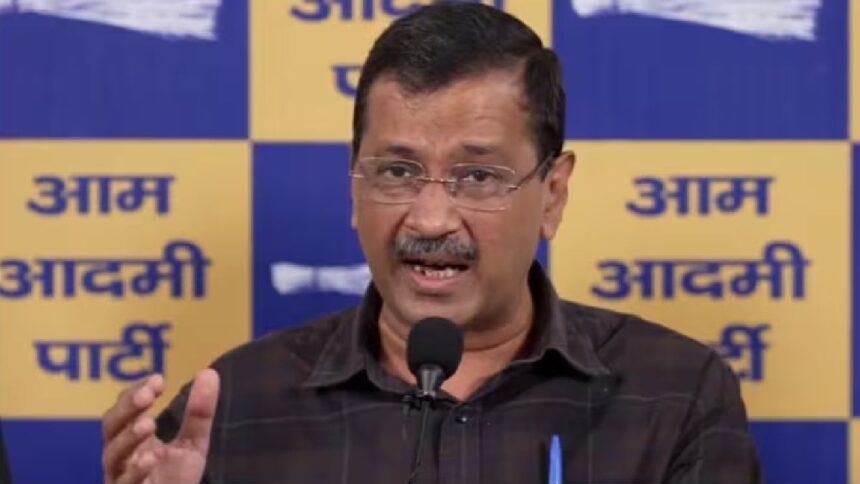
Aam Aadmi Party chief Arvind Kejriwal has turned the debate over E20 petrol into a public campaign, asking Prime Minister Narendra Modi to address concerns over the impact of 20 percent ethanol-blended fuel on vehicle owners. In a video message shared on X, Kejriwal said he had written to the Prime Minister and urged citizens to sign an online petition against E20.

Arvind Kejriwal is campaigning against India’s E20 petrol policy, urging PM Narendra Modi to address vehicle owners’ concerns about fuel efficiency, engine compatibility, and maintenance costs associated with the 20% ethanol blend.
The former Delhi chief minister said people should not only support the petition but also share their own experiences with the fuel. His appeal brings a consumer-focused political angle to a policy the Union government has promoted as a way to reduce crude oil imports, support farmers and cut emissions.
What Kejriwal said on E20 petrol
In his message, Kejriwal said, “Yesterday I wrote a letter to the Prime Minister. Let us raise our voice together against E20. Click on the link below and sign the petition addressed to the Prime Minister. Also share your experiences with the Prime Minister.”
The AAP leader’s intervention comes at a time when many motorists have been discussing fuel efficiency, engine compatibility and maintenance costs linked to ethanol-blended petrol. Kejriwal has asked people to make the issue a public movement and directly communicate their concerns to the Prime Minister.
His party has framed the matter as one affecting ordinary vehicle owners, especially those using older two-wheelers and cars. The core argument is that consumers need clearer information on whether E20 is suitable for all vehicles currently on Indian roads, and what impact it may have over time.
Why E20 petrol has become a political issue
E20 petrol is a blend of 20 percent ethanol and 80 percent petrol. India has been expanding ethanol blending for several years as part of a broader energy security strategy. The government says higher blending can reduce the country’s dependence on imported crude oil and lower the foreign exchange burden.
The policy is also linked to the farm economy. Ethanol in India is produced from sugarcane-based sources as well as other agricultural feedstock. The Centre has argued that the blending programme creates an additional market for farmers and sugar mills, while helping manage surplus production in some years.
Supporters of ethanol blending also point to environmental gains. Ethanol contains oxygen, which can help improve combustion and reduce some tailpipe emissions. However, the overall climate and pollution impact depends on several factors, including feedstock, production methods, transport and vehicle technology.
The concern raised by critics is not only about the idea of ethanol blending, but about its rollout. Vehicle owners want to know whether engines designed before wider E20 availability can safely run on the fuel. Questions have also been raised about mileage, corrosion risk, rubber and plastic components, and long-term service costs.
What vehicle owners need to know
India’s auto industry has been preparing for higher ethanol blends, but the transition is uneven because vehicles of different ages remain in use. Newer models are more likely to have components designed for ethanol-blended fuel. Older vehicles may not have the same level of compatibility, depending on model, year and manufacturer guidance.
Fuel efficiency is another major concern for consumers. Ethanol has a lower energy content than petrol. This means a vehicle running on a higher ethanol blend may deliver slightly lower mileage in some conditions. The real-world impact can vary by vehicle, engine tuning, driving style and maintenance condition.
For many households, even a small drop in mileage matters because fuel costs are a recurring monthly expense. That is why the debate has found traction beyond policy circles. It affects daily commuters, delivery workers, cab drivers, small business owners and families using two-wheelers for routine travel.
There is also a communication gap. Many motorists are unsure whether the petrol sold at their local pump is E10, E20 or another blend. Clear labelling, consumer advisories and manufacturer-specific guidance can reduce confusion. Without that, the policy risks being viewed as something imposed without enough public explanation.
Government’s position on ethanol blending
The Union government has consistently defended ethanol blending as a national priority. It has said the programme helps cut oil imports, improves energy security and benefits farmers. India had earlier set a longer timeline for 20 percent blending but advanced its target as ethanol availability and policy support increased.
Oil marketing companies have expanded ethanol-blended petrol supply across the country in phases. Automakers have also been asked to align vehicle technology with higher ethanol blends. The government’s position is that the shift is part of a planned transition rather than a sudden change in fuel policy.
Even so, public acceptance depends on trust. If consumers believe their vehicles may be affected, the government will need to respond with specific information rather than broad policy claims. That includes clarity on compatibility, warranty implications, expected mileage variation and safeguards for vehicles not designed for E20.
Kejriwal’s campaign is likely to push the issue further into political debate. It gives the opposition a consumer-rights argument against a policy promoted by the Centre as pro-farmer and pro-environment. The disagreement may now move from technical discussions to a wider public conversation on cost and accountability.
The E20 debate is unlikely to end with one letter or petition. For now, the main question before policymakers is whether the rollout can be matched with transparent information for motorists. Vehicle owners will want practical answers on safety, mileage and maintenance before they accept higher ethanol blending as a routine part of India’s fuel system.