


Bengaluru
oi-Madhuri Adnal

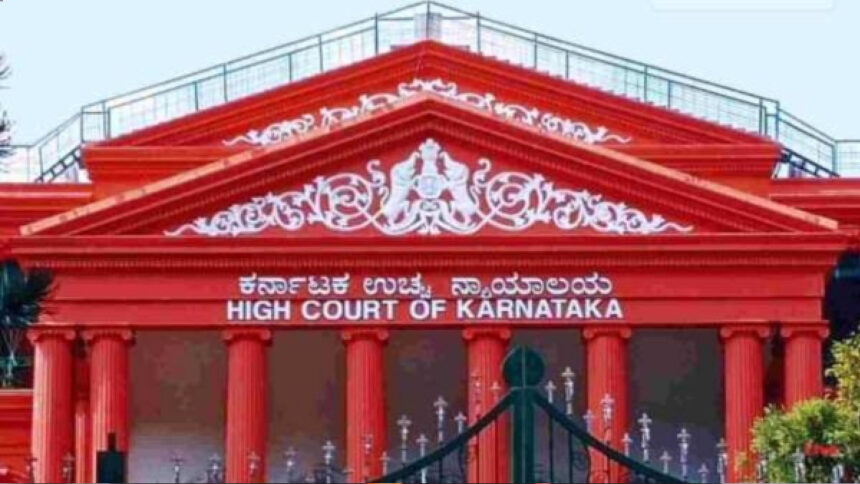
The Karnataka High Court on Thursday said that any contract awarded for Bengaluru’s proposed ₹19,000-crore Twin Tunnel Road project will remain subject to the final outcome of the public interest litigations (PILs) challenging the project.
The Court also made it clear that no third-party rights should be created while the matter is pending before it.
The Karnataka High Court ruled that any contract awarded for Bengaluru’s ₹19,000-crore Twin Tunnel Road project remains subject to pending public interest litigations, prohibiting the creation of third-party rights until the outcome is decided. Further hearings are scheduled for August 20.
A division bench comprising Chief Justice Vibhu Bakhru and Justice K.S. Hemalekha was hearing two PILs questioning the legality of the ambitious tunnel road project, which is proposed to connect Hebbal and Silk Board in an attempt to ease Bengaluru’s chronic traffic congestion.

During the hearing, the bench directed the State government to inform all prospective contractors and third parties that the project is currently under judicial scrutiny. It observed that any contract awarded during this period would ultimately depend on the outcome of the pending petitions.
The Court also asked the respondents to be provided with a pen drive containing around 7,000 pages of documents relied upon by the petitioners. The matter has now been posted for further hearing on August 20 at 2:30 pm.
The petitions have been filed by actor and activist Prakash Belawadi and Dr. Adikesavalu Ravindra. They have sought quashing of the tender notification issued on July 14, 2025, along with all subsequent steps connected to the bidding process, including the request for proposal, pre-bid proceedings, bid evaluation and the proposed issuance of the letter of award.
Appearing for the petitioners, Senior Advocate Arun Kumar argued that the State government had moved ahead with the project without conducting a mandatory environmental impact assessment. He contended that although feasibility studies and a detailed project report (DPR) had been prepared, the authorities had allegedly ignored several planning policies and master plans already in place for Bengaluru.
The petitioners maintained that they were not opposing the tunnel road project itself. Their challenge, they argued, was limited to the manner in which the project was being pursued and the alleged failure to comply with statutory requirements before proceeding with the tender process.
According to them, moving ahead without carrying out the required environmental assessment was arbitrary and contrary to established legal procedures.
Advocate General Shashi Kiran Shetty, appearing for the State government, opposed the submissions and defended the government’s stand before the Court.
While hearing the matter, the bench acknowledged Bengaluru’s long-standing traffic problems and observed that the issue required urgent attention. At the same time, it clarified that the Court was not examining whether a tunnel road was the best solution, but whether the applicable legal and regulatory procedures had been followed.
The judges orally observed that Bengaluru’s traffic challenges needed to be addressed and that the proposed tunnel road was one of the methods chosen by the government. However, they noted that the petitioners were free to point out any violation of rules or regulations governing the project.
In a connected PIL, the petitioners have also challenged Rule 24 of the Bangalore Metropolitan Land Transport Authority (BMLTA) Rules, 2026. They contend that the provision effectively shields large infrastructure projects, including the Twin Tunnel Road, from scrutiny by the transport authority.
Senior Advocate D.R. Ravishankar, appearing in the connected matter, sought issuance of notice. The Court agreed and issued notice on Thursday.
The petitions further seek to set aside the feasibility study prepared by Altinok Consulting Engineering Pvt. Ltd. in December 2024, the DPR prepared by Rodic Consultants Pvt. Ltd., and the revised DPR submitted in February 2025. The petitioners have alleged that the reports do not comply with mandatory legal standards and were prepared without adequate consideration of relevant factors.
They have also challenged a communication issued by the State Environment Impact Assessment Authority (SEIAA), Karnataka, on November 26, 2024. The communication had stated that prior environmental clearance was not required for the proposed project.
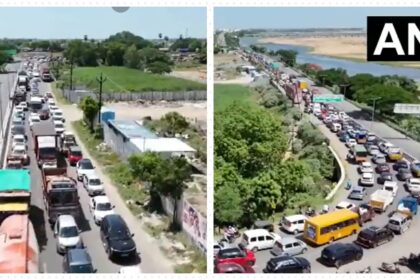
The Twin Tunnel Road project has been one of the most debated infrastructure proposals in Bengaluru in recent years, drawing both support and criticism. While the State government has projected it as a long-term solution to reduce travel time across the city, critics have raised concerns over its environmental impact, cost and planning process.
Earlier in the proceedings, the High Court had sought clarification from the State government on whether trees inside Lalbagh Botanical Garden would be affected by the project. The Advocate General later informed the Court that no trees within Lalbagh would be cut for the construction of the proposed tunnel road.
With the matter set to return before the Court next month, the future of one of Bengaluru’s biggest infrastructure projects remains closely tied to the outcome of the legal challenge.