



International
oi-Swastika Sruti

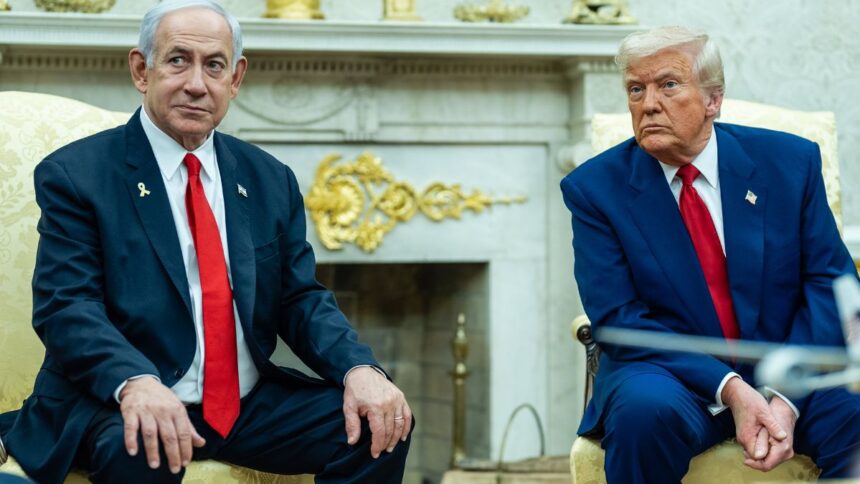
Israeli Prime Minister Benjamin Netanyahu has rejected key elements of US President Donald Trump’s 15-point Gaza peace plan, declaring that there will be no Palestinian state in Gaza or the West Bank as long as he remains in office.

Israeli PM Benjamin Netanyahu rejected key elements of Donald Trump’s 15-point Gaza peace plan, stating no Palestinian state would form under his leadership and contingent withdrawal on Hamas disarmament. Hamas conditionality also demands an end to Israeli military operations first.
His remarks have cast fresh uncertainty over the US-backed roadmap, which Trump had described as a major breakthrough towards ending the Gaza war. While Hamas says it remains committed to the plan, it insists that Israel must first meet several conditions before any agreement can move forward.
Netanyahu Rejects Palestinian State
Speaking on Sunday, Netanyahu made his government’s position clear.
“As long as I am Prime Minister, there will be no Palestinian state in Gaza or the West Bank,” he said. He also rejected the proposal that would eventually pave the way for Palestinian self-rule, one of the central ideas in Trump’s peace roadmap.
The statement marks one of Netanyahu’s strongest public rejections of the plan announced by the United States.
Another major point of disagreement is the withdrawal of Israeli forces from Gaza. Netanyahu said Israel will not withdraw its troops until Hamas is completely disarmed.
Israeli officials have repeatedly maintained that any military pullback can happen only after the militant group gives up its weapons and military infrastructure.
Hamas Says It Supports the Roadmap, But Sets Conditions
Hamas has said it is still committed to the roadmap discussed with mediators and representatives of Trump’s Peace Council in Cairo.
However, the group insists that Israel must first stop its military operations and honour previous ceasefire commitments.
Senior Hamas official Basem Naim said the group expects the United States and other mediators to pressure Israel into implementing the agreed framework.
Another Hamas leader, Ghazi Hamad, said the group is willing to accept a difficult agreement but believes Israel must first:
- Stop military attacks in Gaza.
- Withdraw troops to previously agreed positions.
- Allow more humanitarian aid into the territory.
Only after these steps, Hamas says, would it consider placing its weapons under the control of a proposed Palestinian administrative committee.
What Trump’s 15-Point Gaza Peace Plan Proposes
The roadmap announced by President Trump outlines a phased approach to ending the conflict.
Key proposals include:
- Completing the existing ceasefire agreement.
- Gradual withdrawal of Israeli troops from Gaza.
- Transfer of Gaza’s administration to a Palestinian technocratic body.
- Identification and control of heavy weapons and military infrastructure.
- Deployment of an international stabilisation force.
- Reconstruction of Gaza under international supervision.
- A long-term political process aimed at Palestinian self-determination and eventually establishing a Palestinian state.
While the framework seeks to balance security and governance, the biggest obstacle remains the sequence of implementation.
Israel insists Hamas must disarm first, while Hamas says Israel must halt attacks and begin withdrawing first.
Eight Countries Warn Against Escalation
The United Arab Emirates, Saudi Arabia, Qatar, Egypt, Jordan, Pakistan, Turkiye and Indonesia released a joint statement saying that the continuation of the military campaign by Israel would jeopardize the peace roadmap’s implementation.
These nations are of the view that any further bloodshed will hamper the political process and also exacerbate the human condition in Gaza.
This joint statement is perceived as a rare example of cohesion of nations who are traditionally at odds with each other over their approach towards the Israeli-Palestinian conflict.