



India
oi-Madhuri Adnal

The pilot-in-command of Air India’s Phuket-Delhi flight that plunged about 300 feet on August 4 told investigators he had been suffering from sleep problems and had been prescribed medication by his family doctor, according to two people briefed on his account. The pilot gave the account during more than an hour of questioning by the Aircraft Accident Investigation Bureau (AAIB), the people said.
The disclosure came a day after the pilot’s initial post-flight drug screening was found to have produced a ‘non-negative’ result, requiring additional testing. The follow-up confirmatory test detected cannabis.
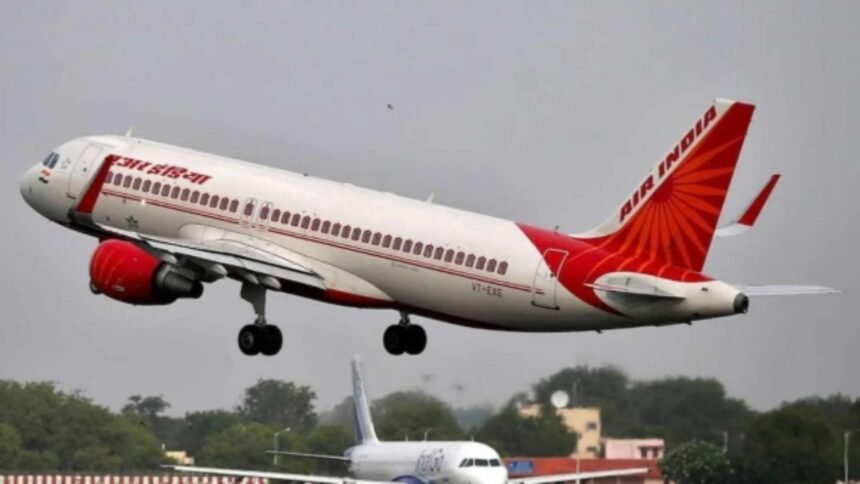
Air India flight AI2379 pilot, reporting sleep issues and prescribed medication, tested positive for cannabis after an August 4 incident involving a 300 ft altitude drop; he told investigators he slept during the flight, coinciding with multiple system warnings.

During questioning, the pilot told investigators that he had been unable to sleep during his layover in Phuket. One of the people said the pilot had experienced sleep difficulties for some time because of personal circumstances. He did not disclose the name of the medication or how long he had been taking it, the person said.
DGCA regulations require pilots taking prescription medication to inform their airline. Failure to disclose such medication can lead to action by the operator. It was not immediately clear whether the pilot had informed the airline.
Pilot slept for 30-35 minutes
The commander told investigators that he slept for about 30 to 35 minutes during the flight before using the washroom and returning to the cockpit to stand behind the first officer, the two people said. He was discussing the aircraft’s air-conditioning system when the altitude event occurred and was thrown to the cockpit floor, they said.
The first officer was flying the Airbus A320, while the commander was serving as the pilot monitoring, according to the two people.
A cabin crew member occupying the observer seat – a position that a pilot leaving the cockpit is required to assign – helped the commander back up, they said. The account provides the first detailed description from the cockpit crew of what happened aboard flight AI2379, operated by an Airbus A320 registered as VT-EXO.
However, the complete sequence of events inside the cockpit could not be independently established from the pilots’ accounts to investigators.
The report said the aircraft’s post-flight Centralised Fault Display System log recorded nine warning messages within one minute at 9:32 a.m. IST, when the aircraft was crossing the Odisha coast after flying over the Bay of Bengal.
The warnings included low pressure in the Green, Blue and Yellow hydraulic systems in various combinations, low reservoir levels in the Yellow and Blue systems, an autopilot disconnect and an elevator flight-control fault. Two emergency-exit door sensor warnings followed at 9:33 a.m. and 9:35 a.m.
No additional hydraulic or elevator warnings were recorded for the following 43 minutes. A separate engine anti-ice fault appeared at 10:16 a.m., followed by a second autopilot disconnect at 10:52 a.m. Unlike the first disconnect, the second was not accompanied by hydraulic warnings. The fault log does not identify the cause of any of these events.
The hydraulic pressure readings changed across different system combinations within the same minute, rather than showing a single system failing and remaining failed. A review of the log against standard A320 fault-code references suggests that this pattern could be consistent with a transient event, such as a sharp vertical excursion or sudden altitude loss, which can briefly affect fluid movement within hydraulic reservoirs.
A sustained mechanical failure, by contrast, would generally be expected to generate additional warnings, including indications of recurring faults.
Flightradar24 tracking data places the altitude anomaly within the same minute as the cluster of warnings. The aircraft was cruising at 36,160 feet when the anomaly was recorded at 9:33 a.m. IST. It subsequently descended to about 35,800 feet, representing a loss of roughly 360 feet, according to the tracking data. Air India had not issued a statement on the developments by the time of publication.