India
oi-Swastika Sruti

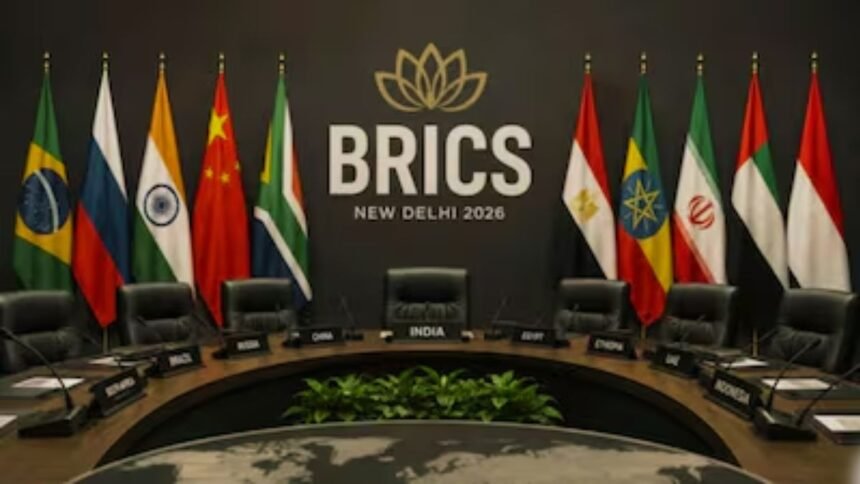
India is all set to host the 18th BRICS Summit in New Delhi on September 12 and 13, 2026, with the main leaders’ meeting schedules at Bharat Mandapam.

India hosts the 18th BRICS Summit in New Delhi on September 12-13, 2026, with over 350 events planned nationwide, but no single figure details the total cost, though tenders reveal expenses like a ₹2.84 crore exhibition.
It is a major diplomatic event, bringing together leaders and senior representatives from the expanded BRICS grouping. But alongside the diplomatic significance comes a question that taxpayers may reasonably ask: how much is India spending to host it?
The surprising part is that there is no single publicly available figure yet showing the total cost of hosting the 2026 BRICS Summit. What is available are individual government tenders, contracts and reports that provide glimpses of where public money is going.
India’s BRICS presidency is considerably bigger than the two-day summit in Delhi.
The government says India’s 2026 BRICS chairship involves more than 350 meetings and high-level engagements across over 25 cities. That means expenditure is spread across events, meetings, exhibitions, logistics and preparations taking place throughout the year.
As a result, adding up a few publicly available tenders would not give the complete cost.
At Least ₹2.84 Crore for One BRICS Exhibition
One clearly identifiable expense is an immersive BRICS-related exhibition in Bhopal.
A government tender puts its estimated value at around ₹2.84 crore. The exhibition covers themes linked to India’s BRICS presidency, including Project Mausam, Gyan Bharatam and Brihattar Bharat.
This is only one component of the wider BRICS programme, not the cost of the summit itself.
Branding and Publicity Also Cost Money
The Ministry of External Affairs has also floated a tender for creative and branding services for India’s BRICS 2026 presidency.
The tender carried an earnest money deposit of ₹30 lakh, but that should not be confused with the final cost of the contract. The procurement document does not provide a consolidated final contract value.
This distinction matters because tender amounts, EMDs, estimated values and actual payments are not interchangeable.
Delhi Preparations Add to the Bill
There are also smaller but identifiable expenses connected with preparing Delhi for the summit. Government procurement records show a tender worth about ₹7.96 lakh for plant supply and beautification work at locations associated with the BRICS summit.
Another Delhi PWD tender for horticulture-related work on VVIP routes connected with BRICS 2026 was valued at approximately ₹18.08 lakh.
Individually, these amounts may appear small. But they illustrate how the cost of a major international summit extends beyond the conference hall.
There are roads to prepare, venues to maintain, security arrangements to coordinate and public spaces to spruce up.
Then Come the Hotel Bills
Accommodation could potentially represent a much larger expense.
Reports ahead of the summit indicate that thousands of hotel rooms have been booked for visiting delegations in Delhi. Some luxury hotels have reportedly quoted rates running into ₹1 lakh or more per night, with some rooms reportedly reaching around ₹2 lakh during the summit period.
But there is an important caveat.
A reported hotel room rate is not automatically government expenditure.
Without seeing the actual booking agreements and payment records, it would be misleading to multiply the reported room rates by the number of rooms and present the result as the taxpayer’s bill.
The same caution applies to many other estimated expenses surrounding the summit.
Security Could Be a Major Component
Security is another area where the final bill could be substantial.
Hosting several foreign leaders in the national capital requires coordination among multiple security and law-enforcement agencies. Traffic restrictions, route security, accommodation protection, airport movements and venue security all require additional manpower and logistical arrangements.
But there is currently no single publicly disclosed figure that captures the entire security expenditure for BRICS 2026.
That makes it impossible to responsibly say that the summit has cost a particular amount without access to the government’s final expenditure statements.
What About the G20 Comparison?
India’s 2023 G20 presidency provides a useful reference point, although it should not be treated as a direct comparison. The government had allocated ₹990 crore for the G20 Summit, while the Ministry of External Affairs later informed Parliament that about ₹416.19 crore was actually spent.
That figure is often useful when discussing the cost of international summits in India.
But BRICS and G20 are not identical events. Their organisational structures, scale, number of participating countries, security requirements and meeting schedules are different.
Therefore, assuming that BRICS 2026 will cost ₹400 crore, ₹500 crore or ₹1,000 crore simply because the G20 cost a certain amount would be speculation.
So, What Is the Actual Cost?
For now, the honest answer is: we don’t know yet.
Publicly available government procurement records allow us to identify at least around ₹3.1 crore in specific BRICS-related tender values from a small selection of projects, including the Bhopal exhibition and Delhi beautification-related work.
But that ₹3.1 crore is not the total cost of hosting BRICS 2026.
The eventual bill could include:
- accommodation for foreign delegations
- security arrangements
- transport and protocol
- venue management
- event production
- branding and publicity
- technology and communications
- exhibitions
- hospitality
- road and city beautification
- meetings held across India during the presidency
Many of these costs have either not been publicly consolidated or cannot yet be linked to a final payment figure.
The Bigger Question Is Transparency
There is nothing unusual about a government spending money to host a major international summit. Diplomacy costs money, and international events can also bring political, economic and diplomatic benefits.
But public money deserves public accounting.
The more useful question is not simply whether India is spending a lot or a little on BRICS. It is whether taxpayers will eventually be able to see where the money went and what was actually paid.
A final consolidated expenditure statement would make that assessment possible.
Until then, quoting one number as the “cost of the BRICS Summit” risks giving readers a false picture.