

By using this site, you agree to the Privacy Policy and Terms of Use.
Accept
Next India Magazine
  • Home
    • Home 2
    • Home 3Hot
    • Home 4
    • Home 5New
  • Home
  • Opinion

    That Provide Critical Analysis on Political Decision-Making

    krutikadalvibiz@gmail.com

    Analyzing Global Dynamics and Unraveling Key Policy Initiatives

    krutikadalvibiz@gmail.com

    Luxurious Stays Redefining Hospitality at Hotel Havens

    krutikadalvibiz@gmail.com

    Electric Cars Subsidies by German Taxpayers End Up on Foreign Roads

    krutikadalvibiz@gmail.com

    Challenge and Inspire Future of Political Thought

    krutikadalvibiz@gmail.com

    Assessing the Diplomatic Challenges and Global Security

    krutikadalvibiz@gmail.com
  • World
  • Politics
  • Market
  • Health
  • Insurance
  • Pages
    • Blog Index
    • Contact US
    • Search Page
    • 404 Page
    • Technology
    • World
  • Pages
    • Blog Index
    • Search Page
    • 404 Page
  • Technology
    TechnologyShow More
    Ramya Sudha Vinukonda: A Biology Teacher Turning Government School Classrooms into Spaces of Possibility
    6 Min Read
    Dr. Nishant Sawant: The Mind Behind Secure Digital Progress
    4 Min Read
    NASA’s Artemis II Mission Rekindles Humanity’s Dream of Deep Space Exploration
    5 Min Read
    Buying a Car Will Soon be Like Buying a Phone, Why Your Next Car Could be an EV
    Hands-On With the iPhone 13, Pro, Max, and Mini
    4 Min Read
  • Posts
    • Post Layouts
      • Standard 1
      • Standard 2
      • Standard 3
      • Standard 4
      • Standard 5
      • Standard 6
      • Standard 7
      • No Featured
    • Gallery Layouts
      • Layout 1
      • Layout 2
      • layout 3
    • Video Layouts
      • Layout 1
      • Layout 2
      • Layout 3
      • Layout 4
    • Audio Layouts
      • Layout 1
      • Layout 2
    • Post Sidebar
      • Right Sidebar
      • Left Sidebar
    • Review
      • Stars
      • Scores
      • User Rating
    • Content Features
      • Highlight Shares
      • Inline Mailchimp
      • Print Post
      • Inline Related
      • Source/Via Tag
      • Reading Indicator
      • Content Size Resizer
    • Table of Contents
      • Full Width
      • Left Side
    • Sponsored Post
  • Contact
  • Pages
    • Search Page
    • 404 Page
Reading: AI 1980s photo trend: From privacy to climate impact, 3 things to consider before joining in
SUBSCRIBE
Next India MagazineNext India Magazine
Font ResizerAa
  • My Saves
  • Economics
  • Technology
  • My Interests
  • World
  • My Feed
  • History
  • Business
  • Technology
  • Lifestyle
  • Fashion
  • Health
  • Technology
  • World
Search
  • Pages
    • Blog Index
    • Contact Us
    • Search Page
    • 404 Page
  • Home
    • Home 1
    • Home 2
    • Home 3
    • Home 4
    • Home 5
  • Home
  • Blog
  • Categories
    • Technology
    • Lifestyle
  • Personalized
    • My Feed
    • My Saves
    • My Interests
    • History
  • Demos
  • Categories
    • Technology
    • Business
    • Fashion
    • Economics
  • Bookmarks
  • Categories
    • Technology
    • Health
    • World
  • More Foxiz
    • Blog Index
    • Sitemap
  • Bookmarks
  • Contact
  • More Foxiz
    • Sitemap
Have an existing account? Sign In
Follow US
  • Home
  • World
  • Contact
  • Blog
© Foxiz News Network. Ruby Design Company. All Rights Reserved.
BusinessLifestyleStartup

AI 1980s photo trend: From privacy to climate impact, 3 things to consider before joining in

India Times Now
Last updated: September 13, 2026 2:40 pm
India Times Now
4 Min Read
Share
SHARE

Whether you’re a internet native or a digital immigrant, it’s highly improbable that you’ve not stumbled upon the grainy 1980s pictures on your WhatsApp and Instagram feeds. Some of you may have even participated in the trend out of FOMO, curiosity or just to have fun.
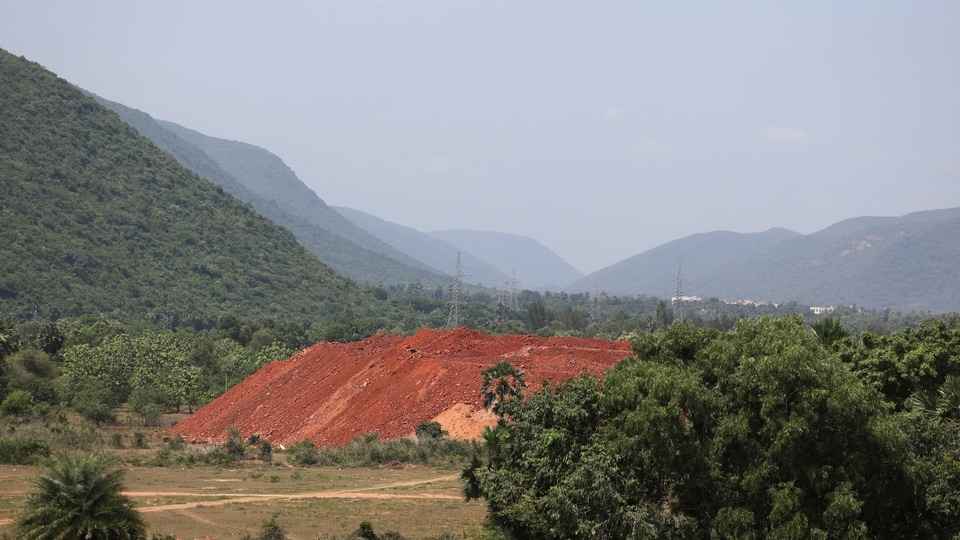
The Kambalakonda Wildlife Sanctuary, as seen from the construction site of the Google-Adani data centre in Tarluvada, Visakhapatnam, Andhra Pradesh, India, August 3, 2026. (REUTERS)

While that’s fair, how safe are these AI trends for us, and the environment that sustains us? Read on to find out.

Read More | 1980s AI photo trend: What is the environmental cost of your latest AI avatar?

Privacy concerns

In the age of Meta AI glasses, it has become increasingly impossible to avoid surveillance and protect your facial identity.

The ordinary people who upload their pictures to recreate a 1980s retro look for a moment of joy might not be aware that ChatGPT and Gemini can save their pictures. AI itself claims that “on personal ChatGPT accounts, content may be used to improve/train models unless you opt out.” Unless turned off, data control options allow OpenAI and Google to save user data for training purposes.

Read More | Making AI 1980s photos? ChatGPT has a warning about your pictures

The climate crisis of rising temperatures

Most large-scale AI systems run in data centres, including those managed by cloud service providers. However, these facilities can have a significant environmental impact. As reported by Al Jazeera, a study by Cambridge researchers found that land surface temperatures around AI data centres increase by an average of 2°C (3.6°F), with some areas experiencing rises of up to 9°C (16.2°F). This is called the “data heat island effect”.

In fact, in Thane and Visakhapatnam, residents have staged some of India’s first organised protests against large data centres, raising concerns that these projects could further strain local land, power and water resources.

Shortage of resources

A case-study by University of Oxford labelled data centres as “water guzzling” and “energy eaters”. According to the International Energy Agency (IEA), data centres consumed around 415 terawatt hours (TWh) of electricity in 2024, accounting for roughly 1.5% of global electricity consumption, as per Al Jazeera. This demand has grown by about 15% annually over the past five years and is expected to nearly double to 945 TWh by 2030.

Read More | Want an AI-made 1980s makeover? Think twice before uploading your photo

Data centres require larger amounts of water to cool them down and generate electricity. A study published in Water Research estimated that AI’s global water footprint could rise to 4.2–6.6 billion cubic metres a year by 2027, while noting that around two-thirds of data centres built after 2022 are located in water-stressed regions.

On the other hand, a huge chunk of world’s population doesn’t have easy access to water. According to the United Nations World Water Development Report 2024, around half of the world’s population experiences severe water scarcity for at least part of the year.

Generating a single AI image isn’t the issue, the main problem lies in large-scale usage and viral trends. As AI becomes increasingly woven into everyday digital life, being mindful of what we upload and how often we use these tools is a small but worthwhile step.


Share This Article
Facebook Email Copy Link Print
Previous Article Delhi Cop Removed From BRICS Duty After Posting Reel Showing Weapons, Security Posts
Next Article Amit Shah Says PM Modi Changed India’s Politics, UCC To Be Introduced In 21 States Before 2029
Leave a Comment Leave a Comment

Leave a Reply Cancel reply

Your email address will not be published. Required fields are marked *

You Might Also Like

BusinessLifestyleStartup

BJP seeks CBI probe into Gruha Lakshmi scheme

The Bharatiya Janata Party on Thursday demanded a Central Bureau…

5 Min Read
BusinessLifestyleStartup

Derogatory remarks against women: Yograj Singh denied pre-arrest bail

A local court on Tuesday dismissed the anticipatory bail plea…

2 Min Read
BusinessLifestyleStartup

40 bottles of expired soft drinks, pest infestation found at Bengaluru hockey club

Forty bottles of expired soft drinks were found at Bengaluru’s…

2 Min Read
BusinessLifestyleStartup

Numerology Horoscope for July 3, 2026: Here’s what your birth numbers have in store for you

Number 1 (Born on the 1st, 10th, 19th and 28th)Chasing…

13 Min Read
Next India MagazineNext India Magazine
Follow US
© 2026 Next India Magazine powered by India Times Now. All Rights Reserved.
Welcome Back!

Sign in to your account

Username or Email Address
Password

Lost your password?