


Business
oi-Ashish Rana

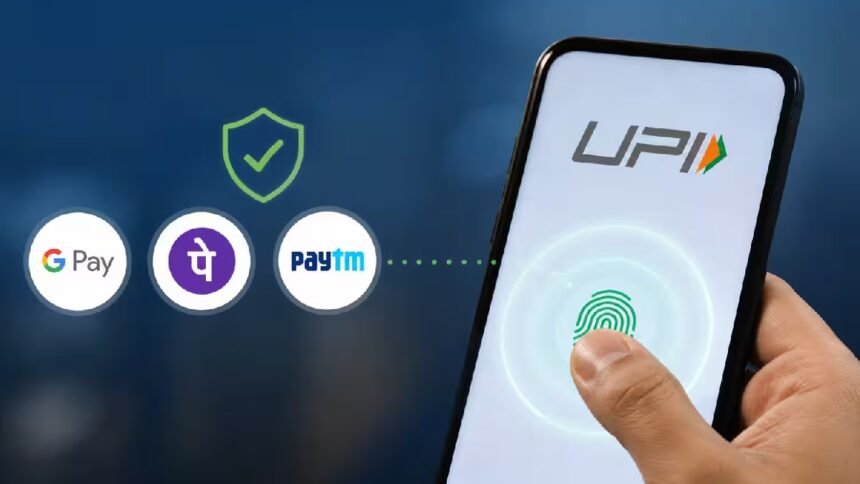
The National Payments Corporation of India (NPCI) has clarified how the new Merchant Discount Rate (MDR) on UPI payments will work from 15 October, 2026. The new rules apply a 0.4 Percent MDR to eligible merchant transactions above Rs 2,000, with different rules for some sectors.

Starting October 15, 2026, the NPCI will introduce a 0.4% Merchant Discount Rate (MDR) on UPI merchant transactions over Rs 2,000, capped at Rs 300 for payments of Rs 75,000+, while merchants cannot pass charges to consumers.
The move has raised questions among customers and merchants about who will pay the fee, whether customers will have to pay more and how the charge will be calculated.
Why Is UPI Introducing MDR?
NPCI said UPI handles billions of transactions every month. The MDR collected from eligible merchant payments will remain within the UPI ecosystem and will be used to support infrastructure, cybersecurity, innovation and customer services.
NPCI also said the government incentive for UPI was meant to provide short-term financial support rather than permanently cover the cost of running the payment system.
Industry estimates put the annual cost of running UPI operations, including servers, fraud prevention and technical support, at around Rs 20,000 crore.
UPI MDR: Key Questions Answered
Q. When will the new MDR rules start?
A. The new framework will come into effect from 15 October, 2026.
Q. Can merchants pass the MDR to customers?
A. No. NPCI said merchants cannot pass the MDR charge to customers. Consumers will pay “only the posted price.”
Q. How much will the MDR be?
A. Eligible transactions above Rs 2,000 will generally attract an MDR of 0.4 Percent. For example, a Rs 3,000 payment would result in an MDR of ₹12, while a Rs 50,000 payment would attract Rs 200.
Q. Is there a maximum cap?
A. Yes. For payments of Rs 75,000 and above, the maximum MDR will be Rs 300 per transaction. Therefore, a Rs 1 lakh payment will not attract Rs 400. The applicable maximum will be Rs 300.
Q. Will UPI person-to-person payments become chargeable?
A. No. P2P transactions will remain free for both the sender and receiver.
Q. Can UPI apps charge a platform fee?
A. NPCI said UPI app providers cannot charge a platform fee or any other fee for UPI payments.
What About Small Merchants?
Small merchants covered under the Person-to-Person-Merchant (P2PM) framework will continue to have zero MDR.
P2PM is designed for small vendors who receive UPI payments directly into their accounts. Merchants receiving up to ₹1 lakh per month through UPI QR under this framework will remain exempt.
This means a payment above ₹2,000 does not automatically mean that every small merchant will have to pay MDR. The merchant’s account category will determine whether the charge applies.
Fuel And Other Special Categories
Some sectors will not follow the standard 0.4% MDR. These include railways, telecom services, insurance and fuel, among others.
For these categories, a flat ₹5 MDR will apply to transactions above ₹2,000.
For example, a petrol pump operator receiving a UPI payment above ₹2,000 will pay a fixed ₹5 MDR instead of 0.4% of the transaction value. Fuel payments below ₹2,000 will continue to have zero MDR.
NPCI said the final operational rules, fee distribution and category-wise caps will be decided through the UPI and Services Steering Committee headed by NPCI.