


Spotlight
oi-Oneindia Staff

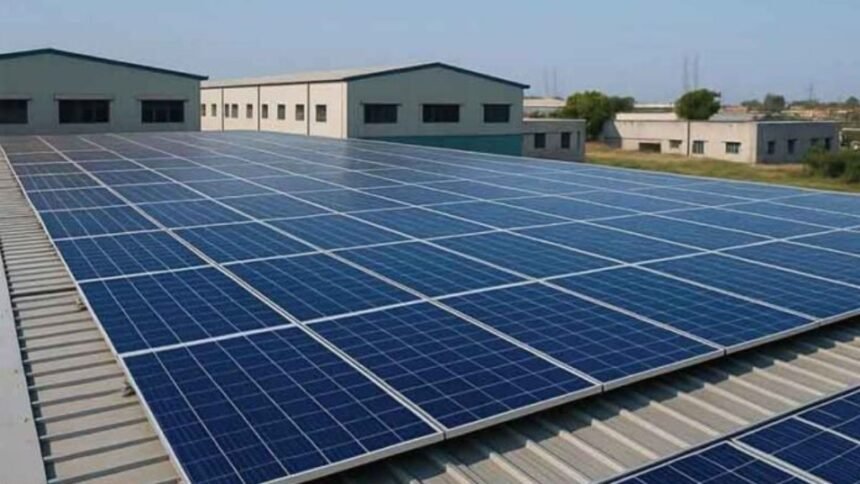
India’s rooftop solar expansion in individual homes is now running hand in hand with powering entire residential communities. Under the Centre’s flagship PM Surya Ghar: Muft Bijli Yojana, 19,035 Residential Welfare Associations (RWAs) and Group Housing Societies across the country have successfully installed solar systems within their complexes.

India’s PM Surya Ghar: Muft Bijli Yojana has enabled 19,035 RWAs to install over 278 MW of community rooftop solar, benefitting 9.09 lakh households by reducing electricity costs for common utilities, with Gujarat and Maharashtra leading installations.
This initiative has directly benefited over 9.09 lakh households under RWAs, drastically cutting down electricity expenses for shared common utilities. Alongside home units, a cumulative rooftop solar capacity of over 278 MW has been installed for these communities, with the government disbursing ₹422.30 crore in central subsidies so far.
From Lifts, Pumps, STP (Sewage treatment plants), Common Area Lighting to Solar Powers Common Facilities
The scheme provides a dedicated framework for residential societies to generate solar power for their shared electricity requirements. The clean energy generated can be used to operate lifts, common-area lighting, water pumps, security systems and STP (Sewage treatment plants).
Under the operational guidelines, eligible solar capacity is calculated at a benchmark of 3 kWp per household, subject to a maximum project capacity of 500 kWp. This allows residents of multi-storey housing complexes to collectively benefit from rooftop solar without having to install separate systems for individual homes.
Gujarat and Maharashtra Lead the Rooftop Solar Push
As per the recent data, Gujarat leads in total installations, with 9,377 housing societies setting up 106.18 MW of solar capacity and benefiting around 3.54 lakh households. Maharashtra, meanwhile, has recorded the highest solar capacity, with 7,571 RWAs collectively installing 138.99 MW, benefiting approximately 4.28 lakh households.
Other states are also steadily expanding their adoption of community solar. Telangana, Tamil Nadu, and Andhra Pradesh have implemented it across 273, 640, and 248 RWAs respectively.
Up to ₹18,000 Subsidy Per kW
The government has disbursed ₹422.30 crore in central subsidy, with final subsidy transfers having been completed for RWAs. To make community-scale rooftop solar financially viable, the government provides Central Financial Assistance (CFA) of ₹18,000 per kW for eligible RWA and GHS projects.
Housing societies located in Special Category States and Union Territories including the North-Eastern states, Himachal Pradesh, Uttarakhand, Jammu and Kashmir, Ladakh, Andaman and Nicobar Islands, and Lakshadweep are eligible for a higher CFA of ₹19,800 per kW.
Akhil Jai Singh, the President of Surya Square RWA, Gokhale Marg, Lucknow said “Our experience of installing rooftop solar under the PM Surya Ghar: Muft Bijli Yojana has been very encouraging. Before the installation, our housing society was spending around ₹18,000/- per month on electricity used for common-area facilities. After commissioning the rooftop solar plant, this expenditure has reduced substantially to ₹3,000/- per month on an average.”
He further added “The savings generated through solar are a direct financial benefit to our residents. Instead of spending a large part of the society’s maintenance collections on electricity bills, these funds can now be utilised for improving parks, security arrangements, building maintenance, common facilities and other resident welfare activities.”
Highlighting the process of adopting rooftop solar in housing societies, Secretary of Shiv Shakti Apartments, Sector-54, Gurugram, commented , “PM Surya Ghar: Muft Bijli Yojana has enabled us to reduce our monthly common-area electricity bill from ₹30,000 to ₹8,000. Our society now saves ₹22,000 every month. With support from our DISCOM and the concerned authorities, the installation process was smooth and hassle-free.”
He further stated “The project has helped us reduce our recurring electricity costs while taking a meaningful step towards adopting clean and sustainable energy. Our residents are extremely delighted with this initiative, as these substantial savings allow us to provide them with significantly enhanced facilities and amenities.”
Solar Power Cuts Housing Society Costs
With common-area electricity bills forming a significant component of monthly maintenance expenses in many large housing complexes, the government’s support for rooftop solar is creating a new avenue for societies to reduce recurring costs while transitioning to cleaner energy. From individual rooftops to entire residential communities, PM Surya Ghar is helping turn India’s housing societies into collective clean-energy hubs cutting electricity costs while bringing solar power closer to everyday urban life.