



India
oi-Madhuri Adnal

Imagine being told that your name has been removed from the electoral roll and that you have the right to challenge the decision. You file your appeal, submit your documents and wait. Then comes the shocking part: the system hearing your case may take more than 12 years to clear its backlog.
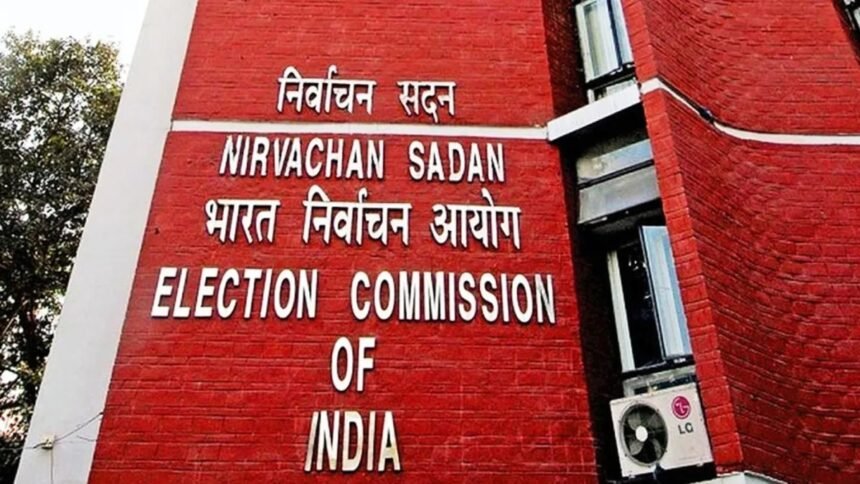
This is not a hypothetical situation. The Election Commission of India (ECI) has told the Supreme Court that, at its present pace, tribunals hearing appeals arising from West Bengal’s Special Intensive Revision (SIR) of electoral rolls could take 146 months to dispose of the pending cases.
The Election Commission of India reported that West Bengal’s electoral roll revision appeals backlog could take 146 months to clear, with over 37 lakh cases pending, raising concerns about institutional planning and accountability.

More than 37 lakh appeals were still pending as of September 16. The tribunals had disposed of only 1,26,194 cases in five months. The Commission has now asked for the number of tribunals in West Bengal to be increased from 24 to 42 and has suggested allowing judicial officers to conduct proceedings from home to speed up the process.
More tribunals may help. But it does not answer the question that should now be asked to the Election Commission: how did the system reach this point in the very first place?
The scale of the appeals could hardly have come as a complete surprise. A large scale revision of electoral rolls inevitably creates disputes. When names are removed, some voters will challenge the decision. Some will have documents to establish their eligibility. Some will dispute the reasons for deletion. Others may have been caught in errors or inconsistencies in the process.
The appeal mechanism, therefore, was never an unexpected consequence. It was an essential part of the exercise.
That makes the present situation particularly difficult to explain.
If the Election Commission knew that millions of appeals were possible, why was sufficient capacity not created beforehand? If it did not foresee the scale, why did its planning fail to anticipate a predictable consequence of such a massive electoral roll revision? And if the Commission had underestimated the workload, who was responsible for that assessment?
These questions inevitably bring Chief Election Commissioner Gyanesh Kumar into the spotlight.
This is not about suggesting that the CEC personally examined every voter record or decided how individual names were removed. The Election Commission is a large institution with officials working at several levels. But the head of a constitutional institution cannot be separated completely from questions about its preparedness and institutional decisions.
Leadership means anticipating consequences.
The Commission is now effectively acknowledging that its existing appellate infrastructure is inadequate. Its request for 42 tribunals is an admission of the scale of the problem. But asking for additional capacity after more than 37 lakh cases have accumulated is very different from ensuring that adequate capacity existed before the exercise began.
And there is a fundamental reason why this cannot be dismissed as an ordinary administrative backlog.
Elections do not wait for appeals.
If an eligible voter is wrongly excluded from the electoral roll and their case is decided three years later, restoring their name does not restore the vote they lost in an election held during those three years. If the decision comes six years later, the problem is even more obvious. A remedy that arrives after the democratic moment has passed cannot fully repair the damage.
The Commission’s own figures make this concern harder to ignore. More than 1.13 lakh voters have been added back to the electoral rolls after their appeals were decided. That does not prove that the entire SIR process was wrong, nor does it establish that every deletion was unjustified. But it shows that the appeals mechanism is producing real corrections.
So what happens to the millions still waiting?
This is where the accountability question becomes unavoidable.
The Election Commission can increase tribunals, permit remote hearings and bring in more officers. Those measures may reduce the backlog. But they do not explain why the system was not ready for the workload created by the exercise.
The public deserves to know what projections were made before the SIR, what number of appeals was anticipated, what tribunal capacity was considered necessary and whether officials warned the leadership about the possibility of an overwhelming backlog.
And ultimately, the country deserves to know whether this was simply an unforeseen administrative problem or a failure of institutional planning.
That distinction matters.
If the scale of the crisis genuinely could not have been predicted, the Commission should explain why. If it was foreseeable and adequate preparations were not made, then responsibility has to travel upwards.
That brings us to the question that may be uncomfortable but cannot be avoided: should Gyanesh Kumar take responsibility if the Election Commission failed to anticipate and prevent this crisis?
Responsibility does not automatically mean resignation. A fair assessment would first need to establish what the Commission knew, what it planned and what could reasonably have been foreseen. But if such an assessment establishes a serious failure of leadership and preparation, then asking whether the CEC should step down is a legitimate accountability question.
The Election Commission occupies a position unlike an ordinary government department. It asks citizens to trust the electoral roll, political parties to accept its processes and voters to have faith in the fairness of elections. That trust carries an obligation to ensure that citizens have a timely mechanism to challenge decisions affecting their right to vote.
A 12 year backlog raises serious questions about whether that obligation was adequately planned for.
The answer cannot simply be another request for more tribunals.
The harder question is this: who was responsible for ensuring that millions of voters would not be left waiting for years to establish their right to participate in an election?
If the Election Commission failed to foresee the mess, the country deserves an explanation.
And if the failure was foreseeable, it deserves accountability.