


India
oi-Gaurav Sharma

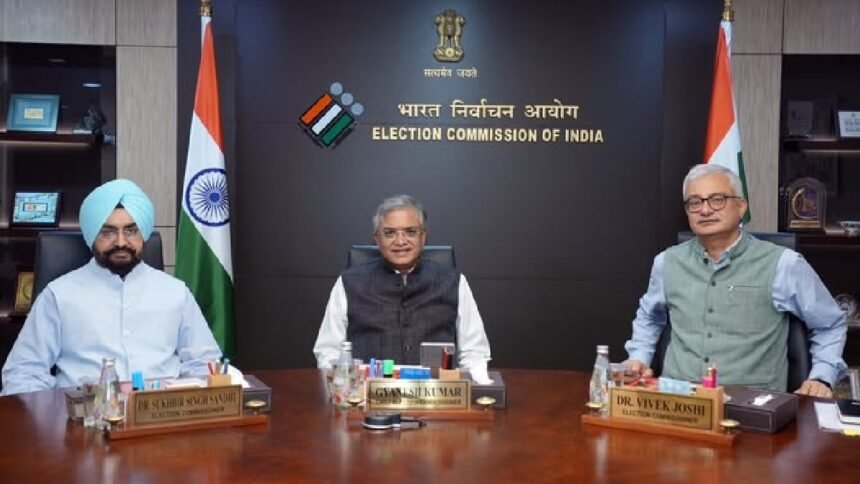
The Election Commission has pushed back against claims of a serious internal rift over voter-roll decisions, with EC sources saying all major decisions, including the Special Intensive Revision exercise, had the approval of Chief Election Commissioner Gyanesh Kumar and Election Commissioners Sukhbir Singh Sandhu and Vivek Joshi.
The clarification came after a report said Sandhu and Joshi had recorded objections at least 14 times between November 2025 and August 2026 to decisions issued in the Commission’s name. The reported objections related to voter registration forms, control of electoral-roll databases, deletion appeals in West Bengal and voter inclusion issues in Goa.
The Election Commission of India has denied reports of significant internal dissent over voter roll decisions, maintaining that unanimous approval from Chief Election Commissioner Gyanesh Kumar and Commissioners Sukhbir Singh Sandhu and Vivek Joshi covered key actions like the Special Intensive Revision and Form 6 modifications between November 2025 and August 2026.

EC sources say SIR decisions were unanimous
According to EC sources cited in the clarification, the Commission’s decisions were not unilateral. “All decisions of the Election Commission of India, including SIR, have been unanimous and with the approval of both the Election Commissioners and the Chief Election Commissioner,” the statement said.
The response is significant because the Election Commission functions as a multi-member constitutional body. While the Chief Election Commissioner heads the institution, decisions of the Commission are expected to reflect the collective view of the panel, especially on matters affecting electoral rolls and voting rights.
The reported objections, if accurately recorded, would raise questions about internal procedure, documentation and whether operational decisions were being placed before all commissioners in time. The EC’s denial, however, seeks to draw a clear distinction between internal discussion and final institutional approval.
Why Form 6 became a point of dispute
One of the key issues reported was a change to Form 6, the application used by citizens to enrol as voters. During the Special Intensive Revision process, new applicants were reportedly asked whether their name, or that of a parent or grandparent, appeared in the electoral roll prepared during the previous SIR.
The report said Election Commissioner Vivek Joshi objected to the change in May, arguing that Form 6 was prescribed under electoral rules and could not be altered in that manner without amending those rules. Sandhu was reported to have later called the change “unauthorised and illegal”.
Form 6 is central to voter inclusion. Any additional question on the form can affect how first-time voters, migrants, young adults and people without older family records complete the enrolment process. That is why changes to voter application formats usually attract close scrutiny from parties, civil society groups and election officials.
The reported objection did not merely concern formatting. It went to the legal basis for asking additional information from applicants during roll revision. The report said the question remained on the form until September 21, although the EC sources maintained that decisions, including those linked to SIR, had the approval of the full Commission.
Concerns over voter data and ERONet access
Another major area of reported disagreement involved control over electoral-roll data. The Commission uses digital systems to manage voter information across states. ERONet has been used for electoral-roll work, while ECINet is a wider platform designed to integrate several election-related services.
According to the report, Joshi raised concerns about what he described as the gradual centralisation of electoral-roll database controls in Delhi. He reportedly suggested an audit to ensure that only statutory authorities could make changes to voter records. Sandhu was also said to have flagged access-related concerns in August.
Voter databases are sensitive because additions, deletions and corrections directly affect the right to vote. Electoral Registration Officers and other notified authorities have defined roles under the law. If digital access is restricted, unclear or centralised without sufficient oversight, it can create procedural and legal concerns.
The report also said Sandhu and Joshi separately approached Cabinet Secretary T V Somanathan over changes involving the EC’s information technology systems. They were reportedly concerned that the changes could reduce oversight of systems used to manage voter lists. The order was later set aside, and the earlier arrangement was restored until the Commission could agree on changes.