


India
oi-Madhuri Adnal

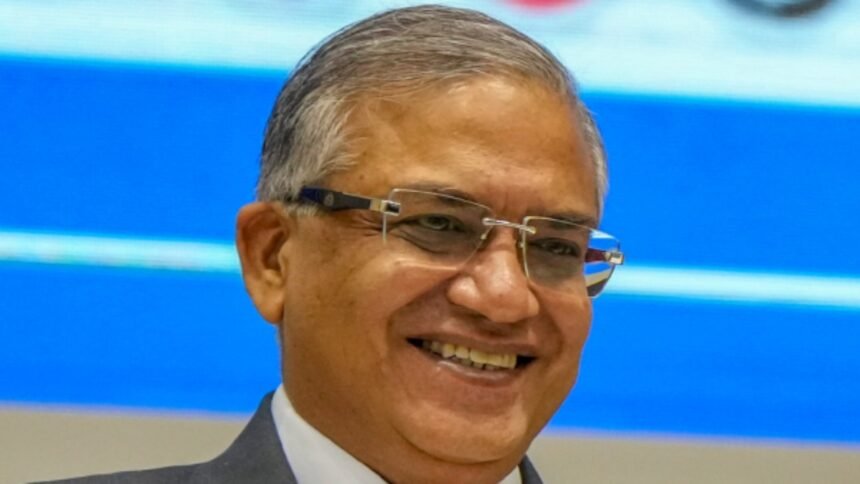
Gyanesh Kumar has spent much of his career working behind the scenes on some of the biggest decisions taken by the Union government. Today, as Chief Election Commissioner, he is himself at the centre of a controversy that has opened a rare window into disagreements within the Election Commission.
Kumar took charge as India’s 26th Chief Election Commissioner on February 19, 2025. His term is scheduled to end on January 26, 2029.
Chief Election Commissioner Gyanesh Kumar is central to a controversy where Commissioners Sukhbir Singh Sandhu and Vivek Joshi reportedly raised objections concerning decisions made without their knowledge, such as changes to voter registration forms.

The latest controversy began with a report by The Indian Express, which said Election Commissioners Sukhbir Singh Sandhu and Vivek Joshi had recorded objections at least 14 times over the past 10 months.
The objections reportedly concerned decisions that the two Commissioners said had been taken without their knowledge. Among the matters they raised were changes to Form 6, which is used for voter registration, and the centralised handling of electoral roll data.
The report has brought attention to what is happening inside the three member poll panel at a time when the Election Commission is already facing intense political scrutiny over the Special Intensive Revision of electoral rolls.
The Election Commission has said differences of opinion are part of the normal deliberative process and has maintained that its final decisions on the nationwide SIR were unanimous. Neither Sandhu nor Joshi has publicly commented on the objections attributed to them.
Long before he became the country’s top election official, Kumar was a senior bureaucrat with experience in some of the most sensitive areas of government.
A 1988 batch IAS officer from the Kerala cadre, he held several posts in the state before moving to the Centre.
His years in the Union Home Ministry brought him into the government’s work following the abrogation of Article 370. He was also involved in the process related to the setting up of the Ram Janmabhoomi trust after the Supreme Court’s Ayodhya verdict.
Kumar later served as Secretary in the Ministry of Parliamentary Affairs and then as Secretary in the Cooperation Ministry.
He had also worked in the Defence Ministry and Home Ministry, holding positions including Joint Secretary and Additional Secretary.
He joined the Election Commission in March 2024, shortly before the schedule for the Lok Sabha election was announced. Less than a year later, he took over as CEC.
His official Election Commission profile lists an engineering degree from IIT Kanpur, a qualification in business finance from the Institute of Chartered Financial Analysts of India and studies in environmental economics at Harvard University.
Kumar’s appointment as CEC came under the 2023 law that changed the process for selecting election commissioners.
The new law replaced the Chief Justice of India on the selection panel with a Union Cabinet minister. This meant the government had two representatives on the three member panel, with the Leader of Opposition being the third member.
Rahul Gandhi, who was the Opposition representative on the panel, had sought a delay in the selection process until the Supreme Court considered challenges to the law.
That legal battle was still alive on Wednesday when a two judge Supreme Court bench delivered a split verdict on whether the petitions challenging the law should be considered by a larger bench.
The two Commissioners who raised objections
Sandhu has been part of the Election Commission since March 2024 and served during the 2024 Lok Sabha election.
A 1988 batch IAS officer from Uttarakhand, he has previously served as the state’s Chief Secretary. His earlier central government assignments included Chairman of the National Highways Authority of India and Secretary to the Lokpal. His term as Election Commissioner is due to end in July 2028.
Joshi joined the poll panel on the same day Kumar became CEC.
A 1989 batch IAS officer from Haryana, Joshi had earlier served as the state’s Chief Secretary. He has also held senior positions at the Centre, including in the Department of Financial Services and the office of the Registrar General and Census Commissioner.
The reported objections have surfaced at a particularly sensitive moment for the Election Commission.
The SIR exercise has become one of the biggest political flashpoints around electoral rolls, with Opposition parties alleging that eligible voters could be left out. They have also accused the poll panel of favouring the ruling BJP. The Election Commission has rejected these allegations.
Kumar had earlier faced criticism over his response to Rahul Gandhi’s “vote chori” allegations. He had asked Gandhi to substantiate the allegations through a sworn declaration or apologise.