



International
oi-Swastika Sruti

In the latest development, Italian Foreign Minister Antonio Tajani has faced criticism after comments he made about women’s clothing, attractiveness and their suitability for marriage sparked a political controversy in Italy.

Italian Foreign Minister Antonio Tajani faced backlash for remarks linking women’s clothing and attractiveness to marriage suitability, prompting protests from female politicians and a wider debate on gender stereotypes. Tajani later claimed his comments were misunderstood.
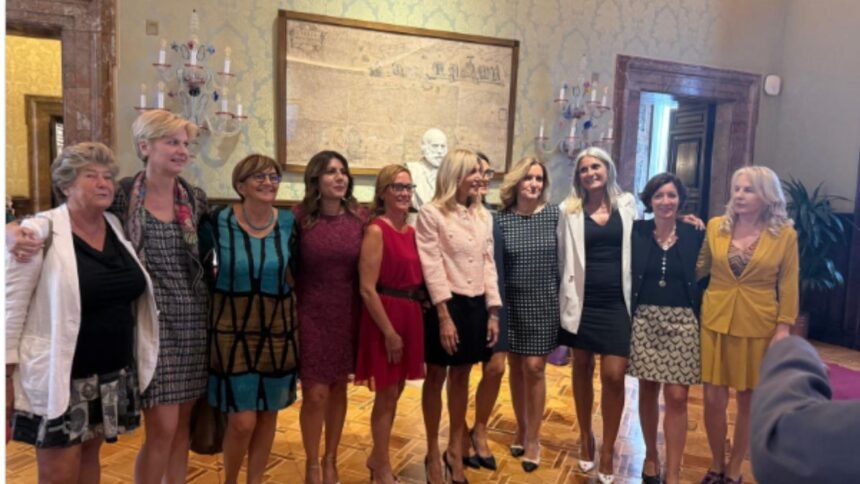
His remarks, reportedly made at an event in Formello near Rome, drew criticism from opposition politicians, with several female lawmakers staging a symbolic protest by wearing short skirts.
What Antonio Tajani Said
Tajani is quoted as having said that should he have to advise a young man on whom to marry, he would prefer to see a less flashy woman but a reliable one who would make a good mother.
The minister took the discussion a step ahead by associating the way a woman dresses or appears with the nature of her character and loyalty towards marriage. A longer skirt-wearing woman would be more dependable when it comes to keeping up the promise of marriage and making sure that everything is fine at home.
In the case of an attractive woman, one may have only a few cornettos from her, according to the reports.
His remarks were soon followed by condemnation from his opponents, who accused him of holding backdated views about women.
Tajani, non sono una donna “affidabile”? Non sono una “brava madre di famiglia”?
Nel 2026 non possiamo sentire ancora un Ministro della Repubblica spiegarci che sia meglio sposare una donna con la gonna più lunga e meno appariscente. pic.twitter.com/oBHtOuTYH7
— Chiara Appendino (@c_appendino) September 20, 2026
Female Politicians Protest In Short Skirts
These comments sparked a reaction from women politicians in Italy.
Chiara Appendino, an Italian politician, published a picture of herself wearing a short skirt, and she wondered if she would be less “reliable” or less of a good mother because of this clothing.
The senator of Italy, Simona Malpezzi, posted a picture of herself and other women politicians in short skirts and dresses. This was in reply to Tajani’s comment.
Another critic was Valeria Valente who is a member of Italy’s Democratic Party.
Ringrazio le donne di Italia Viva che hanno scovato, poi rilanciato e fatto girare sui social il video di Tajani sulle gonne delle donne. Sono fiero di voi: senza la vostra tenacia la frase di Tajani sarebbe finita nel dimenticatoio. È devastante pensare che nel momento più… pic.twitter.com/VwhaLo1TIg
— Matteo Renzi (@matteorenzi) September 21, 2026
The protest highlighted the wider criticism that a woman’s clothes should not be used to judge her character, relationships or suitability for family life.
Matteo Renzi Criticises Tajani
The former prime minister of Italy, Matteo Renzi, was also among those who criticized the foreign minister.
Renzi called out Tajani’s statements as being outdated and said that it was especially disappointing to hear such things from an important member of the government at a time when the international politics is facing many difficulties.
Politicians also took up the cause and kept the controversy alive in Italian politics.
However, former general of the Italian army and politician Roberto Vannacci made another outrageous statement while addressing the controversy. He said that he would prefer women without skirts.
Tajani Says He Was Misunderstood
Tajani later addressed the controversy while attending the United Nations General Assembly in New York.
He said his comments had been misunderstood and apologised to anyone who felt offended.
Tajani maintained that he had never intended to offend women and said he had not meant his remarks as an attack on women.
Italy’s Prime Minister Giorgia Meloni, the country’s first woman prime minister, had not publicly commented on the controversy at the time of the reports.
The episode has since sparked a wider debate in Italy over gender stereotypes, women’s clothing and the expectations placed on women in relationships and family life.