


India
oi-Swastika Sruti

Two viral videos involving politicians have put a familiar question back in the spotlight: what happens when ordinary citizens question people in power?

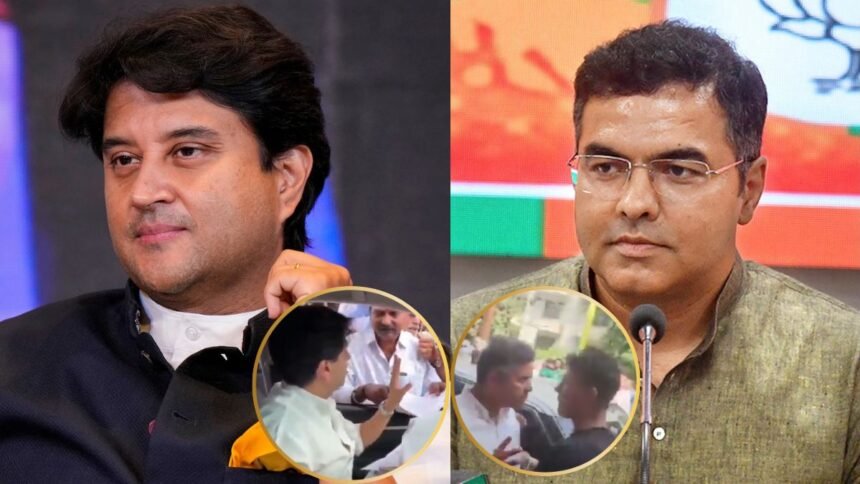
Viral videos feature confrontations between citizens and ministers Parvesh Verma in Delhi and Jyotiraditya Scindia in Guna over road projects, raising questions on political accountability versus public anger.
One latest incident is from Delhi, where PWD Minister Parvesh Verma was seen in a video appearing to slap a young man during a road inspection. The other is from Guna, Madhya Pradesh, where Union Minister Jyotiraditya Scindia had a tense exchange with a resident who questioned him over a delayed road project and said people would not vote if the road was not built.
The two incidents are not identical. One involves an alleged physical assault, while the other involves a sharp verbal exchange. But both have drawn attention because the conversations began with a basic public issue – a road.
Parvesh Verma Slap Row: What Happened In Delhi?
This recent controversy occurred in Tilak Nagar, West Delhi on September 27, 2026, during Parvesh Verma’s inspection of road construction work.
The AAP MLA Jarnail Singh was also present at this site and complained about the quality of the newly laid road. According to reports, parts of the road were removed during the inspection process.
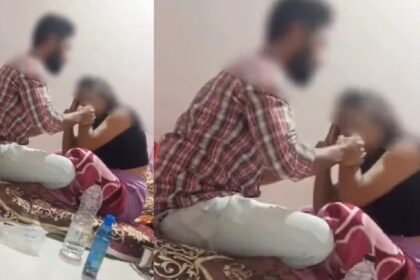
A video which was doing rounds on social media shows Parvesh Verma approaching a young man who was filming the entire process. It can be seen in the video that the minister pulled down the mobile of the man before apparently slapping him. Thereafter, a security guard comes between the two.
Delhis PWD minister Pravesh Verma slapped a young man recording video during ministers inspection. This is the same state where young men and women forced the resignation of a union cabinet minister. pic.twitter.com/kpf7fLtoa0
— Piyush Rai (@Benarasiyaa) September 27, 2026
The man named Saheb says in reports that he is associated with the social media work of Jarnail Singh and was present at the site because people from the PWD department had invited them to inspect the road. He further states that he was showing the defects in the road to the minister when the incident took place. He has also accused the men accompanying the minister of threatening him. The complaint has been lodged in Delhi police.
The video has turned into a political controversy in Delhi.
Parvesh Verma Gives His Version
Verma has contradicted the notion that the matter was only a response to queries regarding the road.
♦️AAP ने जो छिपाया वह सच्चाई जान लीजिए
◾️विकासपुरी रिंग रोड पर पिछले कई दिनों से रोड बनाने का काम चल रहा है। वहां के विधायक जरनैल सिंह द्वारा PWD डिपार्टमेंट के इंजीनियर्स को यह कहा गया कि हमको कॉन्ट्रैक्टर्स से मिलाइए और कमीशन दिलाइए। इसके लिए पुलिस में हम कम्प्लेन करा रहे हैं।… pic.twitter.com/neYXwYwTTy
— BJP Delhi (@BJP4Delhi) September 27, 2026
In his statement, the minister claimed that the entire context of the matter had been left out of the viral video. He claimed that those who accompanied Jarnail Singh were abusive to his family and he reacted in anger.
Verma further claimed that Jarnail Singh was interfering with government business and he had also made some allegations against the road contractor. This is what Verma claims and has not yet been proven to be true.
Guna: When A Road Complaint Turned Into A Viral Exchange
Another such controversy related to road had occurred just before the Delhi incident.
In this case, Union Minister Jyotiraditya Scindia was on a tour to Guna in Madhya Pradesh on September 19, 2026 when the locals halted his convoy owing to an ongoing road-related dispute.
Locals held banners bearing the slogan “Road nahi to vote nahi” – no road, no vote.
One local warned Scindia that unless the road work was carried out by the time of the next election, they would not cast their votes. Scindia retorted and said that he did not want to hear such language from that person. He requested the man to make a request instead as he was the one responsible for completing the task.
एक व्यक्ति:- आपसे निवेदन है कि इस बार समय से पहले ये रोड बन जाए, नहीं तो फिर इस बार हम लोगों में से कोई भी वोट नहीं डालेगा
ज्योतिरादित्य सिंधिया:- ये भाषा मेरे सामने कभी प्रयोग ना करना pic.twitter.com/h0sqrKxb1U
— Shubham Shukla (@Shubhamshuklamp) September 18, 2026
Scindia Later Announced ₹3 Crore For The Road
There was another development after the confrontation.
Around half an hour after the video gained attention, Scindia announced ₹3 crore for the road project from the fund of Guna MLA Pannalal Shakya. He also directed the district administration to take up the construction after the monsoon.
This part of the story is important because the viral clip captured only one moment of the larger episode. The resident raised a civic demand, there was a heated response, and a financial allocation for the road was subsequently announced.
Two Politicians, Two Reactions, One Common Question
The Delhi and Guna incidents are different in both nature and circumstances.
In Delhi, the controversy centres on a video showing Parvesh Verma appearing to slap a man, followed by a police complaint and competing claims about what happened before the incident.
In Guna, there was no allegation of physical assault. The controversy arose from Scindia’s response when a resident linked the pending road to his vote.
Yet there is a common thread: citizens raising questions about public infrastructure in front of politicians.
Roads are among the most visible signs of governance. For an ordinary resident, a broken or unfinished road is not an abstract policy issue. It affects daily travel, safety and access to homes and businesses.
When such complaints are raised directly with elected representatives, the response becomes part of the public’s perception of how accessible and accountable those representatives are.
Has Political Power Changed The Way Leaders Respond?
The phrase “arrogance of power” has been used by opposition parties and critics while reacting to these incidents. Congress, for instance, used that phrase while criticising Scindia’s Guna exchange. That is a political characterisation, not an established finding.
Similarly, AAP leaders have strongly criticised Verma over the Delhi incident and demanded action against him. Verma, however, has presented a different account of the confrontation.
So, rather than treating two viral clips as proof of a broader political trend, the incidents raise a more basic question about public office and public behaviour.
The Bigger Issue Is Not Just Anger – It Is Accountability
The debate around these two incidents goes beyond whether a politician appeared angry.
The larger issue is how elected representatives respond when voters are unhappy.
A citizen saying “build our road or we won’t vote” is exercising political choice. A resident recording a public road inspection is also part of today’s reality, where almost every public interaction can be documented.
At the same time, politicians are entitled to respond to allegations, explain their position and object to conduct they consider inappropriate.
The real test is what happens after the confrontation: Is the complaint heard? Is the work actually completed? Are allegations investigated? And if someone crosses a legal or official boundary, is there due process?
Two viral videos. Two road disputes. Two very different confrontations.
But the question they have brought back into public discussion is simple:
When citizens question those in power, should the answer be anger – or accountability?