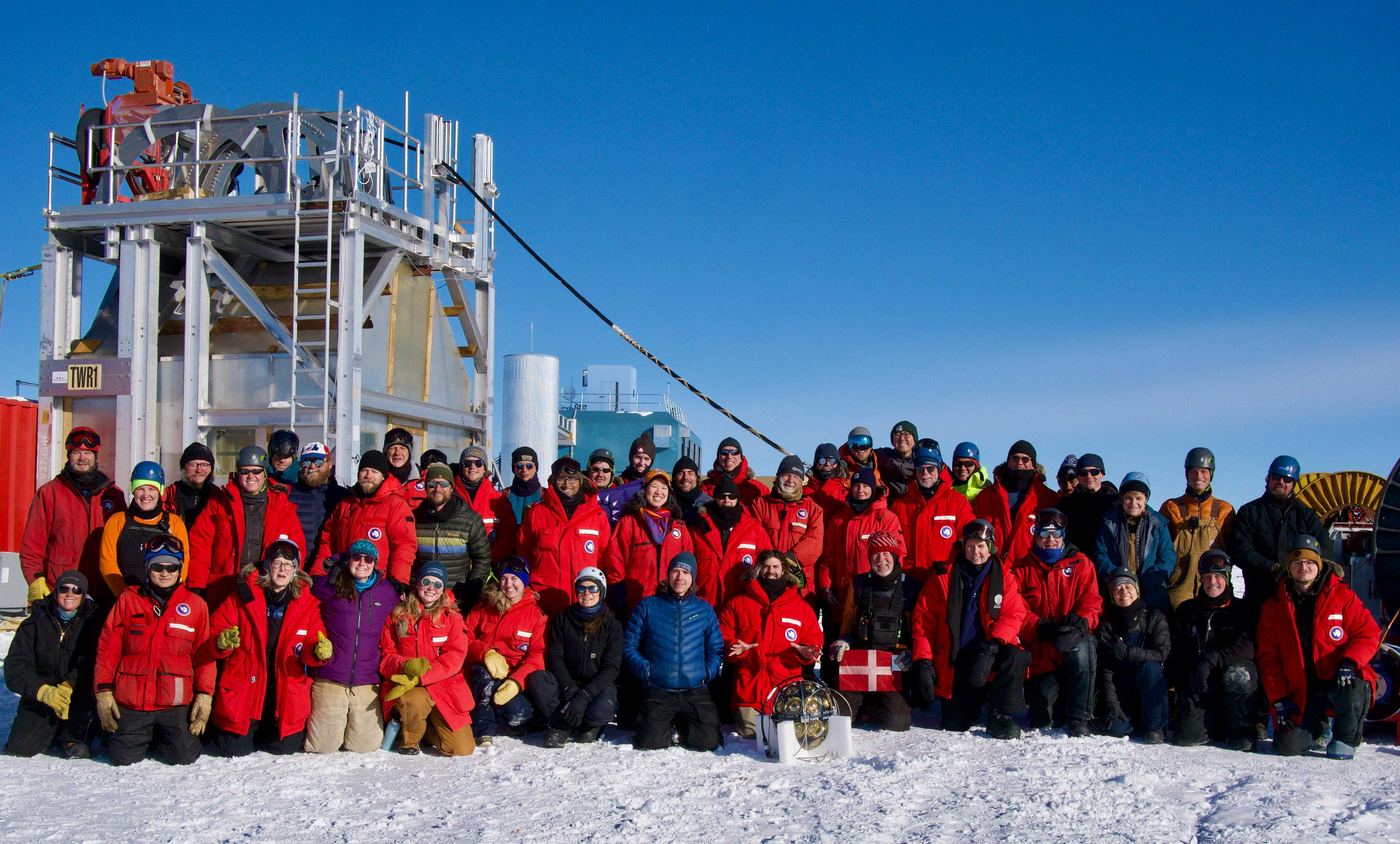



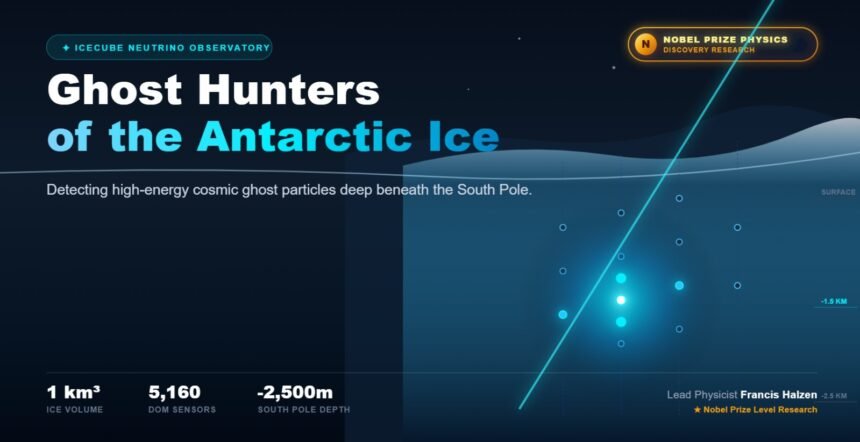
Francis Halzen, a physicist from Belgium, laid the foundations for an entirely new kind of astronomy. Instead of collecting light with mirrors and lenses, he wanted to use the ancient glacial ice of the South Pole to catch some of nature’s most secretive particles: neutrinos. That idea became the IceCube Neutrino Observatory, an instrument that can follow neutrinos back toward the distant corners of the cosmos where they were born.
1
The particle that ignores everything
The neutrino is the shyest particle in the universe. It carries no electric charge and has almost no mass, so it barely notices ordinary matter. Walls, mountains and entire planets are practically empty space to a neutrino. It simply passes through.
Right now, every single second, about 65 billion neutrinos from the Sun are streaming through your little fingernail, and you feel absolutely nothing.
Not all neutrinos come from the Sun. Some arrive from much farther away, and those rare travellers carry clues to some of the biggest mysteries of the cosmos. If researchers can capture these cosmic neutrinos, they can work out what was happening in the extreme environments where they were created.

2
An idea born in the 1980s
Back in the 1980s, Halzen realised that the Antarctic ice sheet might be the perfect trap for enough of these elusive neutrinos to tell us where they came from. He quickly persuaded many others that the idea had real potential. In 1992, a determined group of researchers and engineers made their first attempts to lower light sensors down into the glacier at the South Pole.
The real breakthrough came roughly twenty years later. IceCube recorded neutrinos whose properties convinced researchers they had come from distant regions of space. The hunt for the universe’s neutrino sources had begun in earnest.
3
The hunt for high-energy neutrinos
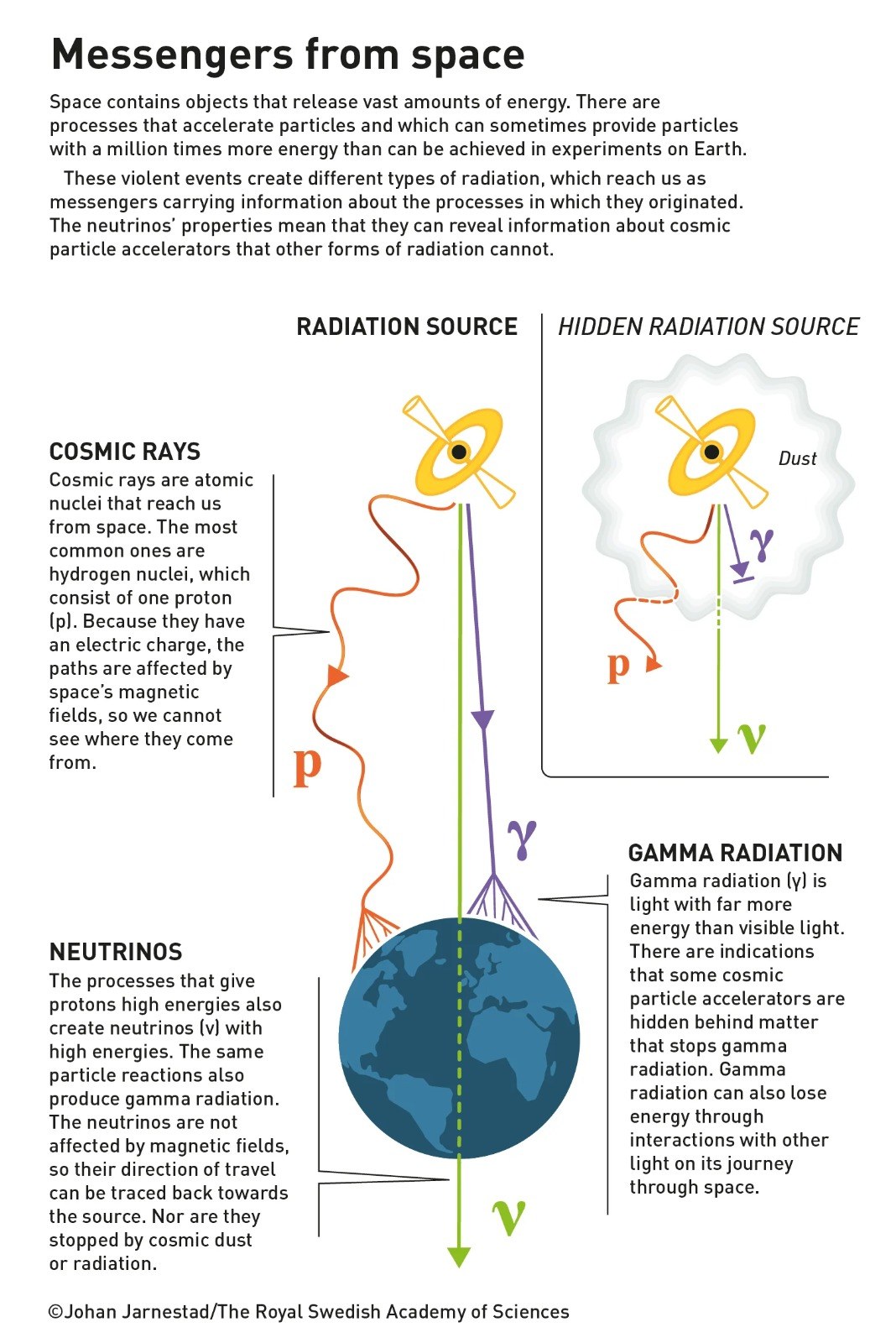
Cosmic rays are tiny particles, mostly protons, that constantly race through space. Some carry astonishing amounts of energy, and scientists still do not know exactly where these powerful particles come from. It is one of astronomy’s oldest unsolved puzzles.
Neutrinos are a way to crack it. Broadly, scientists talk about two kinds. Low-energy neutrinos are produced by radioactive decay here on Earth, by the Sun and by nearby stars. Very-high-energy neutrinos, however, are thought to be born in powerful cosmic events far beyond our Solar System: exploding stars, the remnants of supernovae, and active galaxies. Studying these energetic neutrinos lets scientists peer into some of the most violent processes in the universe.
4
Radio sparks, flashes of light, and a meeting in Poland
In the 1980s, while Halzen was working on cosmic particles, he heard that Soviet researchers were planning to use radio receivers to catch neutrino signals in Antarctica. Their idea was that when a neutrino collides with an atom in the ice, it creates an electrical spark that gives off a radio wave. If that wave were strong enough, an antenna could pick it up.
Halzen was inspired, and he saw another possibility: install light sensors in the glacier ice and watch for the faint flashes of light produced by those collisions.
He contacted his research colleague John G. Learned, who was working on a similar project to catch light from interacting neutrinos in the deep, clear ocean water off Hawaii. Together the two physicists weighed the opportunities and the challenges of hunting neutrinos in Antarctica. They first presented their concept for a neutrino observatory in the South Pole ice in 1988, at a conference in Poland.
5
Why ice? The perfect, and terrible, location
Ice turns out to be a wonderful material for the job. Deep enough down, it is permanently dark. There is no interference from living creatures, only very low levels of radioactive substances, and the region is geologically stable with no earthquakes.
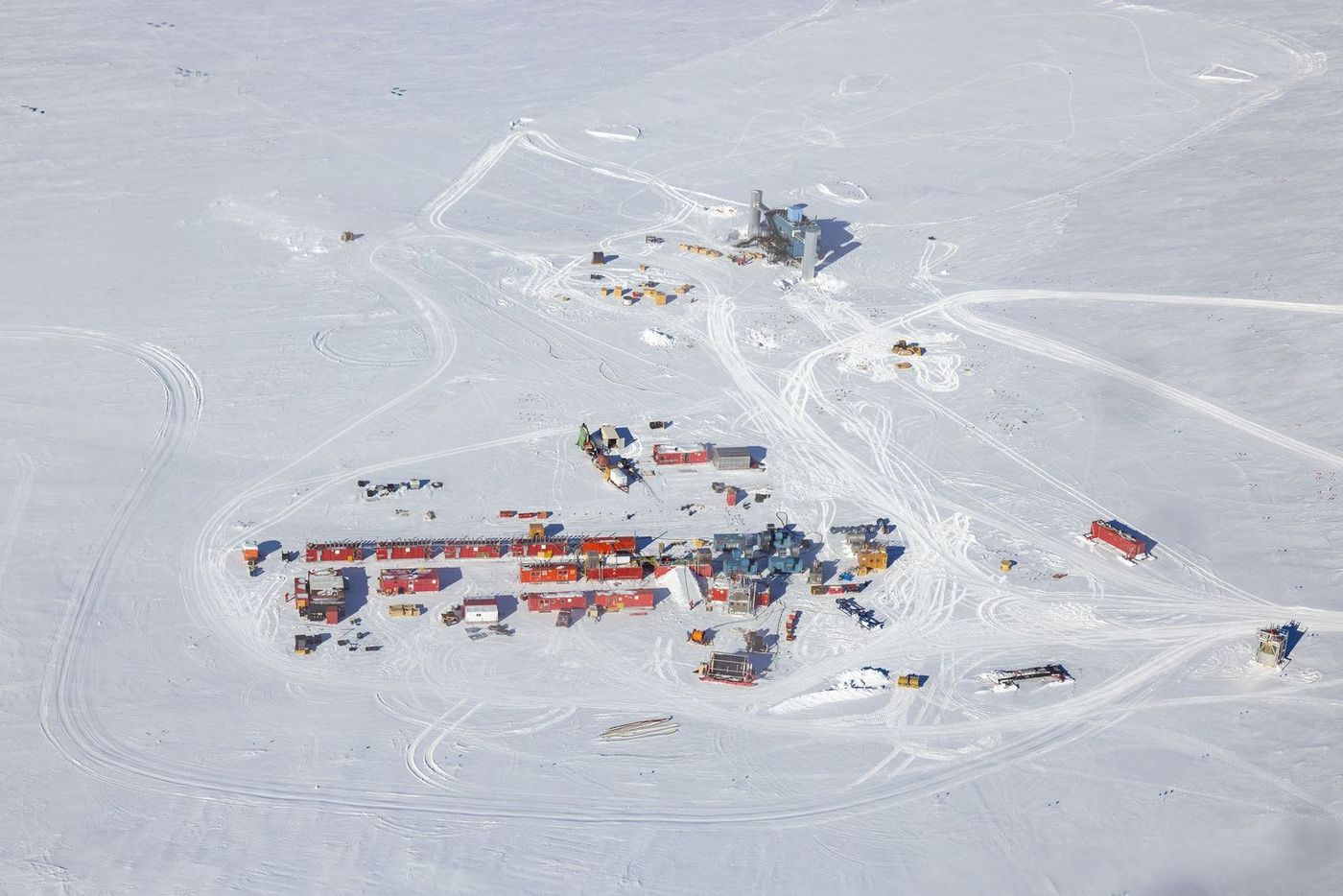
There is one big drawback. The cold makes it impossible to travel to or from the South Pole for most of the year. All the practical work has to be squeezed into the brief Antarctic summer, between November and February.
Even so, the idea was compelling enough that scientists from many different institutions joined Halzen to build a neutrino observatory in Antarctica.
6
Drilling with hot water
The first problem was how to put instruments deep inside the ice. Glaciologists had the answer: drill very deep holes by melting the ice with hot water.
A long cable carrying many light sensors could then be lowered into each water-filled hole before it froze solid again. Halzen likes to describe these sensors as light bulbs in reverse. Instead of turning electricity into light, they catch light and turn it into electrical signals.
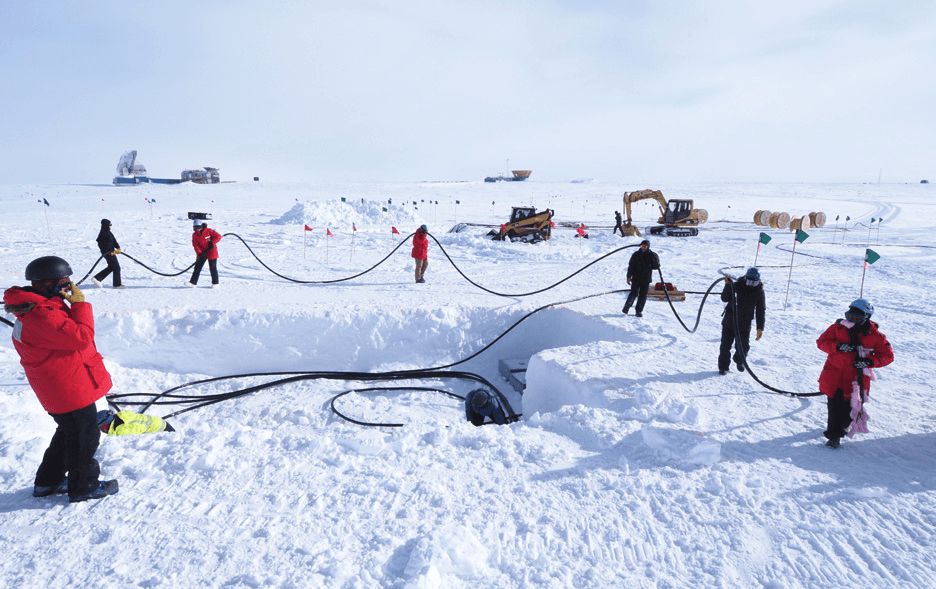
First, the team tested their idea by sinking sensors into the ice in Greenland, to check that they could register light from particles moving through ice. Then they started building the first neutrino observatory at the South Pole, called AMANDA.
But the upper layers of ice were full of tiny air bubbles. These scattered the light in every direction and blurred the information about how the particles were moving, so the very first attempts were disappointing.
Then came good news. Below about 1,400 metres, the ice turned out to be extraordinarily pure and transparent, because the enormous pressure squeezes the bubbles out of existence. Deep ice was actually excellent for detecting neutrinos.
AMANDA’s construction continued until January 2000. Everything worked as intended, but it was simply not big enough to catch the rare, energy-rich neutrinos from cosmic particle accelerators.
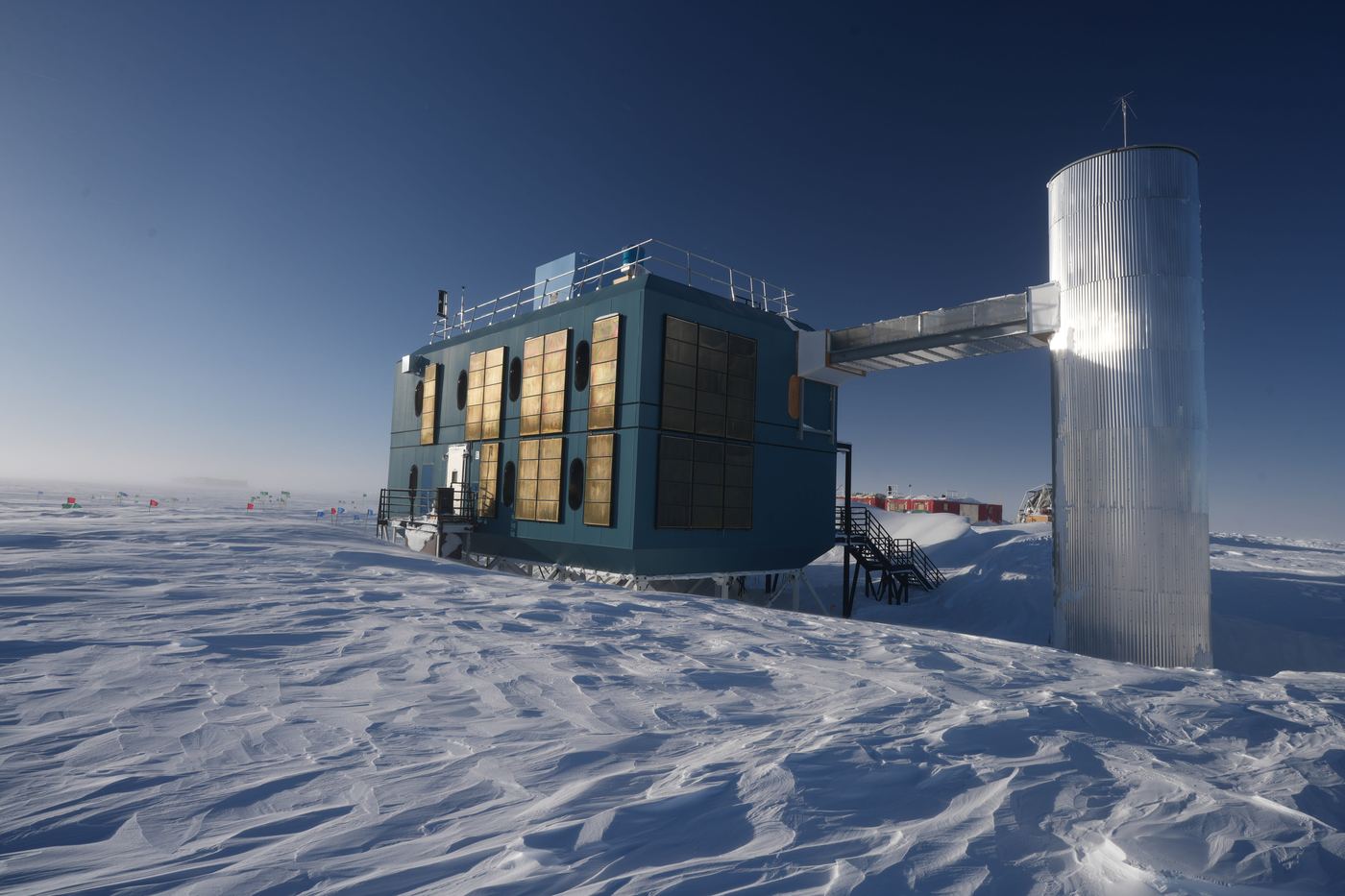
A much larger volume was needed, so work began on a second observatory: IceCube. It instruments a full cubic kilometre of ice (1 km long × 1 km wide × 1 km deep) with 5,160 light sensors spread across 86 cables.
9
IceCube finally finds cosmic neutrinos
Researchers soon detected the first high-energy neutrinos, and a few years later they published the discovery of neutrinos that must have come from far outside our Solar System. The search for the universe’s neutrino sources could finally begin for real.
Every neutrino interaction that IceCube keeps collecting adds to our understanding of the violent settings where high-energy neutrinos are made, and could even reveal cosmic phenomena that nobody has imagined yet.