


This article outlines the proposed constitutional amendment, delimitation, and fast-tracking of the womens reservation law, highlighting potential changes to Lok Sabha and state assemblies, required majorities, and the political dynamics between the government and opposition.
India
-Prakash KL

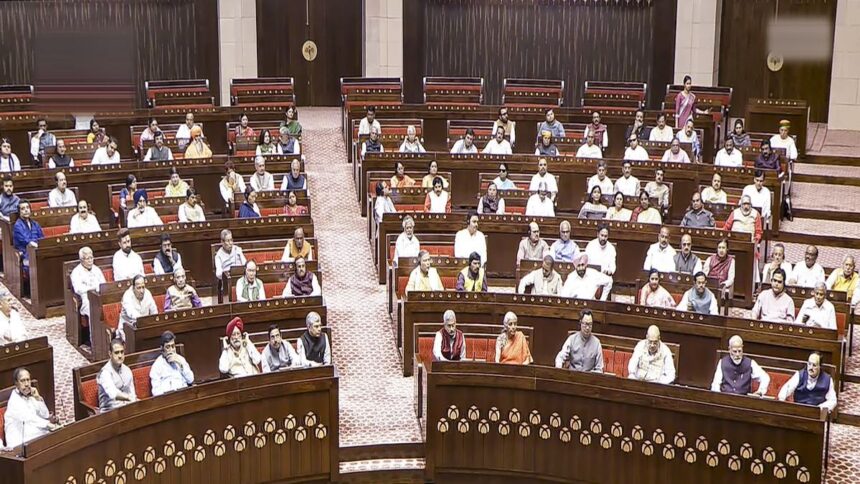
The special Parliament sitting from April 16 to 18 is expected to see sharp exchanges as the Narendra Modi-led National Democratic Alliance government and the Opposition confront each other over a Constitution amendment bill linked to the women’s reservation law and a large-scale redrawing of Lok Sabha and Assembly seats.
The government plans to move several key proposals in the Lok Sabha, including a Constitution amendment bill, a delimitation bill, and a law enabling legislatures in Delhi, Jammu and Kashmir, and Puducherry to speed up the rollout of the women’s reservation law that Parliament cleared in 2023.
During Parliament’s April 16-18 session, a Constitution amendment bill proposes implementing women’s reservation and delimitation, potentially increasing Lok Sabha seats to 850, requiring a special majority and state ratification.

Women’s reservation law and Constitution amendment bill reshape Lok Sabha strength
According to the draft Constitution amendment bill, the number of Lok Sabha seats could rise from 543 to 850 after a fresh delimitation based on the latest census figures, creating space to implement a 33% quota for women, with a corresponding increase proposed in state and Union Territory assemblies.
The amendment’s passage will demand a high bar in both Houses. Article 368 specifies that Constitution amendment bills need a “special majority” in each House, which means support from more than half the total membership and at least two-thirds of members who are present and voting during the division.
The “Special Majority” Requirement
Based on the April 16-18 special session (Article 368 requirement).
| House | Current Strength | Majority Mark (Total) | 2/3 Majority (If Full House) |
|---|---|---|---|
| Lok Sabha | 540 | 271 | 360 |
| Rajya Sabha | 244 | 123 | 163 |
Currently, the Lok Sabha has 540 members and the Rajya Sabha has 244, accounting for vacancies. If every member attends and votes when the bill is taken up first in the Lok Sabha, at least 360 MPs must support it for passage, matching the required special majority threshold.
The Opposition’s combined strength in the Lok Sabha stands at 234, so the government will need backing from rival parties. The four largest Opposition parties — Congress, SP, TMC and DMK — hold 185 members together and could block the bill if they vote as a bloc against the proposed changes.
| Alliance / Bloc | Seats | Key Parties | Stance on Bill |
|---|---|---|---|
| NDA (Govt) | 293 | BJP, TDP, JD-U, Shiv Sena | Pro (TDP wary) |
| INDIA (Opposition) | 234 | INC, SP, TMC, DMK | Against |
| Others / Unaligned | 13 | YSRCP, AAP, AIMIM | Undecided |
Uncertainty over allies further complicates the numbers. The BJP’s partner TDP, which has 16 Lok Sabha MPs, has not clearly committed support for the proposal in its present form, amid concerns that a new seat distribution could favour more populous northern states and weaken representation for southern states in Parliament.
In the Rajya Sabha, where the bill will be taken up after clearing the Lok Sabha, the situation appears somewhat more manageable for the NDA. With a full strength of 244, a two-thirds majority needs 163 votes if all members participate, while the NDA currently has 141, and the effective requirement could fall if some Opposition members skip or abstain from voting.
Rajya Sabha: Alliance Strengths
| Alliance / Bloc | Seats | Status |
|---|---|---|
| NDA (Govt) | 141 | Needs 22 more for 2/3 majority |
| Opposition (INDIA) | 75 | United against Bill |
| Others / Unaligned | 28 | BJD, YSRCP, AAP |
| Vacant | 1 |
The process will not end with Parliament. Because this bill seeks to alter key provisions of the Constitution, it must also secure ratification from at least half of all state legislatures before being sent to the President for assent, making broad political agreement essential for the women’s reservation framework to take effect.
Summary of the Challenge
- The Lok Sabha Gap: The government is 67 votes short of the 360 required for a two-thirds majority in a full house.
- The “Veto” Power: The four largest opposition parties (INC, SP, TMC, DMK) have 185 seats combined. If they vote “No,” the Bill is defeated instantly.
- The Ratification Hurdle: Even if passed by Parliament, the Bill must be ratified by at least 14 state legislatures (50% of 28 states) before it becomes law.