

By using this site, you agree to the Privacy Policy and Terms of Use.
Accept
Next India Magazine
  • Home
    • Home 2
    • Home 3Hot
    • Home 4
    • Home 5New
  • Home
  • Opinion

    That Provide Critical Analysis on Political Decision-Making

    krutikadalvibiz@gmail.com

    Analyzing Global Dynamics and Unraveling Key Policy Initiatives

    krutikadalvibiz@gmail.com

    Luxurious Stays Redefining Hospitality at Hotel Havens

    krutikadalvibiz@gmail.com

    Electric Cars Subsidies by German Taxpayers End Up on Foreign Roads

    krutikadalvibiz@gmail.com

    Challenge and Inspire Future of Political Thought

    krutikadalvibiz@gmail.com

    Assessing the Diplomatic Challenges and Global Security

    krutikadalvibiz@gmail.com
  • World
  • Politics
  • Market
  • Health
  • Insurance
  • Pages
    • Blog Index
    • Contact US
    • Search Page
    • 404 Page
    • Technology
    • World
  • Pages
    • Blog Index
    • Search Page
    • 404 Page
  • Technology
    TechnologyShow More
    Dr. Nishant Sawant: The Mind Behind Secure Digital Progress
    4 Min Read
    NASA’s Artemis II Mission Rekindles Humanity’s Dream of Deep Space Exploration
    5 Min Read
    Buying a Car Will Soon be Like Buying a Phone, Why Your Next Car Could be an EV
    Hands-On With the iPhone 13, Pro, Max, and Mini
    4 Min Read
    Explained: What are Smart Glasses and How Do It Work?
    4 Min Read
  • Posts
    • Post Layouts
      • Standard 1
      • Standard 2
      • Standard 3
      • Standard 4
      • Standard 5
      • Standard 6
      • Standard 7
      • No Featured
    • Gallery Layouts
      • Layout 1
      • Layout 2
      • layout 3
    • Video Layouts
      • Layout 1
      • Layout 2
      • Layout 3
      • Layout 4
    • Audio Layouts
      • Layout 1
      • Layout 2
    • Post Sidebar
      • Right Sidebar
      • Left Sidebar
    • Review
      • Stars
      • Scores
      • User Rating
    • Content Features
      • Highlight Shares
      • Inline Mailchimp
      • Print Post
      • Inline Related
      • Source/Via Tag
      • Reading Indicator
      • Content Size Resizer
    • Table of Contents
      • Full Width
      • Left Side
    • Sponsored Post
  • Contact
  • Pages
    • Search Page
    • 404 Page
Reading: A shifting timing, weak microphone, and other lessons for ‘Cockroaches’ from their first protest on the ground
SUBSCRIBE
Next India MagazineNext India Magazine
Font ResizerAa
  • My Saves
  • Economics
  • Technology
  • My Interests
  • World
  • My Feed
  • History
  • Business
  • Technology
  • Lifestyle
  • Fashion
  • Health
  • Technology
  • World
Search
  • Pages
    • Blog Index
    • Contact Us
    • Search Page
    • 404 Page
  • Home
    • Home 1
    • Home 2
    • Home 3
    • Home 4
    • Home 5
  • Home
  • Blog
  • Categories
    • Technology
    • Lifestyle
  • Personalized
    • My Feed
    • My Saves
    • My Interests
    • History
  • Demos
  • Categories
    • Technology
    • Business
    • Fashion
    • Economics
  • Bookmarks
  • Categories
    • Technology
    • Health
    • World
  • More Foxiz
    • Blog Index
    • Sitemap
  • Bookmarks
  • Contact
  • More Foxiz
    • Sitemap
Have an existing account? Sign In
Follow US
  • Home
  • World
  • Contact
  • Blog
© Foxiz News Network. Ruby Design Company. All Rights Reserved.
BusinessLifestyleStartup

A shifting timing, weak microphone, and other lessons for ‘Cockroaches’ from their first protest on the ground

India Times Now
Last updated: June 7, 2026 4:52 pm
India Times Now
6 Min Read
Share
SHARE

Supporters of the movement Cockroach Janta Party (CJP) gathered at Delhi’s Jantar Mantar on Saturday, demanding action over the NEET 2026 paper leak and alleged irregularities in the CBSE’s on-screen marking system. The protesters also called for the resignation of Union Education Minister Dharmendra Pradhan. It marked the CJP’s first major on-ground mobilisation after building a large following online around issues such as exam paper leaks and education-related grievances.

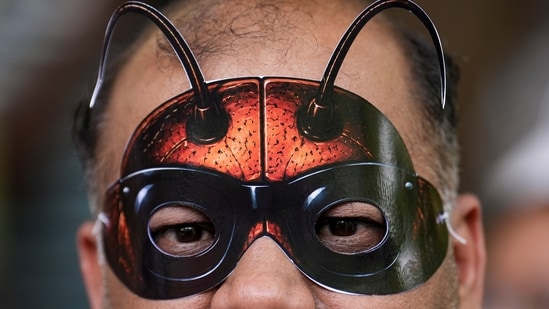
A Cockroach Janta Party (CJP) supporter wears a cockroach-themed mask during a protest demanding the resignation of Union Education Minister Dharmendra Pradhan on June 6, 2026. (PTI)

A few hundred people attended the protest. CJP founder Abhijeet Dipke, who flew in from the United States to lead the agitation, warned that the movement would take its campaign “beyond Delhi” if Pradhan did not step down.

The group later announced plans to hold demonstrations in multiple cities over the coming week, culminating in another gathering at Jantar Mantar next Saturday to determine the next phase of the protest.

Yet, despite the turnout and visibility, the event exposed several organisational shortcomings.

Constant changes in timing and venue

A lack of planning was apparent in the days leading up to the protest. When announcing the agitation earlier in the week, Dipke had initially urged supporters to gather at Delhi airport when his flight landed at 8 am on Saturday. “Meet me at the airport,” he had said.

Two days before the event, however, organisers changed that. In a video posted on Instagram, Dipke asked supporters not to come to the airport and instead gather at the Parliament Street Police Station, citing “inconvenience to other passengers.”

On the morning of the protest, supporters began assembling at the police station by around 8:30 am. Some participants had travelled overnight by train to reach Delhi on time. Soon after, another announcement appeared on the movement’s X account, stating that there was “no longer need to go to the Parliament Street Police Station, as originally planned”.

Delhi Police then used loudspeakers to send people towards Jantar Mantar directly, located about 800 metres away.

Once supporters reached the final venue, organisers issued another update: “’Cockroaches’ will begin our protest at Jantar Mantar demanding Dharmendra Pradhan’s resignation starting at 10 am.”

Microphones and speakers fell short

As the crowd gathered around Dipke, he led slogans using a handheld microphone before moving towards a stage that had been assembled only minutes earlier.

The sound system, however, struggled to cope with the size of the gathering. The microphone was not powerful enough to carry his voice across the crowd.

At times, Dipke’s speech was almost drowned out by Delhi Police public announcements. Frustrated by the interruptions and poor audibility, he remarked, “Ye kaun bol rha hai (Who is this speaking?)” while trying to address supporters.

Lack of volunteers to manage the crowd

The protest also appeared to suffer from a shortage of volunteers on the ground.

Without enough people guiding participants, the crowd often split into smaller groups, with different sections chanting slogans independently instead of acting in unison.

At one point, Dipke himself became stuck amid a large group of reporters while other members of the protest moved ahead. The situation improved later, but the early confusion highlighted the absence of a structured crowd-management system.

Last-minute police clearance created confusion

Another challenge stemmed from the organisers’ decision to seek permission on the day of the protest. Under existing rules, organisers are generally required to obtain permission from the police station in the area at least seven days before a demonstration.

The last-minute clearance process created uncertainty for both organisers and law enforcement. A day before the event, news agency PTI quoted a police source as saying: “The only information available to us at present is what has been circulating on social media.”

According to the PTI report, police deployed around 1,000 personnel in anticipation of the gathering.

Water shortage in the summer heat

The sweltering weather emerged as another problem for participants. With temperatures hovering around 40 degrees Celsius, many protesters struggled to find drinking water. Several nearby shops reportedly ran out of bottled water stocks as demand surged.

In some cases, vendors offered alternatives such as lassi, which was selling for ₹100 a glass. By comparison, a litre of bottled water typically costs between ₹20 and ₹50.

Small 200 ml water bottles and packaged cups of water remained available at some locations, and even a tanker arrived later, but supplies were insufficient for hundreds of people gathered at the site, leaving many struggling to stay hydrated through the afternoon.

Share This Article
Facebook Email Copy Link Print
Previous Article NEET UG 2026 Re-Exam City Slip Released; Here’s How Candidates Can Download It
Next Article ‘They Came For Me At 2 AM’: Imtiaz Ali Recalls Shocking Kidnapping-Like Ordeal During College Days
Leave a Comment Leave a Comment

Leave a Reply Cancel reply

Your email address will not be published. Required fields are marked *

You Might Also Like

BusinessLifestyleStartup

‘They kicked the crap out of me’: Lionel Messi on Cabo Verde’s fight after Argentina survive bruising WC knockout scare

Lionel Messi did not sound angry when he spoke about…

6 Min Read
BusinessLifestyleStartup

Jaishankar condemns Black Sea attacks in call with Ukrainian counterpart

India on Thursday reiterated its condemnation of attacks on merchant…

4 Min Read
BusinessLifestyleStartup

Trump health update: Amid new surgery speculation, insider says ‘pray for president’

A viral social media post on X has claimed that…

3 Min Read
BusinessLifestyleStartup

Jalandhar: ED’s three-day raids at Ashok Mittal’s properties conclude

The Enforcement Directorate (ED) concluded its searches at the residential…

2 Min Read
Next India MagazineNext India Magazine
Follow US
© 2026 Next India Magazine powered by India Times Now. All Rights Reserved.
Welcome Back!

Sign in to your account

Username or Email Address
Password

Lost your password?