



India
-Oneindia Staff

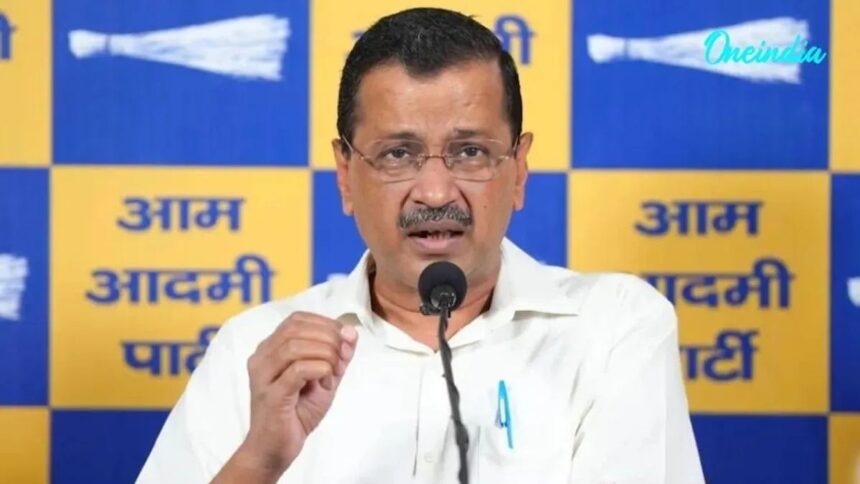
Aam Aadmi Party national convener Arvind Kejriwal has opened a new political front over India’s E20 petrol rollout, launching an online signature campaign that asks the Centre to offer motorists a choice at fuel stations. The campaign, called “Stop E20 Petrol”, seeks signatures for a petition addressed to the Prime Minister amid complaints from vehicle owners about mileage, engine performance and higher running costs.

Arvind Kejriwal launched the “Stop E20 Petrol” campaign, asking the Centre to offer motorists a choice of E20, E10, or unblended petrol amid complaints about decreased mileage and engine performance attributed to the E20 fuel rollout.
Kejriwal said the government was pushing E20 petrol across the country without adequate preparation or public consultation. He argued that motorists should not be forced to use one fuel blend, especially when many older vehicles were not originally designed for petrol containing 20 per cent ethanol. The petition has been hosted on StopE20petrol.com, where supporters have been asked to register their objection.
Kejriwal demands fuel choice at petrol pumps
The AAP leader said consumers should be given access to three options at petrol pumps: unblended petrol, E10 and E20. According to him, this would allow vehicle owners to choose fuel based on their vehicle’s age, compatibility and personal experience. He said the present approach leaves consumers with no practical alternative, even when they suspect the new fuel is affecting performance.
Kejriwal also questioned why E20 petrol is not priced lower than regular petrol if it delivers lower mileage. Ethanol has a lower energy density than petrol, which means a higher ethanol blend can, in some conditions, reduce fuel efficiency. The extent of the drop depends on vehicle design, engine calibration, maintenance and driving patterns.
He said the impact was being felt most by middle-class and lower-income vehicle owners, who use two-wheelers and small cars for daily commuting. A lower mileage figure, even by a small margin, can raise monthly fuel costs for families already dealing with high transport expenses. Kejriwal said service and repair bills were also rising for some motorists.
What is E20 petrol and why India is using it
E20 petrol is a blend of 20 per cent ethanol and 80 per cent petrol. India has promoted ethanol blending to reduce crude oil imports, support sugarcane and grain-based ethanol production, and cut some tailpipe emissions. The Centre has also described the ethanol programme as an important part of its energy security and farmer-income strategy.
India had earlier advanced its 20 per cent ethanol blending target from 2030 to 2025. Oil marketing companies began supplying E20 in a phased manner, starting with selected outlets before wider availability. Newer vehicles are increasingly being designed or calibrated to handle higher ethanol blends, but compatibility remains a concern for many owners of older vehicles.
The debate is not only about the environmental or import-saving benefits of ethanol. It is also about consumer readiness. Many vehicles on Indian roads were sold when E10, or lower ethanol blends, were more common. Owners of such vehicles often depend on manufacturer guidance to know whether E20 can be used regularly without affecting long-term performance.
Why vehicle owners are worried
Kejriwal said his conversations with vehicle owners at petrol pumps and service centres showed a pattern of complaints. According to him, people reported lower mileage, fuel pump issues, injector problems and engine-related concerns after using E20 petrol. He said many also complained that servicing and repairs had become more expensive than before.
Such complaints are politically sensitive because fuel expenses affect a large section of urban and semi-urban households. Two-wheelers remain the most common personal transport option in India, while small cars are often used for office commutes, school runs and family travel. Even a modest increase in fuel consumption can become visible over repeated refuelling cycles.
Automobile experts generally note that ethanol-blended petrol can behave differently from conventional petrol because ethanol attracts moisture and has different combustion properties. Vehicles specifically made for E20 can manage these differences better. Older vehicles may need closer attention to manufacturer recommendations, service intervals and fuel-system components.
The government and oil companies have maintained that ethanol blending is a planned national programme and that fuel quality is monitored through existing standards. However, Kejriwal’s campaign is focused on consumer choice and cost. His argument is that policy goals should not override the concerns of vehicle owners who feel they are bearing the transition cost.
A political campaign around a consumer issue
The “Stop E20 Petrol” campaign gives AAP a national consumer-facing issue at a time when fuel prices, vehicle maintenance and household budgets remain important public concerns. By framing E20 as a matter of choice, Kejriwal is trying to shift the debate from energy policy to everyday affordability and accountability.
He accused the Centre of dismissing public complaints instead of addressing them. He said that if the government wants to continue with E20, it should at least ensure parallel availability of unblended petrol and E20. He also demanded that E20 be priced lower to reflect concerns over fuel efficiency.
The campaign’s central demand is not a complete rejection of ethanol blending, but a pause on what Kejriwal called forced implementation without preparation. The petition asks the government to stop imposing E20 petrol, provide options at fuel stations and acknowledge the problems being raised by motorists.
The issue could gain traction if complaints from vehicle owners continue to spread beyond social media and local service networks. For now, the campaign has turned a technical fuel policy into a wider public argument over choice, transparency and the cost of transition for ordinary motorists.