



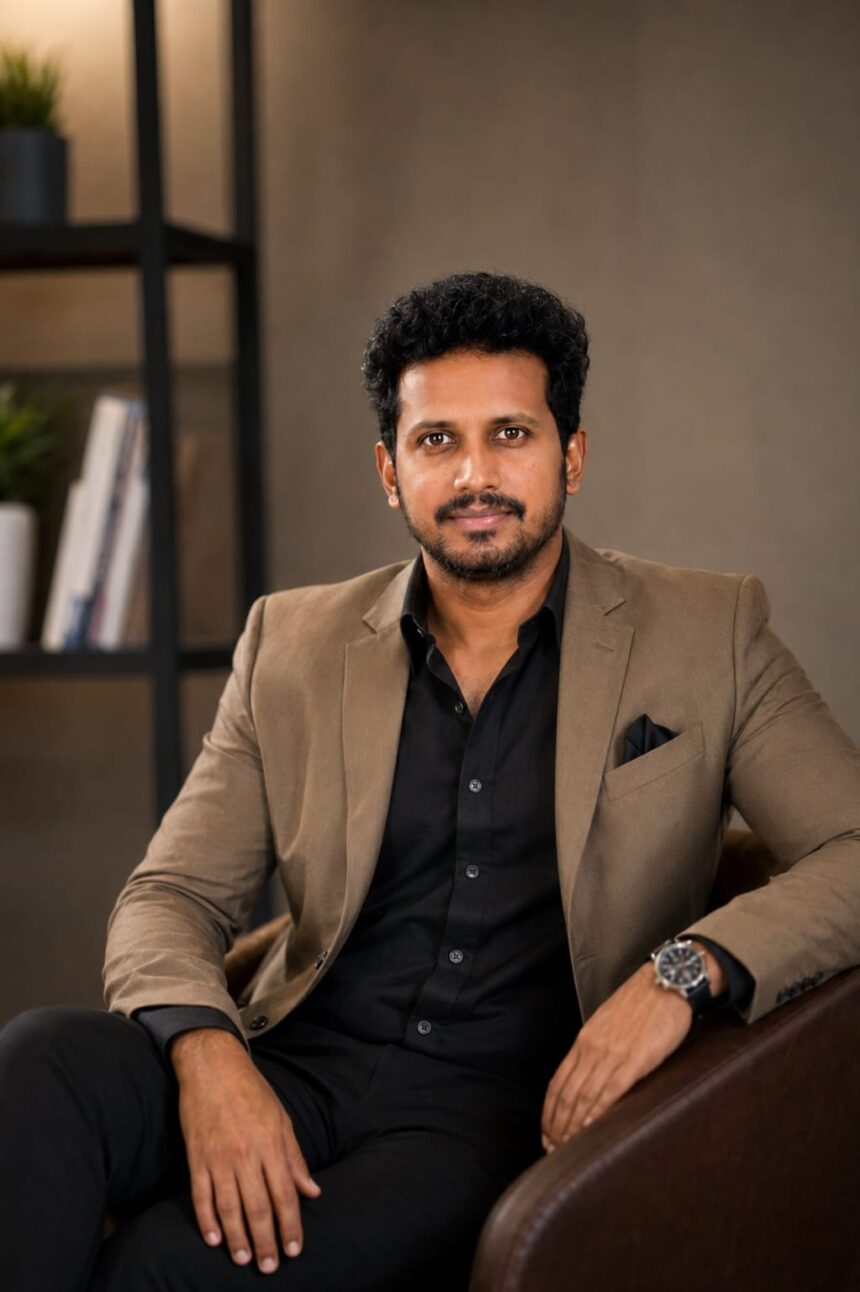
If there is one profession that has the power to shape every other profession, it is education. Every doctor, engineer, entrepreneur, scientist, artist, civil servant, policymaker, and business leader begins life as a student sitting in a classroom. Yet, despite this extraordinary responsibility, education has often remained one of the slowest sectors to evolve. While technology has transformed the way the world communicates, works, and innovates, many classrooms continue to prepare children using methods designed for a very different era. It is this disconnect between the world outside and the classroom inside that concerns Dr. Manesh Sathyanathan the most. As the Correspondent and Principal of Bodhi International School in Tamil Nadu, he is among a growing group of educational leaders who believe that India’s future will not be determined merely by economic growth or technological advancement, but by whether its schools can prepare children for a world that is changing faster than ever before. For Dr. Manesh Sathyanathan, education has never been about producing high examination scores alone. Marks may open doors, he believes, but character determines how far an individual will go once those doors are opened. Throughout his journey, he has consistently argued that schools should not define success only through board examination results or university admissions. Instead, they should be evaluated by the quality of human beings they help nurture.
“The world needs good human beings more than it needs successful professionals,” he often says, a philosophy that continues to shape every decision he takes. Schools, in his view, are not institutions created merely to prepare children for careers they exist to prepare them for life. This philosophy did not emerge overnight. Before entering education, Dr. Manesh Sathyanathan built a successful career in the corporate world, gaining valuable insights into leadership, technology, and organisational development. Those years taught him what industries truly expect from young professionals. But they also revealed something deeper. The biggest workplace challenges poor communication, fear of failure, lack of creativity, weak leadership, and inadequate problem-solving often begin much earlier, during a person’s formative years. That realisation changed everything. Instead of trying to solve these problems after people entered the workforce, he chose to address them where they originated in schools.
Leaving behind a comfortable corporate career was neither the easier nor the more financially rewarding choice. It was a decision driven entirely by purpose. Many questioned why someone with a promising corporate future would enter a profession known more for responsibility than recognition.
His answer was simple: “Why not?”
Why should meaningful education remain limited to metropolitan cities? Why should innovation belong only to urban campuses? Why should a child’s postcode determine the opportunities available to them?
Those questions inspired one of the boldest decisions of his career—the establishment of Bodhi International School in Kalaiyarkovil, a Tier-3 town in Tamil Nadu. His mission was clear: prove that excellence in education should never depend on geography.
Building an institution with international aspirations in a developing region required far more than infrastructure. It demanded conviction. While many believed parents in smaller towns would prefer conventional education, Dr. Manesh Sathyanathan believed parents everywhere share the same dream to give their children opportunities that prepare them for the future.
Guided by this belief, Bodhi International School evolved into an institution where academics coexist with robotics, Artificial Intelligence, entrepreneurship, psychology, leadership, public speaking, and experiential learning. Technology was never introduced for the sake of appearing modern. Every innovation served one purpose to help students think critically, solve problems creatively, collaborate effectively, and adapt confidently to a changing world.
Perhaps what distinguishes Dr. Manesh Sathyanathan even more is that he never stopped being a student himself.
Beginning with a degree in Zoology from Madras Christian College, he pursued an MBA in International Business from the University of South Wales, followed by an M.Sc. in Psychology, a B.Ed., and a Ph.D. in Education. Yet, after earning these qualifications, he once again returned to the classroom this time as a student of Data Science at IIT Madras.
For him, continuous learning is not merely a personal ambition; it is a leadership responsibility. A school leader who stops learning cannot inspire teachers or students to embrace change.
This philosophy has become deeply embedded within Bodhi International School. Teachers are encouraged to see themselves not simply as instructors but as lifelong learners. Innovation is welcomed without compromising timeless values such as empathy, integrity, and compassion.
While Artificial Intelligence may transform classrooms, Dr. Manesh Sathyanathan believes the heart of education will always remain deeply human. Technology can deliver information instantly, but it cannot replace encouragement, trust, understanding, or the ability of a teacher to recognise a child’s potential before the child recognises it in themselves.
His work has naturally attracted national and international recognition. He has been featured by Forbes India under the prestigious Trendsetters of the New Era segment, invited as a TEDx Speaker, and had the honour of speaking at the University of Oxford milestones that reflect his growing influence as an educational thought leader. Yet, when asked about success, he rarely speaks about awards. Instead, he speaks about trust.
Every year, parents entrust him with the most precious part of their lives their children. For Dr. Manesh Sathyanathan, that trust carries a responsibility greater than any recognition. Awards acknowledge achievement, but trust demands accountability. That responsibility continues to shape his larger vision for Indian education. As technology, Artificial Intelligence, and automation redefine the future, he believes schools must prepare children not only for examinations, but for uncertainty itself. The future, he believes, belongs to learners who can think independently, communicate effectively, collaborate with others, adapt to change, and make ethical decisions. Schools that cultivate these qualities will prepare children not merely to succeed in the future but to shape it.