


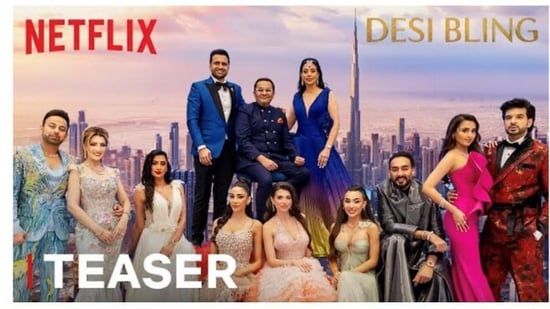
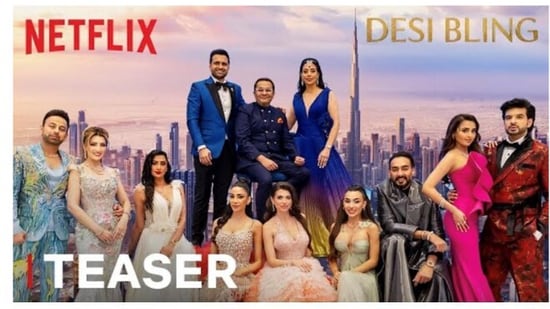
Now that Desi Bling is streaming, it’s clear the show isn’t just a “spin-off of Dubai Bling”. Instead, it presents a similar reality television format through the social and cultural connections between the United Arab Emirates and India. And importantly, it doesn’t reinvent the reality TV wheel. It builds on elements already familiar: wealth, identity, ambition, and the dynamics of people who live between Mumbai and Dubai.
The same Bling DNA—just more desi, more layered
If Dubai Bling was about a group of Dubai-based millionaires navigating status, gossip, and luxury lifestyles, Desi Bling keeps that structure but shifts the centre of gravity. The cast is still built around wealthy social circles, but now the “desi diaspora elite” becomes the main stage. Episodes like the early-season opener, where cast members are introduced through yacht parties, luxury villas, and personal interviews, establish the programme’s visual style and themes from the outset.
What stands out is how familiar the rhythm feels. Social gatherings lead to disagreements, friendships are tested, and luxury settings provide the backdrop for personal interactions.But now there’s an added layer: cultural identity is questioned, even when nobody is explicitly talking about it.
India–UAE life as a reality TV ecosystem
One of the show’s underlying themes is how normalised transnational life is between India and the United Arab Emirates. Rather than focusing solely on life abroad, the programme depicts individuals whose personal, professional, and social lives span both countries. Business is often based in Dubai, family roots in India, social status shaped across both. That’s why scenes move between desert luxury parties and Indian family dynamics without needing explanation.
You see it in the way cast members talk about “home” as a flexible concept. You see it in the constant travel, the hybrid events, the mix of languages in conversations that switch mid-sentence between English, Hindi, and conversational slang that feels like its own global dialect. Even the drama feels shaped by that mobility—conflicts aren’t just interpersonal, they’re logistical, reputational, and cross-border.
The proposal moment: romance on screen
One of the show’s talked-about moments is the on-screen proposal between Karan Kundrra and Tejasswi Prakash, which became a viral talking point and emotional anchor for viewers. It’s classic reality TV staging, but it also fits into the Desi Bling ecosystem: romance isn’t private—it’s performative, public, and tied to audience reaction. The desert backdrop, the emotional build-up, and the immediate social media amplification all turn it into both a storyline and a marketing moment. In Dubai Bling, relationships often played out as status negotiations. In Desi Bling, they’re still that—but now they’re also entertainment content within entertainment content.
Multiculturalism as part of the backdrop
What Desi Bling does well is reflect the UAE’s built-in multicultural structure. The United Arab Emirates isn’t presented as a backdrop to a desi story—it’s the environment where desi identity already exists in hybrid form. That’s why the cast dynamics feel so layered. People are not just “Indian characters abroad”—they’re part of a broader social ecosystem where Emirati, South Asian, European, and other influences constantly overlap. It’s visible in social events, business interactions, and even casual conversations.
This reflects a broader truth: the India–UAE relationship isn’t just diplomatic or economic; it’s cultural and everyday. Millions of Indians live and work in the UAE, making the connection less about “diaspora representation” and more about a shared, functioning social reality between the two countries.
A look at cross-border lifestyles
Beyond its focus on luxury lifestyles and interpersonal relationships, Desi Bling offers a portrayal of people living across two of the most interconnected cultural spaces in the world—India and the United Arab Emirates—and turning that mobility into identity, lifestyle, and entertainment.
Whether viewed primarily as entertainment or as a glimpse into a particular social circle, the programme centres on individuals navigating relationships, careers, and public attention across India and the United Arab Emirates.