


India
oi-Swastika Sruti

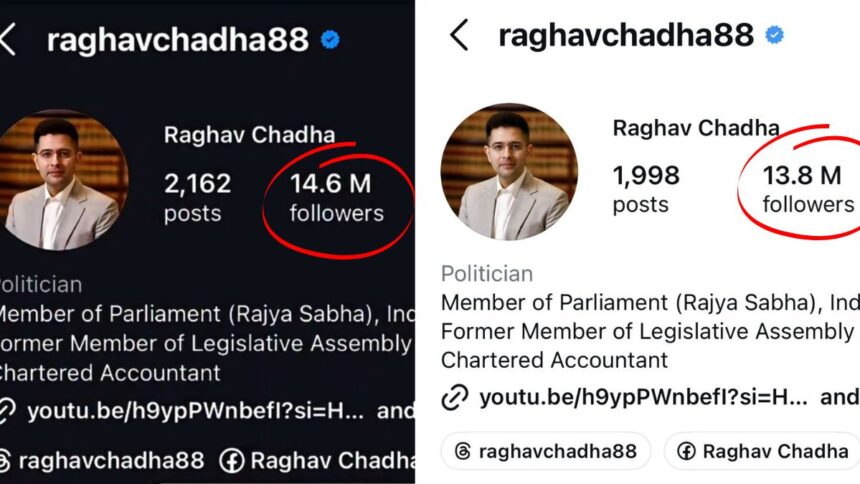
A major political move by Raghav Chadha has sparked a strong reaction online. Within just 24 hours of leaving the Aam Aadmi Party (AAP) and joining the Bharatiya Janata Party (BJP), the young leader lost nearly one million followers on Instagram.

After leaving the Aam Admi Party (AAP) to join the Bharatiya Janata Party (BJP), Raghav Chadha lost nearly one million Instagram followers within 24 hours, illustrating a significant digital backlash to his political switch. The sharp follower decline reflects the immediate impact of political decisions on public perception in the digital age.
On Friday, Chadha had around 14.6 million followers. By Saturday afternoon, that number dropped to 13.5 million. The sharp fall shows how quickly public sentiment can change in the digital age.
A Political Shift That Was Expected
Chadha’s move to the BJP did not come as a complete surprise. Earlier, he had been removed from his position as AAP’s deputy leader in the Rajya Sabha, hinting at internal tensions.
When he finally left, he was joined by several other MPs, making it a significant political shift. While such developments are common in politics, the reaction from his supporters- especially online- was immediate and strong.
A Leader Popular Among Youth
Raghav Chadha had built a unique image as a politician who connected well with young people. Unlike traditional leaders, he often spoke about everyday issues that matter to common citizens.
In Parliament, he raised topics like:
- Paternity leave policies
- Internet data limits
- Traffic problems in cities
- High prices at airports
- Working conditions of delivery workers
Everyone else is talking about the decrease in his followers but did anyone notice that Raghav Chadha has deleted 164 posts and we all know what that could be…🫵🏻🤣😂🤷🏻♂️
— अधिवक्ता जी (@vakilshab09) April 25, 2026“>
He even worked as a delivery partner for a day to understand the challenges faced by gig workers. This approach made him relatable and helped him gain a strong following among Gen Z and young voters.
Early Signs of Backlash
Interestingly, signs of possible backlash had appeared earlier. After his removal from a key party position, some social media users suggested he should start his own political platform instead of joining another major party.
BJP gaining more MPs.
Meanwhile congress:
Feeling happy by posting raghav chadha instagram followers count.
No wonder. https://t.co/wjoJmvOlBV
— Priya (@IntrovertTechi) April 25, 2026“>
One viral post even warned that switching to an established party could lead to disappointment among his supporters. Despite this, Chadha chose to join the BJP-and the reaction followed quickly.
The ‘Unfollow’ Campaign
Soon after his announcement, a trend began on social media where users started unfollowing his account. The hashtag #unfollowRaghavChadha gained traction, reflecting growing dissatisfaction among followers.
Political voices and commentators also pointed out the shift. Many users flooded the comment sections of his posts, expressing their views and urging others to unfollow him.
The drop in followers became a visible symbol of how digital audiences can react strongly to political decisions.
Social Media: A Double-Edged Sword
This incident highlights how social media can quickly build or damage a politician’s image. Platforms like Instagram help leaders connect directly with people, especially the youth. However, they also make public reactions more immediate and visible.
As one observer noted, the internet can turn someone into a hero overnight-and just as quickly, change its opinion.
What Lies Ahead for Chadha?
For Raghav Chadha, the coming days will be crucial. While political careers are shaped by elections and policies, public perception-especially among young voters- now plays a big role.
Whether he can rebuild trust and reconnect with his audience remains to be seen. For now, the sharp drop in followers tells a clear story about how his decision has been received.
Raghav Chadha’s switch from AAP to BJP has not only impacted political circles but also triggered a strong digital response. The loss of nearly one million followers in a day reflects changing expectations from young voters, who closely watch and react to every move.
In today’s world, politics is no longer limited to rallies and speeches-it is also shaped by likes, shares, and, sometimes, unfollows.