


India
-Oneindia Staff

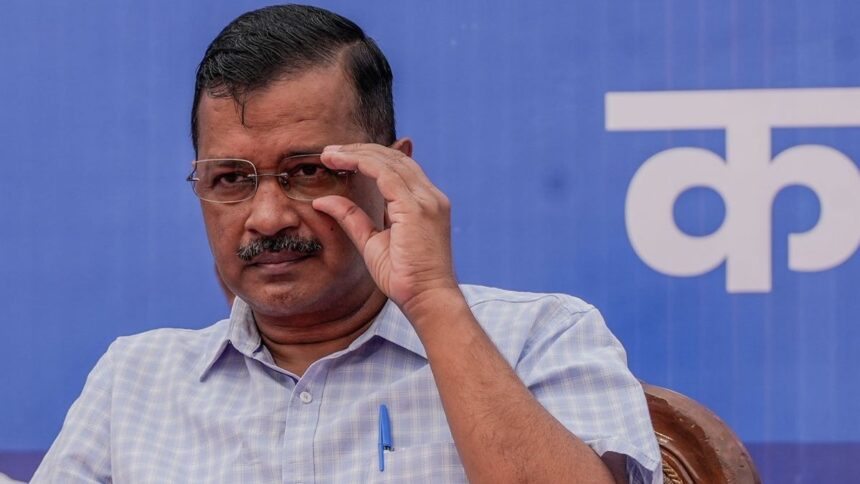
A fresh political row has broken out over E20 petrol after Aam Aadmi Party national convenor Arvind Kejriwal claimed that motorists in Delhi were facing vehicle breakdowns, lower mileage and higher repair costs after using ethanol-blended fuel. The issue has gained traction because E20 is no longer a limited technical change. It directly affects car, two-wheeler and scooter owners who depend on fuel quality, mileage and repair predictability.

AAP leader Arvind Kejriwal alleges Delhi motorists face vehicle breakdowns and lower mileage from E20 petrol, citing mechanics and citing examples like a 2023 Honda City. The controversy highlights concerns over E20 compatibility, repair costs, and consumer choice versus the government’s ethanol blending policy.
Kejriwal shared a video of his visit to service centres and a petrol pump in Delhi, where he spoke to mechanics and vehicle owners. He alleged that the Centre was forcing E20 petrol on consumers without giving them an alternative. The former Delhi chief minister said people should at least be allowed to choose between E20 and regular petrol.
E20 petrol row: What Kejriwal claimed after visiting mechanics
In the video, Kejriwal is seen speaking to mechanics identified as Ashraf and Jasvir Singh. They claimed that several vehicles were being brought to workshops after refusing to start, losing power or developing fuel-system problems. According to them, some cars were being pushed in, while others were being brought by crane.
One case highlighted in the video involved a 2023 Honda City, which was described as E20-compatible. The mechanic claimed the car had not started for a week, its fuel pump had failed and its injectors were choked. The owner and mechanic also claimed that its mileage had fallen sharply from around 22 kmpl to 13 kmpl.
Kejriwal said he saw several such vehicles at the service centre. Mechanics in the video claimed that fuel injectors were developing deposits and had to be replaced repeatedly. They said a set of four injectors could cost around Rs 7,000 to Rs 8,000, adding to the burden on owners already worried about falling mileage.
The AAP leader also met the owner of a 2017 Maruti car, which was reportedly brought in after it started stalling frequently. The owner claimed the car was stopping every few hundred metres and that its spark plugs and injectors had developed problems. Similar concerns were raised by two-wheeler users, who claimed their mileage had reduced after switching to E20 petrol.
Why E20 matters to ordinary vehicle owners
E20 petrol contains 20 per cent ethanol and 80 per cent petrol. India has promoted ethanol blending to reduce crude oil imports, support sugarcane and grain-based ethanol production, and cut some tailpipe emissions. The programme is part of a wider fuel-blending policy implemented through oil marketing companies across the country.
The concern for motorists is compatibility. Newer vehicles sold in recent years have increasingly been designed or calibrated for higher ethanol blends. Older vehicles, however, may not always perform in the same way, especially if their fuel systems, rubber components, seals or engine calibration were designed for lower ethanol content.
Ethanol has different chemical properties from petrol. It contains oxygen, absorbs moisture more readily and has lower energy density than petrol. This means fuel economy can vary depending on vehicle design, maintenance, driving pattern and fuel quality. A small mileage reduction is technically expected with higher ethanol content, but vehicle owners are alleging much steeper drops.
Automakers and fuel experts generally distinguish between two questions. The first is whether a vehicle can safely run on E20 without damage. The second is whether it will deliver the same mileage, drivability and long-term performance as it did on lower ethanol blends. The public anger is emerging from the gap between policy rollout and consumer experience.
Consumers ask why there is no fuel choice
At a petrol pump, Kejriwal spoke to motorists who alleged that their vehicles had started giving lower mileage after the shift to E20. One car owner claimed a seven-year-old vehicle had broken down three times in two months and needed a fuel pump replacement. Another said a full tank that earlier lasted 12 to 13 days was now lasting only about seven days.
Several consumers in the video also questioned the pricing of ethanol-blended petrol. Their argument was that if petrol contains a higher ethanol share, pump prices should reflect that change. They also said owners should not have to pay higher repair costs if fuel compatibility issues arise in older vehicles.
Kejriwal used these complaints to attack the Union government. He said official statements and press conferences could not change the situation on the ground. He also compared India’s rollout with Brazil’s long ethanol transition, arguing that India had moved too quickly and without adequate choice for consumers.
The Centre has consistently defended ethanol blending as an energy-security and farmer-support measure. Government policy has pushed blending targets ahead of earlier timelines, citing reduced import dependence and benefits for the domestic ethanol industry. Oil companies have also expanded E20 availability as part of the national rollout.
The political dispute now hinges on consumer impact. If the problems reported by motorists are widespread, authorities may face pressure to issue clearer guidance for older vehicles, mandate better pump-level disclosure and ensure complaint redressal. If the claims are limited to isolated cases, the government and industry will still need to explain why many owners believe mileage and maintenance costs have changed after E20.
For now, the E20 petrol debate has moved beyond fuel policy and entered the everyday cost-of-living conversation. Vehicle owners want clarity on compatibility, repair liability, mileage impact and pricing. The government’s next challenge will be to address those concerns with verifiable data, not just broad assurances about the benefits of ethanol blending.