


India
oi-Swastika Sruti

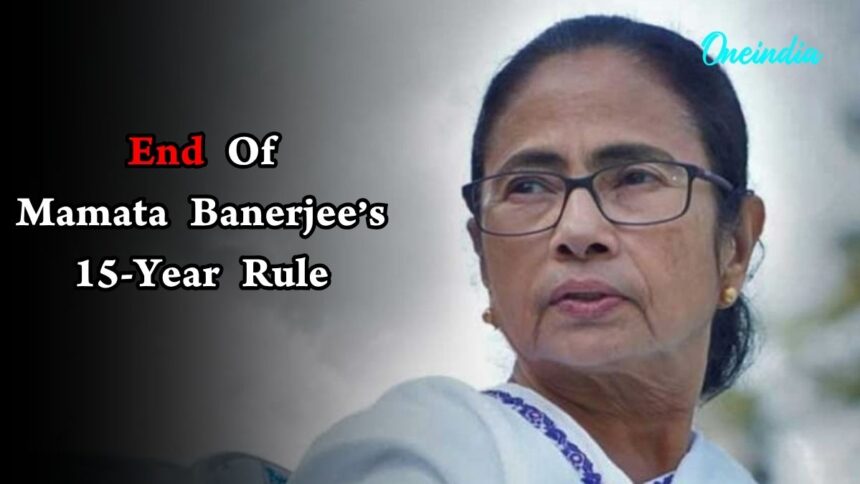
The Bharatiya Janata Party (BJP) is on course to create history in West Bengal, with early trends showing a decisive lead over the Trinamool Congress (TMC). If the trends hold, the BJP will form the government in the state for the first time, ending the 15-year rule of Chief Minister Mamata Banerjee.

West Bengal election trends indicate a historic victory for the BJP, leading in 193 seats and set to oust Chief Minister Mamata Banerjee’s Trinamool Congress after 15 years in power.
The election marks a major political shift in a state long dominated first by Left parties and then by the TMC.
BJP Takes Massive Lead as Counting Continues
According to data from the Election Commission, the BJP is leading in around 193 seats, comfortably crossing the majority mark. In contrast, the TMC, which had secured a strong two-thirds majority in the previous election, is trailing at around 94 seats.
The BJP’s campaign was led by Prime Minister Narendra Modi and Union Home Minister Amit Shah, who held multiple rallies across the state.
RG Kar Case and Public Anger
One of the key issues that influenced voters was the RG Kar Medical College case. The incident, and the state government’s handling of it, became a major point of political debate.
Statements made during the controversy drew criticism and reportedly led to anger among sections of women and young voters. The BJP further strengthened this narrative by fielding the victim’s mother, Ratna Debnath, as a candidate-turning the issue into a powerful emotional campaign point.
Women and Youth Vote Played a Key Role
Analysts believe that dissatisfaction among women and youth voters contributed significantly to the TMC’s decline. Concerns around safety, governance, and allegations of corruption influenced voting patterns.
At the same time, there were also narratives around women’s rights and policies such as the Women’s Reservation Bill, which created sympathy and counter-sympathy among different voter groups.
Corruption Allegations and Governance Issues
The TMC government faced criticism over corruption allegations, including high-profile cases involving party leaders. The recovery of large amounts of cash linked to associates of former minister Partha Chatterjee damaged the party’s image.
Additionally, complaints about local-level issues such as “cut money” demands and alleged political violence were raised by voters during the campaign.
BJP’s Campaign Strategy: Identity and Development
The BJP focused its campaign on a mix of development promises and identity politics. The party highlighted issues such as:
- Alleged infiltration from Bangladesh
- Religious identity and Hindu consolidation
- Governance and development gaps
The BJP also accused the TMC of minority appeasement, while presenting itself as a party focused on national security and growth.
At the same time, critics pointed to concerns about polarisation and rising Islamophobia in political discourse, making the election highly charged.
Strategy Missteps by TMC
Political observers suggest that the TMC’s campaign strategy may not have worked in its favour. Repeated references to the BJP as “outsiders” did not resonate strongly with voters, especially when local issues like jobs, safety, and corruption were being highlighted.
Another point of tension during the campaign was the political friction between Mamata Banerjee and President Droupadi Murmu, which became part of the broader political narrative.
Role of Electoral Management and SIR
The election also saw a strong focus on voter management and booth-level strategies. The Special Intensive Revision (SIR) of voter rolls and ground-level mobilisation efforts played a role in shaping the outcome.
The BJP’s ability to convert votes into seats more efficiently than its rivals appears to have given it an advantage.
Mamata Banerjee Refuses to Concede
Despite the trends, Mamata Banerjee has not conceded defeat. In a message to party workers, she urged them to remain vigilant and not lose hope.
She said, “I request all counting agents and candidates to remain in strong rooms and not leave their centres. BJP votes will be shown first… Just wait and watch.”
Her remarks reflect ongoing tensions and concerns as counting continues across the state.
A Turning Point for Bengal Politics
If the trends are confirmed, the 2026 election will mark a historic turning point in West Bengal’s political landscape. The BJP’s rise signals not just a change in government, but a deeper shift in voter behaviour and political alignment.
For the TMC, the results could lead to introspection and re-strategising, while for the BJP, the real challenge will begin after forming the government-delivering on promises and managing expectations in a politically sensitive state.