



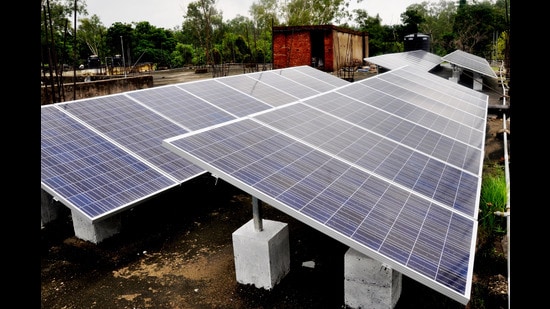
Amid growing criticism from consumers and the renewable energy sector, the Maharashtra government has constituted a committee to examine the applicability of electricity duty on rooftop solar (RTS) users and related charges as decentralised power generation expands across the state.
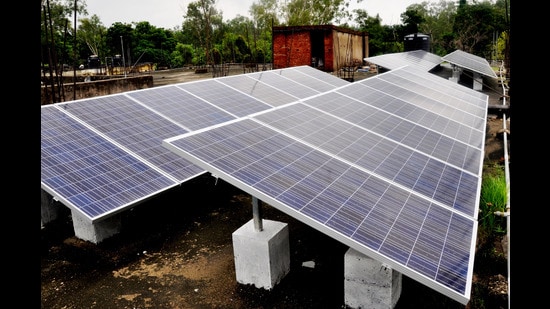
The decision was issued through a government resolution dated April 21, 2026, under the provisions of the Maharashtra Electricity Duty Act, 2016. The review aims to reassess the existing electricity duty structure in response to changing consumption patterns driven by the increasing adoption of rooftop solar systems and behind-the-meter (BTM) power generation.
Officials from Maharashtra State Electricity Distribution Company Limited said electricity duty is currently levied on overall electricity consumption, including fixed charges, energy charges, fuel adjustment costs and reliability charges. However, the rapid rise in rooftop solar installations — encouraged by central and state subsidy schemes — has significantly altered conventional electricity usage patterns.
The development comes soon after the Maharashtra Electricity Regulatory Commission permitted power distribution companies to levy grid support charges on rooftop solar systems with capacities above 10 kW. Following the order, the state government is examining whether electricity duty should also apply to such charges and, if so, at what rate.
Government officials said the committee will conduct a detailed assessment of the financial, technical and policy implications of imposing electricity duty on emerging energy consumption models, including rooftop solar and BTM systems, before submitting its recommendations.
The review is being seen as part of a broader effort by the state to align its taxation and regulatory policies with the rapidly evolving energy sector, which is witnessing a gradual shift towards decentralised and renewable energy sources.
Meanwhile, MSEDCL has proposed a “Grid Support Charge” (GSC) of ₹1.96 per unit on surplus solar power generated during the day and later consumed for common services such as lighting, elevators and water pumps in residential complexes. Industry experts warn that the proposal could significantly increase annual electricity expenses for housing societies and affect their efforts to achieve near-zero power bills through solar energy adoption.
The proposal has triggered sharp reactions from renewable energy industry stakeholders and consumer groups.